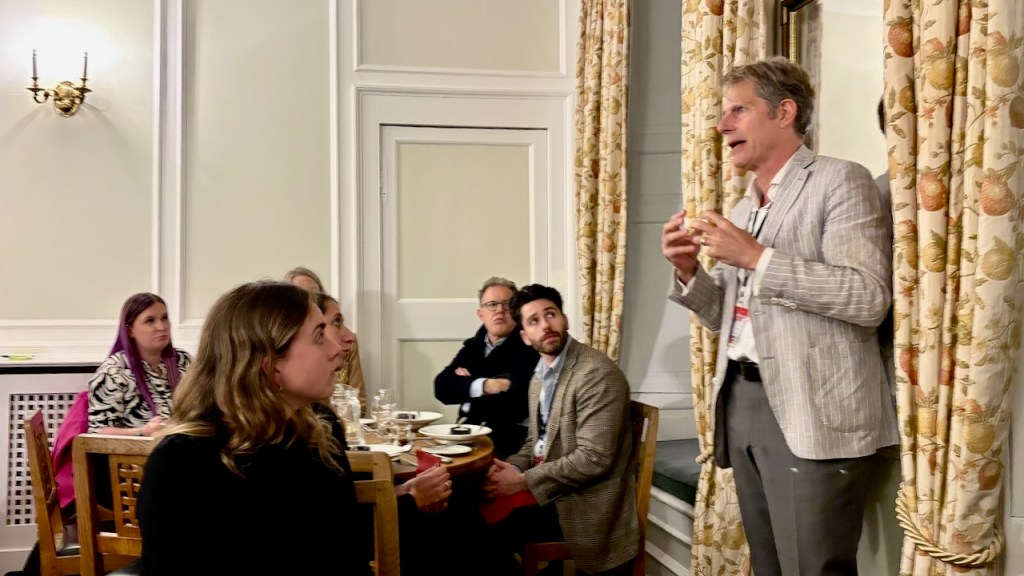
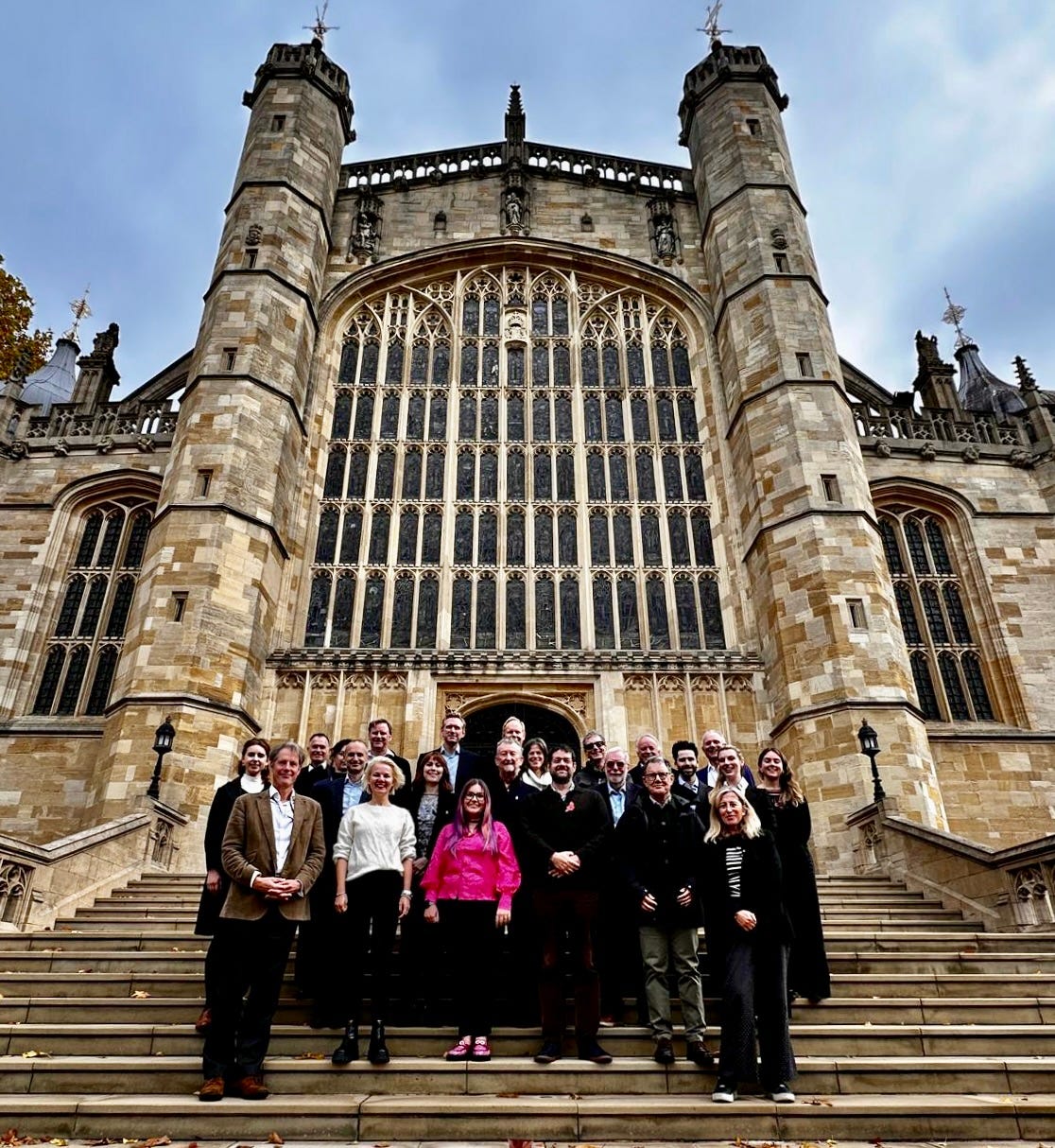
Reimagining Liberal Democracy – the title of a ‘consultation’ I joined this month in England with two dozen British, American and German policy-minded people – could feel strange amid the glories of Windsor Castle, where our hosts, St George’s House, happened to be located.
I wondered what King John looked like as he rode out of the castle gate in 1215. England’s monarch had been forced to agree to the Magna Carta that shared his power with with forty rebel barons at Runnymede, half an hour’s ride to the south. The sealing of that charter was a first step toward modern democratic ideas of freedoms, rights and rule of law.
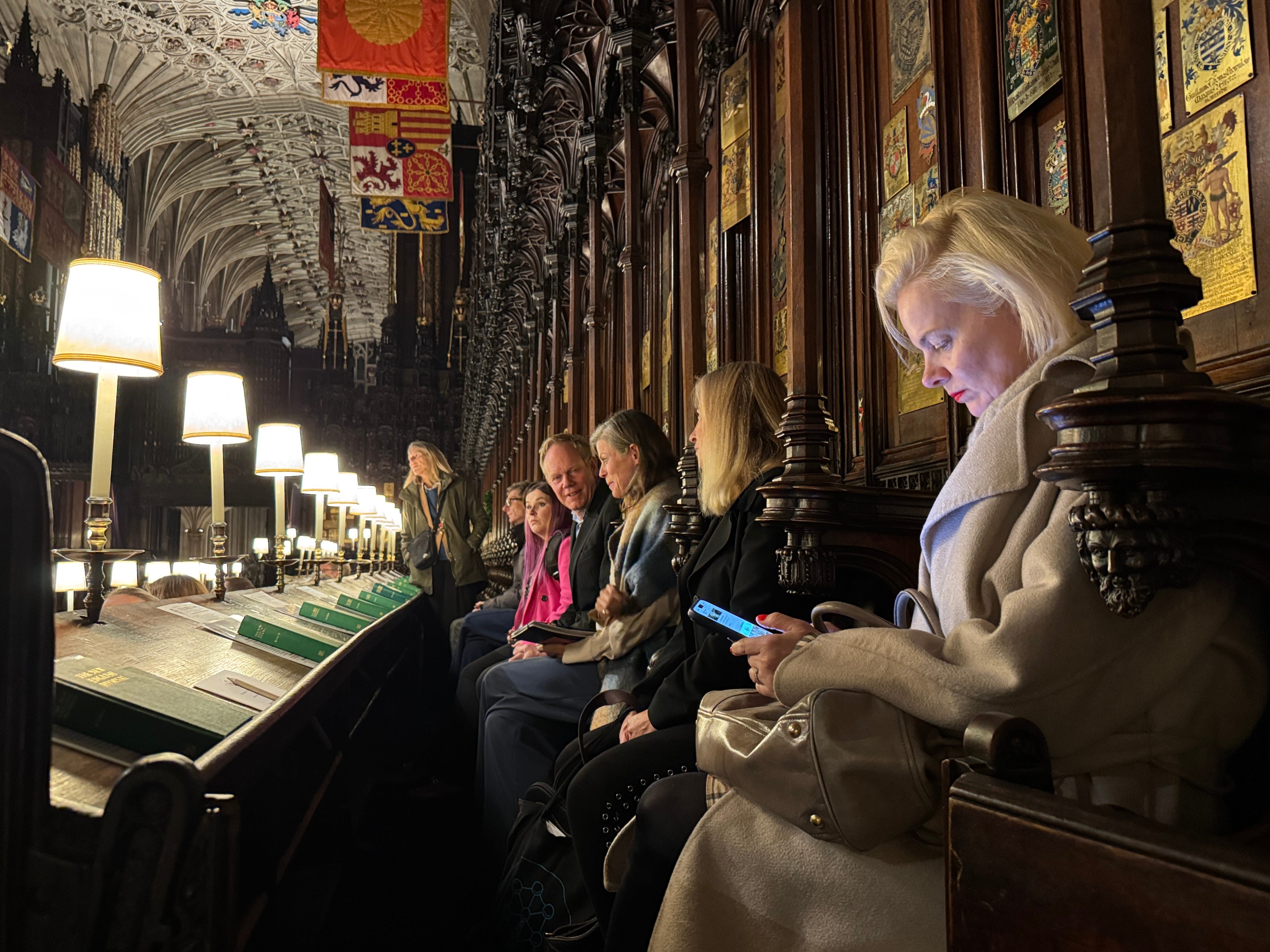
Or I day-dreamed about what King John’s successors, the many royals lying in polished marble tombs near where we sat, would make of us modern folk discussing what had gone so wrong with the political empowerment that began back then.
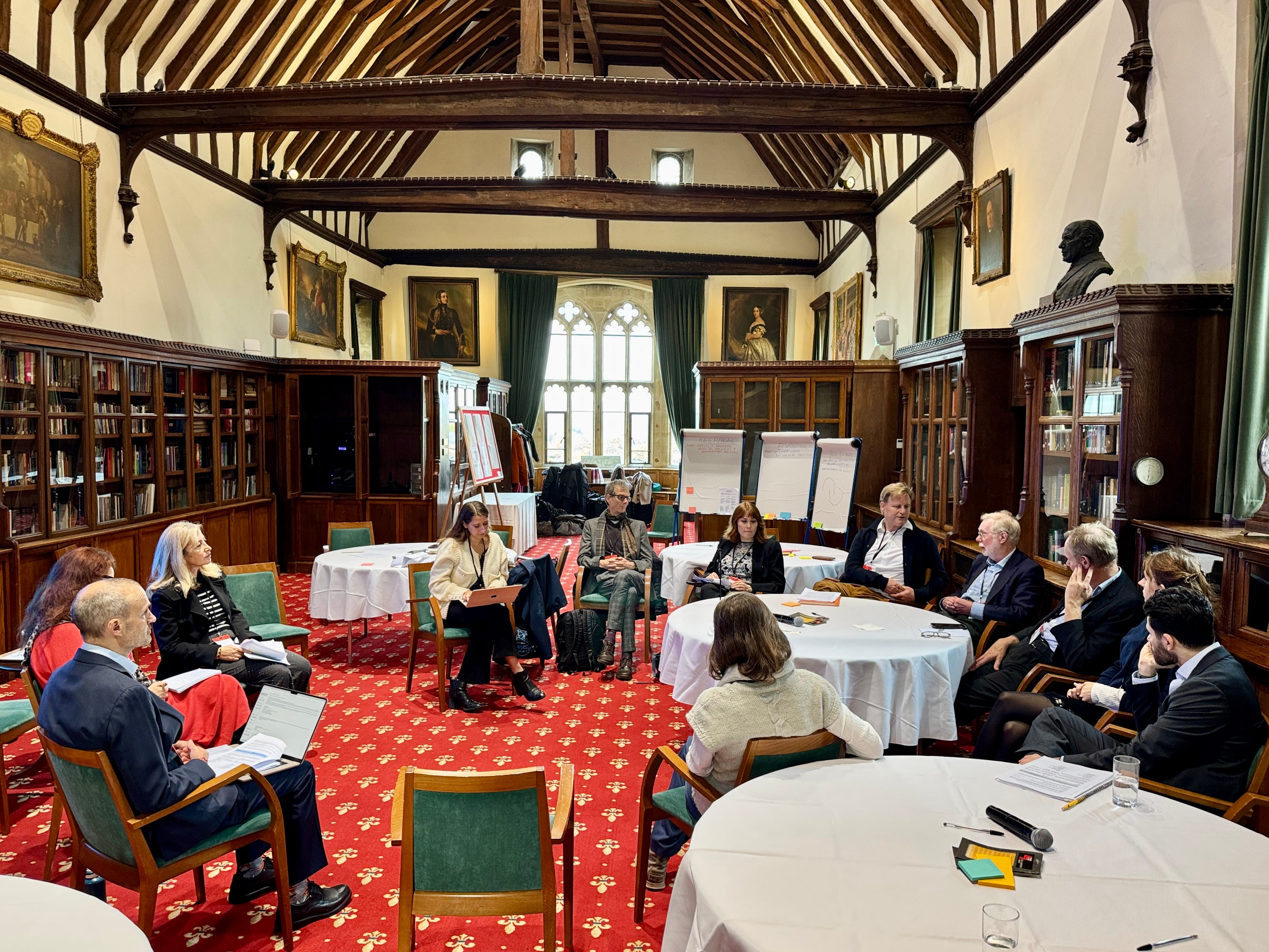
Today’s general outlook was certainly deemed to be gloomy, even seen from the comfort of a mediaeval ecclesiastical refectory. Briefing notes by the meeting’s co-organisers Tom Crofts and Sandra Khadhouri declared that democracy was “in distress”, “facing a crisis” and “in recession for the past two decades”. One question we were asked to answer was bleak and binary: “Are citizens abandoning democracy, or is democracy abandoning its citizens?”
Most participants, of course, equated democracy with electoral systems. This gave me plenty of chances to jump in as cheerleader for sortition as a way to get better, more representative decision-making in the public interest. More than 1,000 citizens’ assemblies held around the world since 2004, I argued, had made great progress bringing together groups of randomly selected people to be informed on a divisive topic, to deliberate and to make new policies.
Others chimed in with often inspiring ideas from politics, government, academia, the military, religious belief, and Silicon Valley. Several had experience with Western missions in Iraq and Afghanistan, real-life encounters with the consequences of poor decisions made by elected politicians that had persuaded one participant, ex-diplomat and writer Iain King, to found a Centre for Ethical Foreign Affairs.
King’s project was not the only encouraging new start-up. Anna Zeiter, a German entrepreneur, had founded the new all-European platform, W Social. Two top British former civil servants also introduced their year-old National Strategy Project for Britain. This strategy will be distilled in 2028 from the informed opinions of 50,000 people, a representative cross-section of the population selected by lot. There was even a professional futurist.
Dark undercurrents
Our discussions surfaced some dark undercurrents too. Late on the evening of our 24-hour meeting – the organisers worked us hard, although the kind offer of an extra night did allow me time for a walk to discover Windsor & Eton – our facilitator was trying to hammer out a common line. People dropped their inhibitions about voicing frustrations with the log-jammed status quo, and a yearning for a more urgent sense of common purpose in the struggle against authoritarian rule. Then I heard something like: “Yes, we need the spirit of 1937!”
I blurted out: “What, a good cleansing war?” Nobody seemed to hear me, which was probably for the best, since I may have misunderstood. For sure, nobody explicitly wanted armed conflict to be the crisis that cleared the way for reform and change. But the looming threat of armed conflict was in the air in every session.
“Russia is already at war with us, in a grey zone, but we are in denial,” pointed out Tobias Ellwood, a former UK foreign and defence minister, who recently published a book Ten Steps to Prevent World War Three.
Ellwood argued that today’s crisis is actually even worse than the late 1930s world of rising fascism, rearmament, hesitant liberal democratic powers and diffident international institutions. “It’s a new world order, the big beasts are competing, the movements of people have been biblical,” he said. “It’s a third world war in every domain, and costs much less to pursue than it used to.”
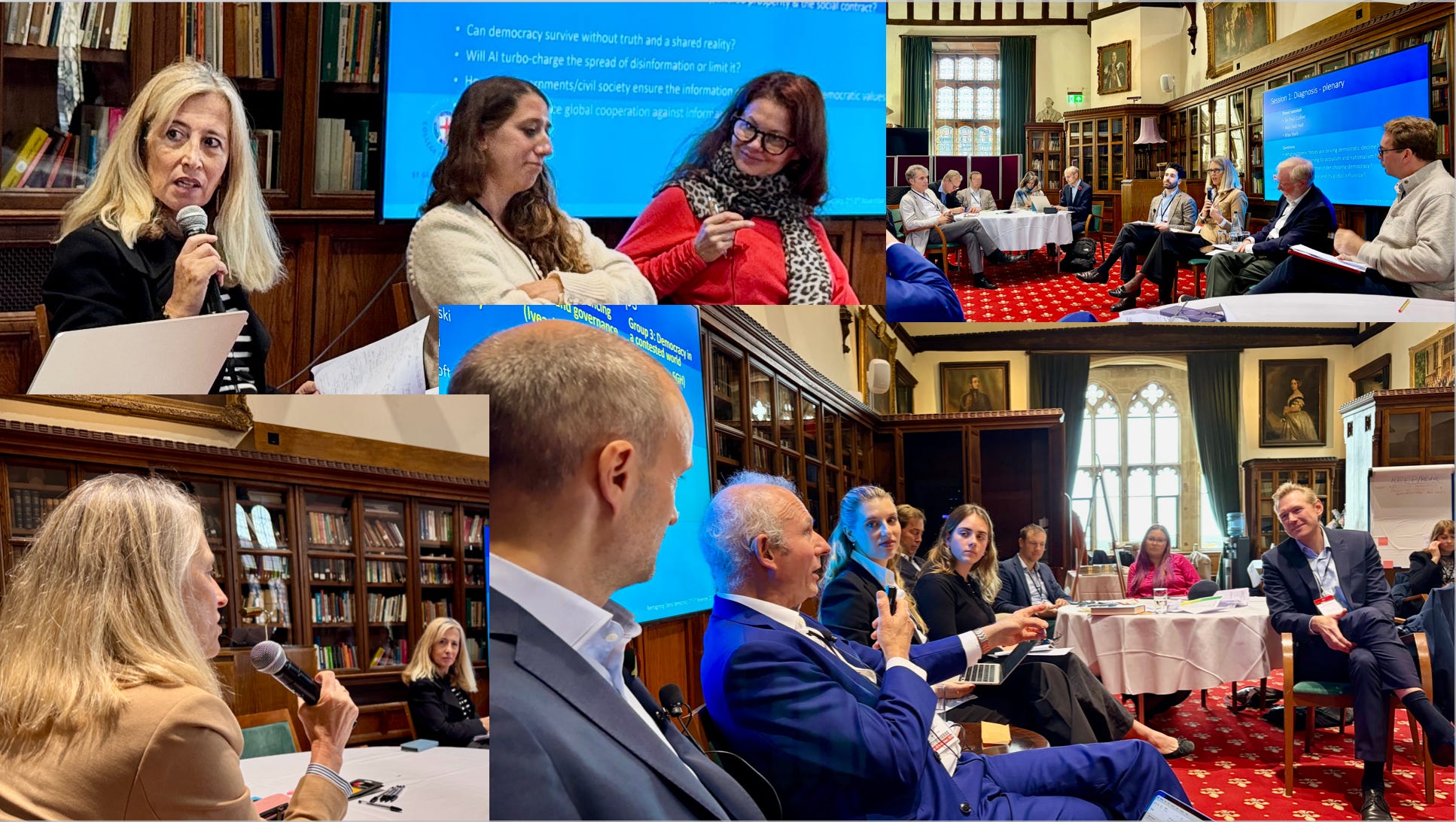
It’s possible that people would have felt more hopeful if the conference had been held 48 hours later, once the good news for more liberal democratic values from the US midterm elections had settled in. But anti-authoritarian movements had already won big in Hungary and Serbia in recent months, and this did little to reduce participants’ sense of alarm about the fate of liberal democracy.
“Germany, France, and Poland are all constantly teetering on the edge of right-wing takeovers. If two or three of them go across the line, that’s the end of the European Union,” said Benjamin Zeeb, whose Alliance 4 Europe defends the EU by training and mobilising Europeans to fight digital disinformation. “I don’t want my two children to grow up under fascism. The problem is, we democrats need to get it right the whole time. The other side only needs one chance, and they’re ready to blow the whole thing up.”
European building blocks
Another striking example of trying to get it right was the work of Anne Zeiter, chief executive and founder of W Social. This rare, all-European, open-source social media platform will go fully live in January 2027.
“When I heard Elon Musk say he wants to destroy the European Union, and claim that his platform X is the number one news source in all EU countries, I thought, I have to do something,” she said. X is not quite as dominant as Musk claims, but her first ambition is to reduce Europe’s digital dependence on the US so that “nobody outside Europe can switch W off.”
Zeiter gave up a big job at eBay, sold her stock, found some fellow investors and started putting W together. (”We chose the name because it’s one letter before X,” she said.) Top EU officials who had been reduced to defending themselves against X’s CEO on X have quickly jumped aboard. Anyone can join, after proving that they are real people.
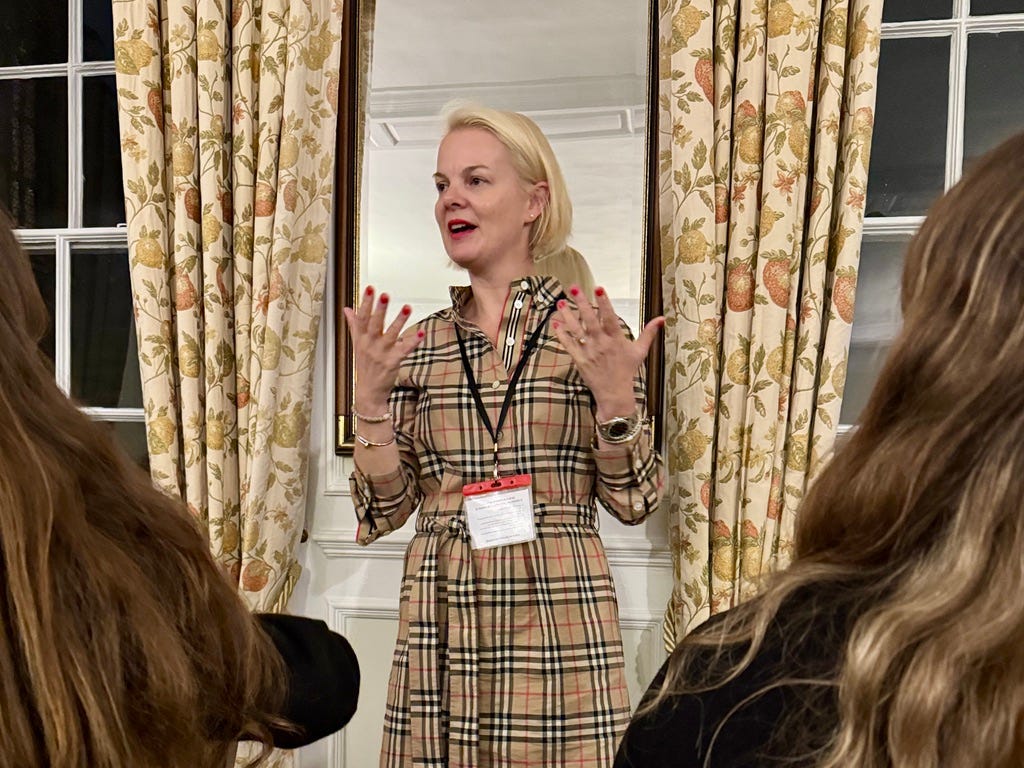
“Remember, X is now about 50% bots,” she said. “Of course we are not yet as slick as the American platforms. We’ve just got 20 people working at W. We have to start somewhere. Give European companies a chance, otherwise they can never grow the user experience.”
Going it alone has needed courage. Zeiter said that as soon as W Social revealed its independent European ambition, she began getting abuse, even death threats. Her house was broken into twice. Hacking attacks on W Social multiplied, “from the US, from Russia, from China, even from Europe,” she said.
A British strategy
The state of Britain worried many participants. Oxford University professor Sir Paul Collier said he thought that British social mobility had gone. Few academics were likely in future to be able to follow a career trajectory like his own, he said, rising from a poor childhood in a steel-making town to a knighthood.
For Collier, Britain’s vote to leave the European Union in 2016 was the result of forty years of government choices to favour London over the rest of the country. For me, even if Collier didn’t put it this way, this was yet more evidence that all the UK’s successive governments were fundamentally unrepresentative of the population.
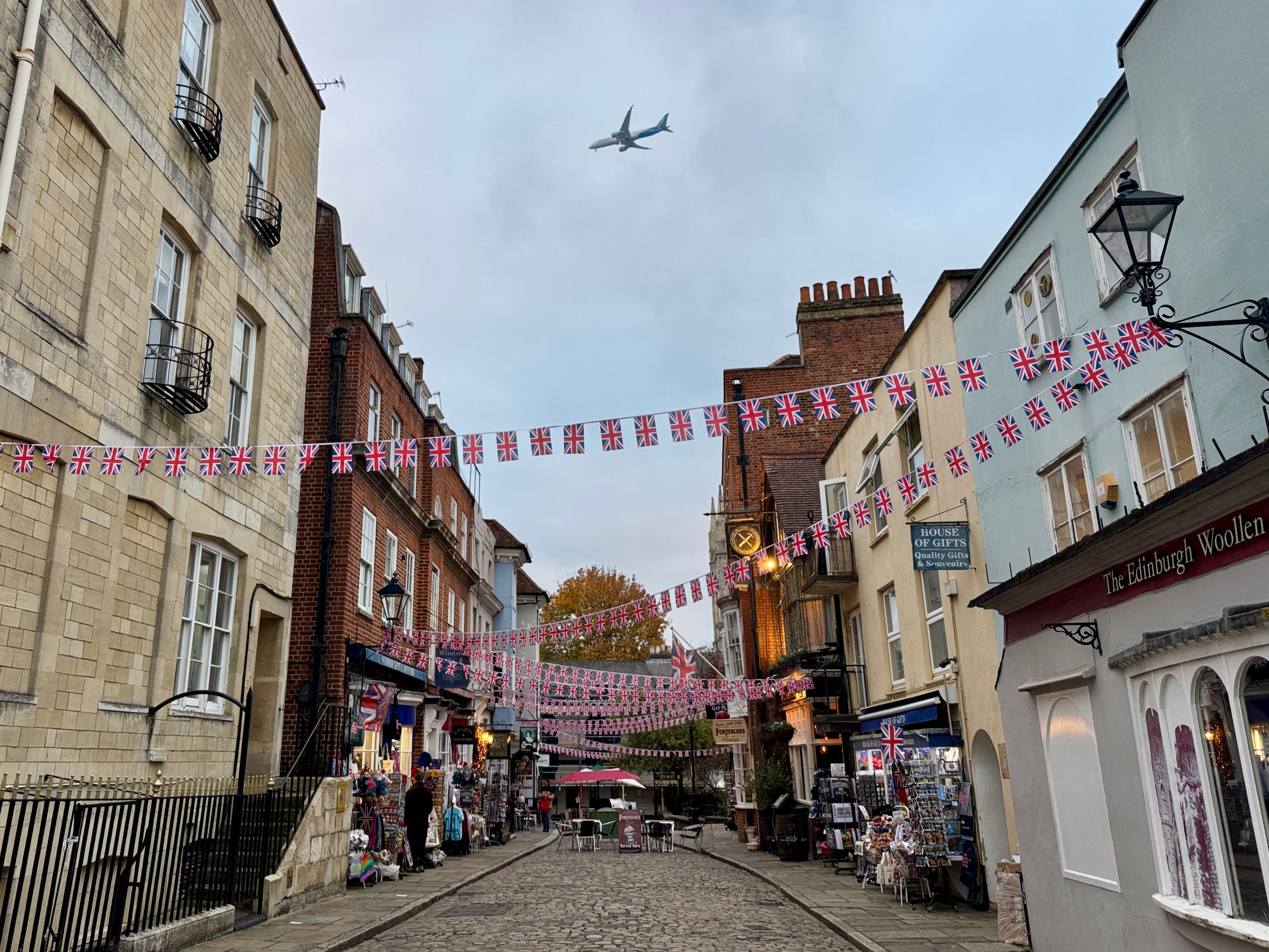
I was surprised, though, how little the future of the Britain-Europe relationship came up as a potential help or hindrance to liberal democracy. Perhaps there was just an assumption that since personal bonds remain strong between the liberal democratic elites of all sides – epitomised by the Windsor group’s easy sense of multinational community – everything was going to turn out ok. The inscription in nearby St George’s Chapel on the tomb of Lieutenant-General Sir John Elley – a veteran British warrior wounded at Waterloo in 1815 – gave a deep echo of this common cause: “He fought for the ancient institutions of Europe, for the happiness, the virtue and the dignity of the human race.”
Two former senior British civil servants offered a more action-oriented response to their country’s difficulties. Catherine Day and Sir Matthew Rycroft founded the independent, non-partisan National Strategy Project in 2025 to help the UK face its long-term challenges, decide what matters most and bring the country’s strengths together to act.
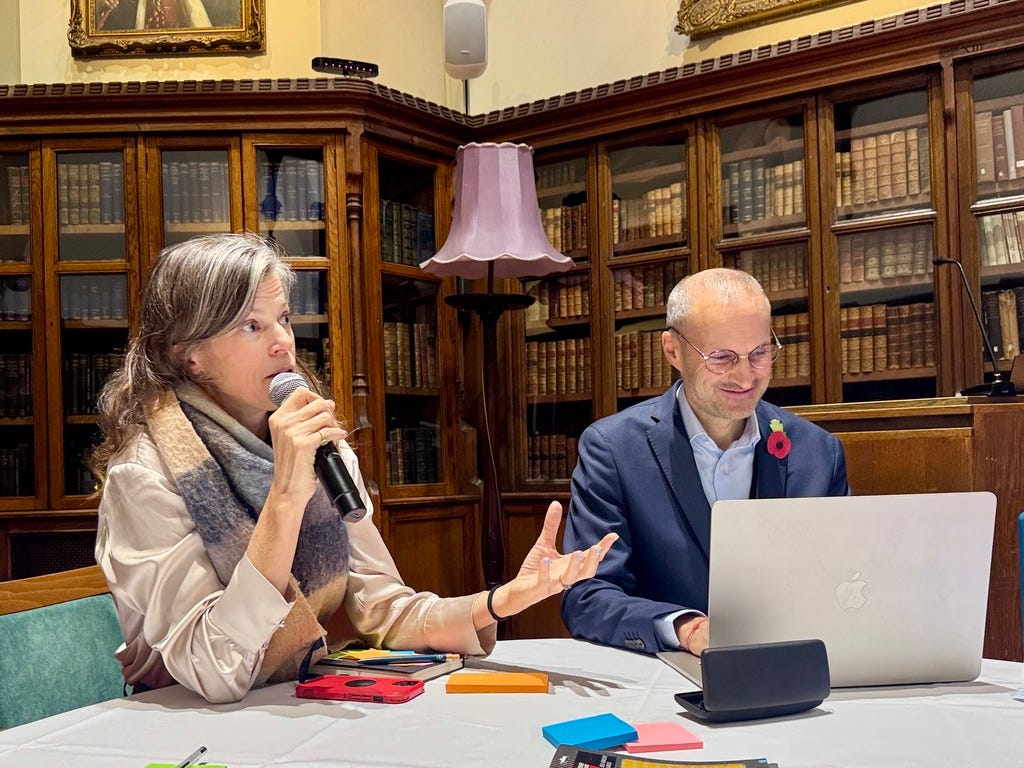
“We ask people in this country to vote on the future without ever giving them a proper opportunity to think about it,” said Day, who leads the non-partisan, all-volunteer group. “We want to give people the time, information and opportunity to weigh the choices we face, help decide what matters most and shape a future in which everyone can thrive.”
On 23-24 January 2027, its first ‘UK in One Room’ will bring together a representative cross-section of the public to deliberate on the country’s long-term choices. They will use Stanford University Professor James Fishkin’s Deliberative Polling method, which explores how representative, randomly selected people’s views develop when they have balanced information, access to experts and time to discuss difficult trade-offs.
The project hopes to involve 50,000 Britons in similar discussions over 2027, and that this informed public judgement on shared goals will generate a National Strategy by early 2028. They said their ambition is to mobilise businesses, institutions and anyone in the country who wants to help achieve this vision. In the future, the founders hope to create an independent, permanent ‘Institute for Our Nation’ to inform a more effective democracy.
Citizens’ assemblies
The National Strategy Project aims to complement the elected government rather than replace it. Similarly, the Deliberative Polling method developed decades ago by Fishkin does not ask its randomly selected citizens for their own policy proposals, but closely tracks the way information changes the way people think about the issues.
Others want to go further. Some proponents of citizens’ assemblies, like me, hope that one day these will actually set policy and make key appointments, adapting to today’s world the principles of the extraordinarily successful democracy of ancient Athens. I heard little in Windsor that challenged my growing enthusiasm for potential of the citizens’ assembly technique, even if testing, evolution, and adaptation may take many more decades.
It was striking, though, to see how deep the consensus was among all participants that the current “liberal democracy” was broken. Nobody objected when one participant quoted former European Commission President Jean-Claude Junker’s summary in 2007 of the dead-end paradox that traps all elected politicians: “”We all know what to do, but we don’t know how to get re-elected once we have done it.”
Yet few participants put new constitutional alternatives on the table. More often, they voiced a desire for better enforcement of freedom of speech and existing laws, especially to regulate the power of our new era of billionaire digital “robber barons”. The UK parliament, one pointed out, only managed to produce its first regulation of social media in 2024, two decades after the first platforms became popular and soon politically influential.
Loyalty to the electoral system predominated, occasionally stoutly defended as the only realistic way of choosing lawmakers. There was not much talk of adjusting the UK’s electoral system with proportional representation. Cities were praised for their more practical, effective, and less ideological versions of elected government, but there was little time to explore this further. Nobody advocated for any other possible approaches like authoritarianism, anarchism, communism, or some new dispensation for political parties.
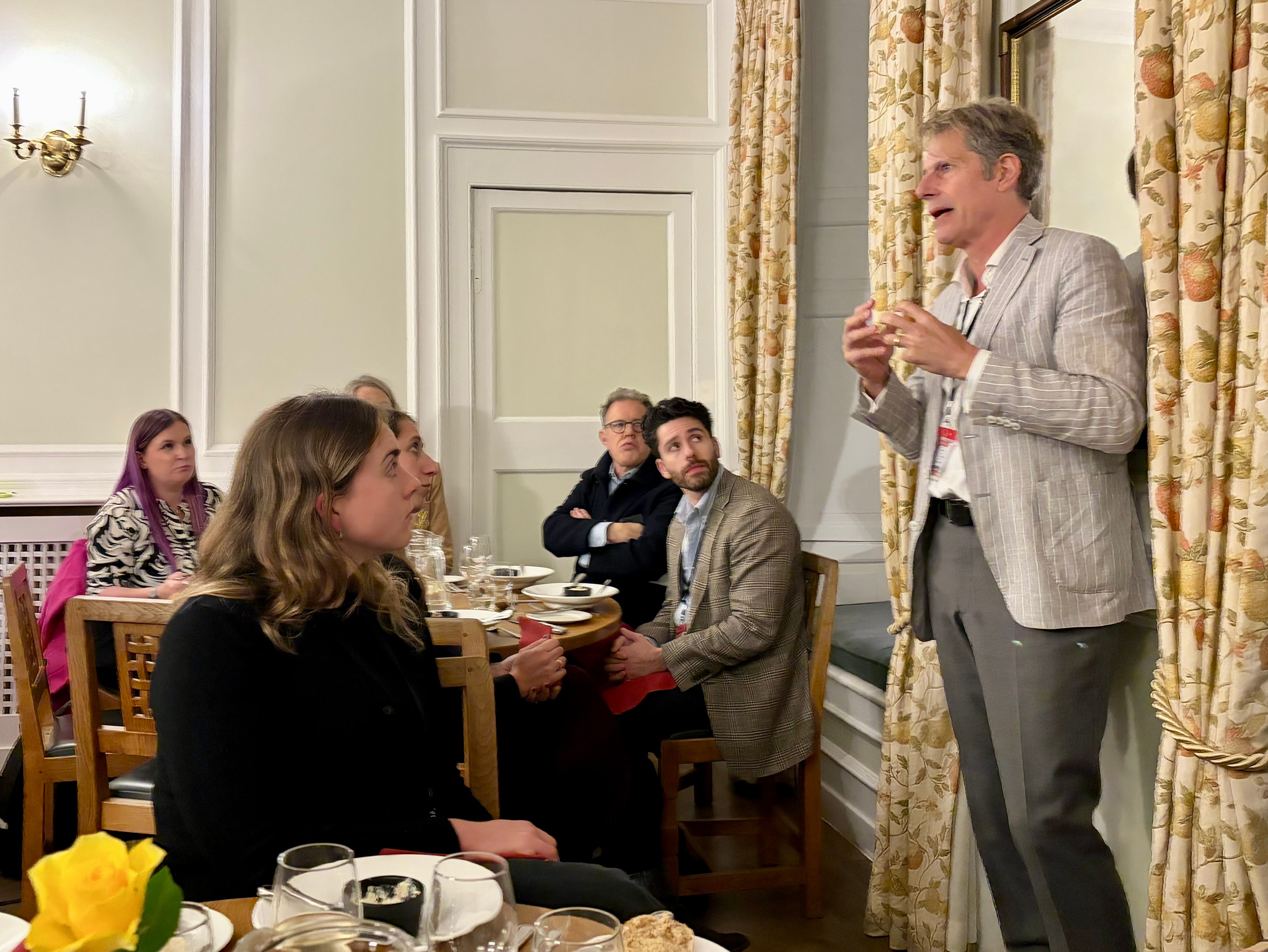
So I was delighted to be given 10 minutes over dinner to describe what it felt like to attend a citizens’ assembly. I chose France’s Citizens’ Convention on the End of Life in 2022-23.
I told how the 185 citizens, diffident at first, rose to the occasion; how all but one (who had to leave for a new job) stayed for the whole nine weekends over 3-½ months; I described their joy in being heard, their joy in learning, and their joy in doing their civic duty; explained how well they learned to judge the 60 experts who briefed them – doctors, health officials, palliative care nurses, clerics, philosophers; and how this inclusive technique meant that 92% of the citizens voted to support a final report recommending assisted suicide be legal, even though only 76% actually agreed with people being allowed to take their own lives.
In August 2026, France’s parliament at last wrote assisted suicide into French law. For sure, the citizens’ assembly had a role in paving the way to change.
I had another chance to weigh in after a politician listed what was putting ordinary people off from joining his profession: the swirl of corruption, the physical threats, and the extraordinary stress. But he could not imagine that a citizens’ assembly could handle difficult tasks, like, say, discussing a budget, or that it could ever be held accountable for its actions.
On the contrary, I said. France this month convened a new citizens’ assembly to tackle the country’s budgetary priorities. A leading Columbia University economics professor, Glenn Hubbard, recently recommended that the US do the same to avoid a Social Security train wreck. European municipalities and regions have already taken this route. Citizens are quite capable of informing themselves, I continued, and of course would be given access to the same law-writing experts as an elected parliament.
As for accountability, I went on, ordinary people have long been seen as capable of taking life-and-death decisions. Almost nobody questions the legitimacy of the innocent or guilty judgements in courts of law by a randomly selected jury of citizens, even in cases of capital punishment.
Getting into my stride, I pointed out that citizens’ assemblies also solved the problems in elected leaders’ lives that the politician had complained about: serving briefly for a specific purpose, assemblies do not have to deal with the same poly-crisis stress as a time-starved politician; random selection and short service minimise the chance of corruption; and, as shown by Mexico’s success with choosing election monitors by lot, the technique also reduces vulnerability to threats.
The arc of history
Will the inhabitants of countries that see themselves as liberal democracies really seize new ways forward to greater independence and bottom-up consensus? Can Europe’s old, deeply indebted states take the initiative, the default expectation of too many of its people? And if states won’t shoulder the initiative or the financial burden, who will do it or pay for it?
For all the talk, we had few clear answers to these questions in Windsor. An overall report is planned and I’ll post it here when it’s ready. But it was encouraging to spend time with others who are already trying to build a new future.
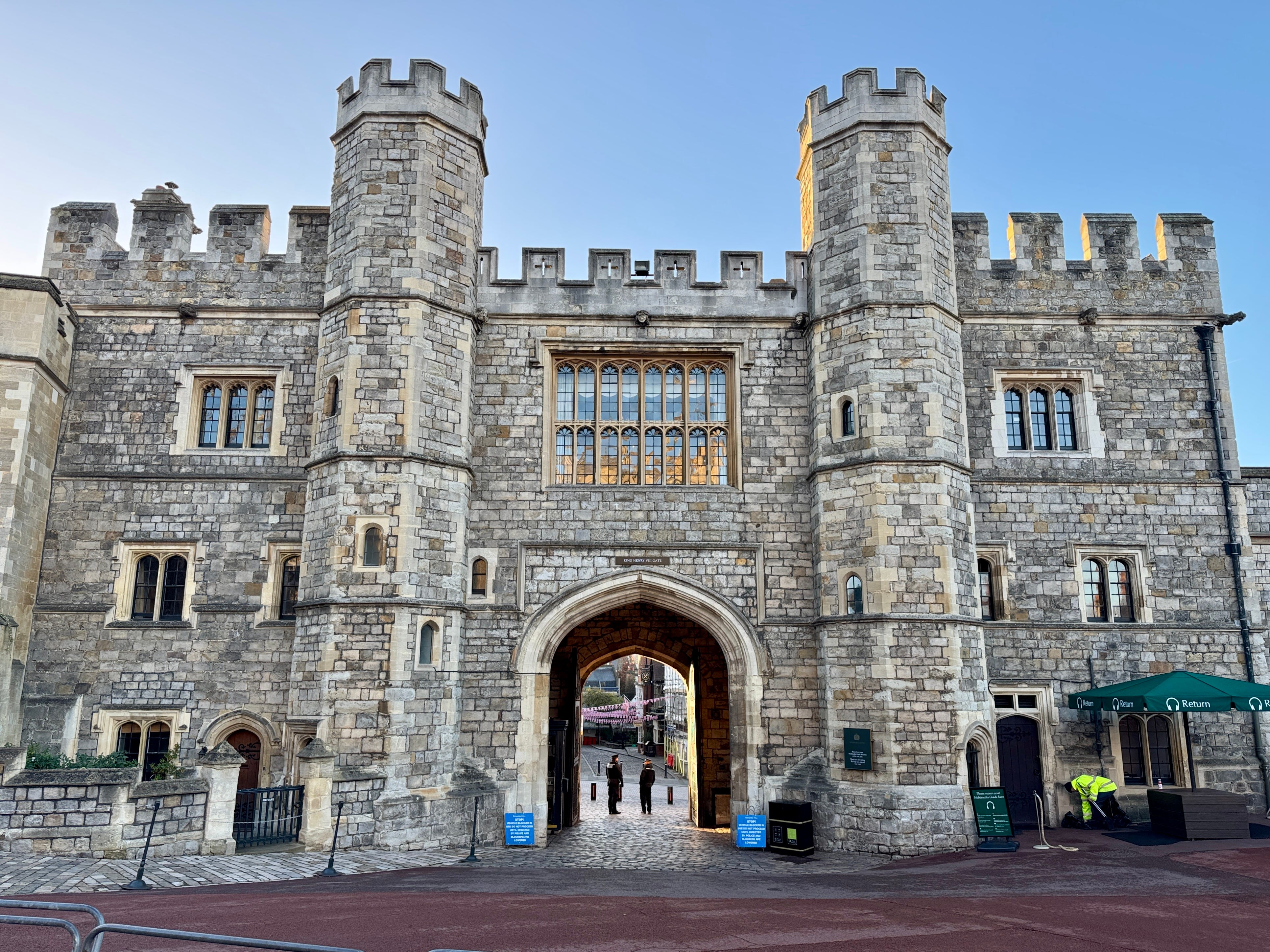
After all, there has been a steady, if fitful, redistribution of power to more and more people in the 811 years since King John rode out of Windsor Castle gate on his way to seal the Magna Carta with those rebellious barons waiting for him four miles (six kilometres) to the south at Runnymede.
Change rarely happens quickly. Those knights soon had to share their new privileges with more high-born aristocrats. The Glorious Revolution of 1688 brought an assertion of the aristocratic parliament’s ascendancy over the monarch. In 1832’s Reform Act, the high bourgeoisie got the vote and its foot in the decision-making door. By 1860, about 5% of the British population had the vote, and by the late 19th century non-aristocrats began to be more powerful than land-owners in parliament’s lower chamber, the House of Commons. In 1911, the aristocrats’ upper chamber, the House of Lords, lost their right to veto any parliamentary bill.
It is sobering to consider that it took the disaster of the 1914-18 First World War to break the aristocrats’ domination of British government and ministerial positions – and for British women to get the right to vote. But those changes eventually happened.
As my late father Maurice Pope puts it in his posthumous book The Keys to Democracy: Sortition as a Model for Citizen Power: “Who in 1860, when Britain’s Chartist movement for working-class political rights had apparently died away completely, would have prophesied that its main demand, for universal adult suffrage, would be met in full within a lifetime?”
By the 1920s, universal suffrage arrived in a handful of European countries. After 1945, the number of those countries started rising, getting another push after many saw the Soviet Union’s collapse in 1989-91 as the victory of their electoral-capitalist system known as liberal democracy. But that dynamic has long dissipated, not least with the rise of elected autocrats. As Freedom House pointed out in 2026, “military coups, violence against peaceful protesters, and efforts to weaken constitutional safeguards in 2025 drove the 20th consecutive year of decline in global freedom.”
Is there a chance that we can adapt the democratic rules, move away from elections and transition to a democratic, representative new system like citizens’ assemblies over the next several decades? After all, the arc of history that started with the Magna Carta seems to have bent largely and slowly towards greater participation and liberal democratic values.
But there have been plenty of hiccups along the way, some of them very bloody. The authoritarian camp favouring top-down government, after all, makes the same analysis as a democrat like me of an electoral system in irreversible decline. Both sides are frustrated with our failure to peacefully reinvent our dysfunctional system of government. Only time will tell whether we find a way to solve this problem without more crises and even wars.
I hope you enjoyed this article. Subscription is free, with an option to give lasting support to my work. If you’d like to show one-off appreciation for the occasional article here, please try the ‘Buy me a coffee’ button above.


Leave a Reply