As an advocate for new ways of doing democracy, the first stage of winning over an audience in a conversation about political reform is becoming easier. More and more people quickly agree that elected politicians are not solving today’s problems. Poll after poll shows that they are fed up with political parties, and even with the way elections are run.
It is harder, however, to persuade people to go to the next level and to support alternatives to voting for representatives, for instance the idea that randomly selected assemblies should replace today’s parliaments, politicians and their political parties. Few people have even heard of the argument that elections themselves are at least a part of the problem.
That’s why I was delighted to stumble across a more or less forgotten episode in which sortition played a key role in digging the city of Brussels out of a deep financial and political hole back in mediaeval times.
I first wrote about this happy discovery here and on Substack and was then commissioned to do a more developed version for The Journal of Sortition here (paywall). This blog was first posted on Sortition Agora, the discussion forum of the Journal of Sortition,
A mediaeval superpower
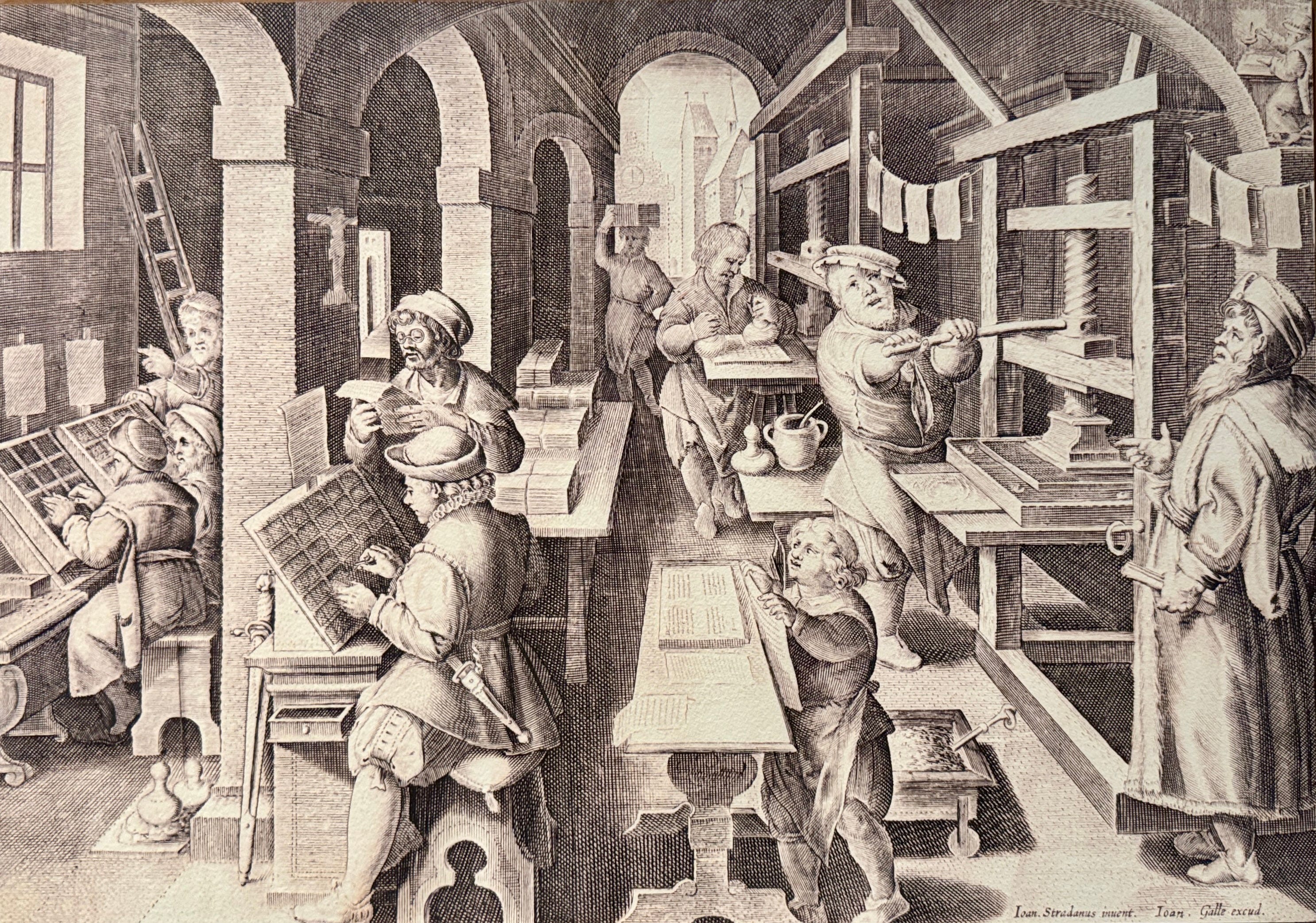
There’s a tendency to dismiss Belgium today, or indeed to doubt there is much to learn from the Middle Ages. But what was the Holy Roman Empire’s Duchy of Brabant was wealthy, successful and a cultural superpower. At its peak in the sixteenth century, the port city of Antwerp alone was the richest city in Europe and handled 40% of global trade. It was home to Plantin, then the world’s biggest book publisher, as well as painters like Rubens and Bruegel. So it’s worth taking note of what people in these parts were up to in the late 14th century.
In the latest edition of the Journal of Sortition, I’ve laid out how and why one of the Duchy of Brabant’s leading cities decided to use random selection to find new leadership to get out of their political and economic dead end. (”Sortition Helped Brussels Out of a Mediaeval Crisis (And Could Do So Again)”.
The burghers of Brussels wanted to break the back of corruption and nepotism in the city’s ruling class by introducing sortition – or possibly re-introduce it, since it seems the ancient Athenian practice had been used a couple of hundred years before as well – but they accepted that, as in Athens and many mediaeval European cities, it would be in a limited way.
Indeed, the mechanism is not one that theorists in the movement for deliberative democracy would normally consider today. The city elite accepted that final choices would be made by the overall sovereign power, the Duke of Brabant, representative of the Hapsburg dynasty’s Holy Roman Empire. Day-to-day power would remain within the seven “lineage” patrician families, whose membership was defined by birth. It fixed their problem.
The example of Venice
The innovative use of sortition in Brussels was along the intra-elite lines that helped keep corrupt practices out of the selection of leaders in the long-lived Republic of Venice and other mediaeval European cities. Venice’s success was also attributed to the way its constitution laid out the rotation of office, the rule of law and equality of electors, even if those electors were a closed class of Venetians. It remained a source of ideas for good government long after its conquest by France’s revolutionary armies in the 1790s.
But while many elements of the admired Venetian constitution went on to become norms for more democratic governance, the key element of sortition did not. My late father Maurice Pope wondered why the use of random selection fell to one side in his book The Keys to Democracy: Sortition as a Model for Citizen Power (Imprint Academic, 2023). After all, he said, the reason could not have been opposition from nineteenth-century monarchies, theocrats or philosophers, since these were demonstrably no longer all-powerful or united in their thinking. He wrote:
“The best answer may be that equal suffrage, secret voting and rotation of office were considered enough to guarantee a democratic government. A Renaissance political thinker might concede … that people will naturally vote for their friends rather than on pure merit and even that they will still do so if their vote is secret. But he was hardly to guess that they would vote willingly and en masse for their masters. Political parties have managed to get them to do so, but political parties did not then exist. Their growth may have been inevitable, as [other philosophers] have convincingly argued with the benefit of hindsight, but this is not to say that it could have been foreseen at the time.” [pp. 95-96]
Now that political parties, and the politicians who must inhabit them, have so publicly run their ships of state aground, the time has come to revive the memory of and lessons from some of the antique and mediaeval successes of sortition in places like Venice and Brussels.
Patrician parties
Reading of Brussels’ seven patrician lineages made me think of Switzerland. As with elsewhere in Europe, use of sortition in several cantons there to break corruption and nepotism died out in the 19th century as the more ‘rational’ elections became fashionable. A strong sense of public participation survives in the wide use of referendums, of course. But Swiss political parties have now become like Brussels’ aristocratic lineages, allotting the seven Cabinet posts between them according to a strict ‘magic formula’ that only changes when voter support has really proven to have changed.
This collegial approach has made Switzerland a country with an advanced and original style of democratic government and one of the lowest national debt to GDP ratios in Europe. But the country could safely mandate the introduction of an element of mediaeval-style sortition into the selection of these parties’ ministers, either while identifying candidates or while choosing between them. The evidence from the past suggests that even such an incremental step would make corruption harder and decrease the incidence of back-room deals and regional or leadership block voting.
Sortition as a useful tool
Like others, I love one of the other mechanisms based on sortition, the idea of policymaking by citizens’ assemblies. And it is exciting that today, Belgium is home to multiple experiments using this and other ways to show how useful sortition can be to improve governance.
As I mention in the JoS article, there is currently a campaign to replace the Belgian Senate with a two-layer system of citizens’ assemblies. In the six months since April 2026, it had by mid-October won nearly 15,000 signatures of the 25,000 it will need to get formal consideration by parliament. Belgium’s German-speaking community in Ostbelgien has had a similar two-layer citizens’ assembly operating successfully since 2019.
In other innovations, Brussels’ francophone parliament has for years brought in randomly-selected members of the community into the committee stage of its law-making process. And a Belgium coalition of non-government organisations convened a randomly selected 2023 citizens’ panel to tackle the perennial problem of political party financing. Politicians and parties have resisted the group’s recommendations, but the panel won a wide new audience for the issue.
Another original idea popped up recently from the Brussels municipality of Auderghem, which announced in October that a 33-person Citizens’ Evaluation Council will be randomly selected each year from a list of volunteers (and stratified to fit the population’s overall profile). The citizens will independently report publicly on the commune’s actions, testing them against its long-term strategy, the councillors’ personal report and a poll of public satisfaction. Again, not perfect sortition, but as the municipality noted, a global first.
Uses for sortition are spreading into communities. When my daughter Vanessa joined a Brussels commune for the sale of more natural vegetables recently, she reported that the group had got over people’s reluctance to turn out for annual general meetings by randomly selecting a minimum quorum of people who would be especially encouraged to attend.
There is participatory budgeting, too, where randomly selected citizens have a say in a portion of a community budget. A few years ago my wife Jessica was chosen by lot to be on a panel that judges projects to improve our sub-municipal neighbourhood in Brussels today. It’s not just participating in the decisions that satisfies her about their three-monthly meetings, but the bonds she has formed with many people she would otherwise never meet.
None of this would have been happening even a decade ago. Conversation by conversation, example by example, sortition is making headway. Change is afoot, and it always helps to know that it isn’t for the first time.


Leave a Reply