The city successfully used random selection to solve a mediaeval crisis – and could do so again
Sortition – the random selection of groups of people to study, deliberate and decide on a disputed topic – struggles to be seen as a credible option for making policy. Quite often, people haven’t even heard of the word, let alone of the fact that using the lot has had considerable success in the past.
So I was delighted when I came across an account of a 14th century experiment in Brussels that helps rebuild our lost understanding that choosing decision-makers by lottery is a possible, legitimate, time-honored system of democratic government.
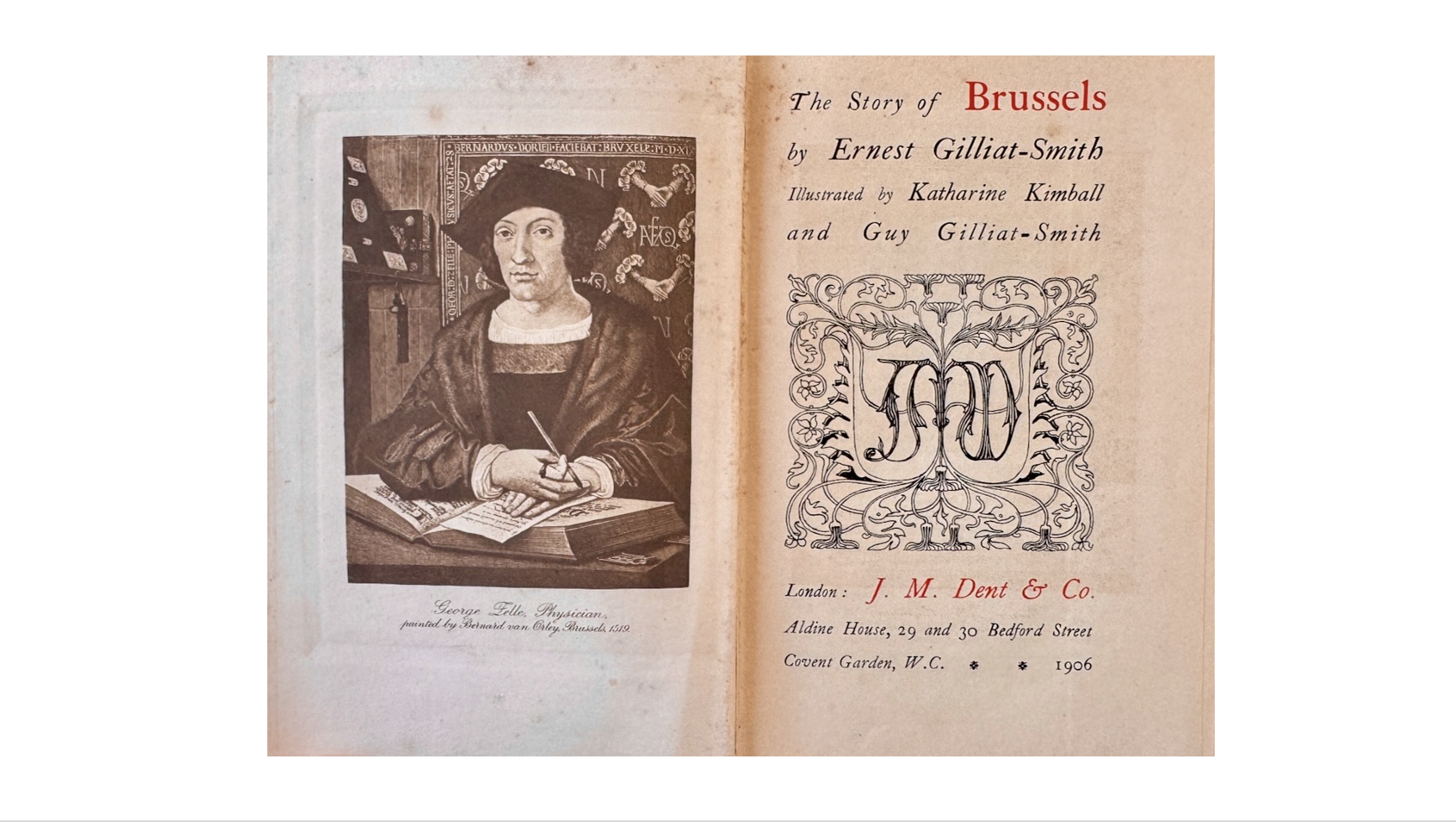
I discovered the episode while reading “The Story of Brussels”, a 1906 history of mediaeval Brussels that I’d randomly selected from my late father Maurice Pope’s library. In 1375, it said, the city’s rulers introduced choosing lottery-style ballots from an urn as a key part of the system to choose the council that governed the town.
At first glance, the story may seem like an obscure footnote in Brussels’ history. What makes it significant is that it emerged during a period when the city was struggling with ruinous debts, pointless political in-fighting and declining confidence in those who governed it. Just like today, in other words.
After years of such tensions and facing growing popular unrest, author Ernest Gilliat-Smith – a Briton then long-resident in Belgium – writes that more and more patricians began to see the need for the radical new system. This included using sortition to make a blind break with nepotism and corruption. And this remedy was a success.
The seven lineages of Brussels
At that time, Brussels and much of the central part of Belgium today was in the Duchy of Brabant, itself part of the Holy Roman Empire. The city’s government was in the hands of the amman, or Duke’s representative, and seven patricians who each represented one of the seven great “lineage” families of the city. The seven acted as both the executive and the judiciary, performing the duties of both aldermen and magistrates.
For a century or more, these seven patricians had nominated their own successors each year; prior to that, they had been appointed by the duke. In the 1100s, a more democratic system had been in place, including “jurors” from the populace and perhaps elements of sortition. But I will limit myself to passing on what is clear to me about the 14th century episode from Gilliat-Smith’s The Story of Brussels, as well as a 1932 book by the eminent Belgian historian, Félicien Favresse, L’avènement du régime démocratique à Bruxelles pendant le moyen age (1306-1423).
First, the background. By the mid-14th century, Brussels had run up great debts because of interminable wars, big building projects like the new city walls (that ran where the inner ring road now goes) and the need to finance the duke’s court. The city (thanks to its patrician government) owed a mountain of debt to its lenders (who, surprise, surprise, were also the patricians).
To service the interest on these debts, the patricians forced the population to pay heavy taxes, especially on basic needs, like grain, beer and wine. But the principal amount owed just kept ballooning and the situation looked increasingly unsustainable.
Public anger at all this self-dealing was building. By the 1360s, more and more patricians realised they were heading into danger. In 1368, in consultation with other classes, the government first appointed a commission of four patricians and four plebeians to look into abuses of hated “coercion laws”, which allowed the elite to bypass any checks and balances and impose taxes, seize property and bind people to specific trades.
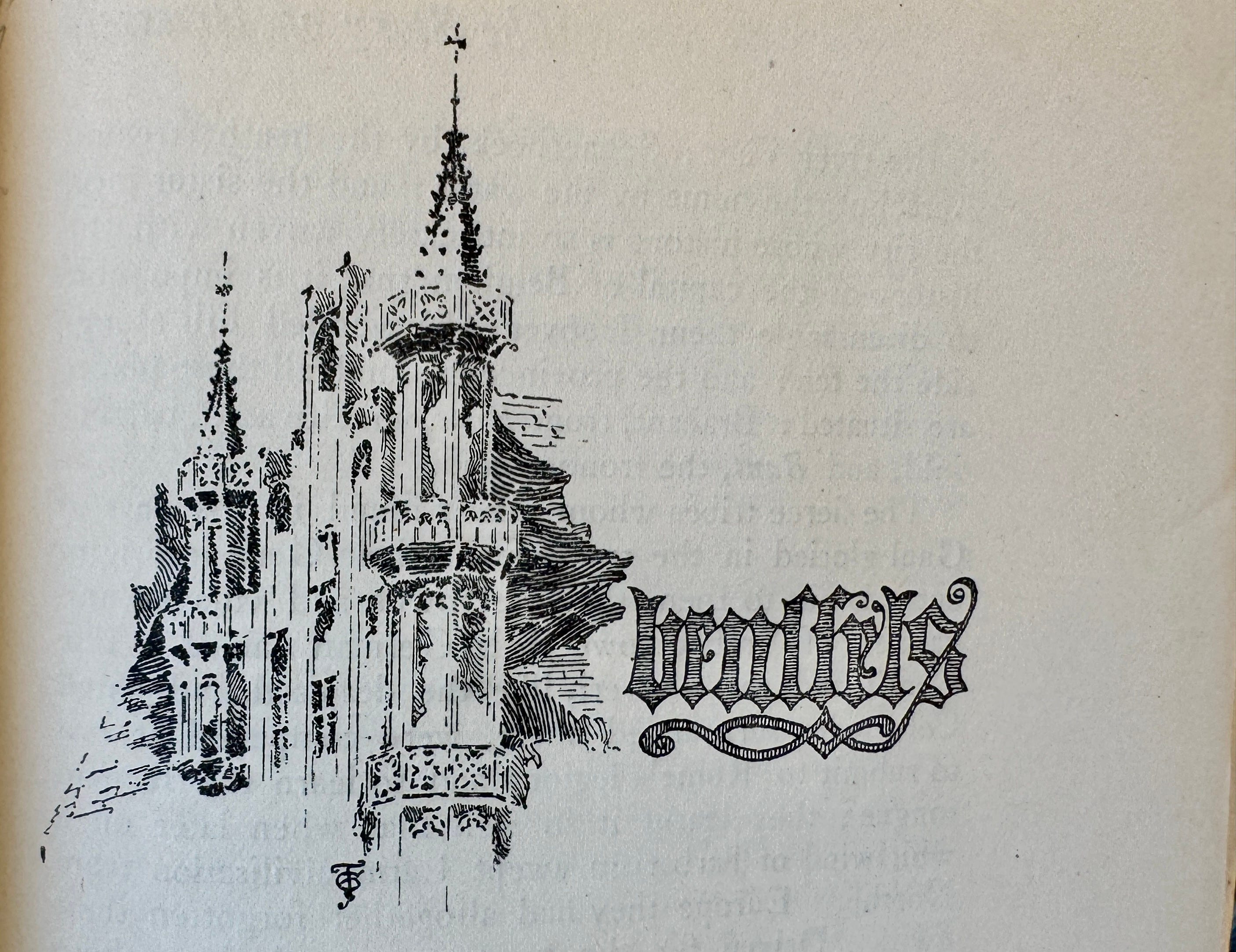
The city finances immediately began to improve, Gilliat-Smith says. “The patricians were wise enough to consult the people, representatives of the trade companies took part in their deliberations, and somehow or other between them they managed to set the affairs of the town on a sound financial basis – the following year revenue covered expenditure and the interest of the debt, the year after that they began to pay off the principal.”
Introducing the lot
Financial reform alone was not enough. The question remained how to prevent the same abuses of the political system from recurring.
In 1375, the city introduced a new system to choose the seven patrician members of its government. This government council would still be chosen from among the seven lineages, but with a strict new methodology to combat nepotism and corruption.
The pool of people in these lineages was not a particularly large minority, as in other early European variants of sortition-based decision-making. From about 30,000 people living in Brussels in 1375, only about 300 families belonged to the seven lineages. Of these, the only eligible candidates were men over the age of 28 who were married and could live without exercising any trade or profession.
These eligible members of the seven lineages would all meet once a year at a hall on the Grand Place in the centre of town. The aim was that each lineage should choose three candidates for alderman. Gilliat-Smith describes the drawing of the lots in each lineage as follows:
“A number of waxen balls, equal to the number of clansmen present, all without alike, but of which four contained within a white and one a black cipher, were placed in an urn, and, when they had been well shuffled, each member drew therefrom one of them, and presently, when the drawing was over, broke it. Whereupon the four men to whom the white-marked balls had fallen withdrew to a separate apartment to consider who was the most fitting man to represent their lineage, each man being free to propose what name he would, provided it was not his own.”
If the four white-ball holders could not find a majority choice, the fifth man who drew the black-marked ball used his vote to break the tie. The whole process was then repeated two more times. The Duke of Brabant would then choose one of the three candidates from each lineage to serve for the next year.
“Thanks to this important measure, and to the other reforms which had been previously inaugurated, the city was now honestly and capably governed, and, in consequence, enjoyed peace. Indeed, for more than fifty years after 1368 – the time of the great reconciliation – patricians and plebeians seem to have lived, if not on terms of affection, at all events without quarrelling. The latter, it is true, had not relinquished their high aspirations, but finding that the town was honestly administered, and, on the whole, equitably governed, they were wise enough to cherish their ideal in their innermost bosoms, and to take no active steps to realise it.”
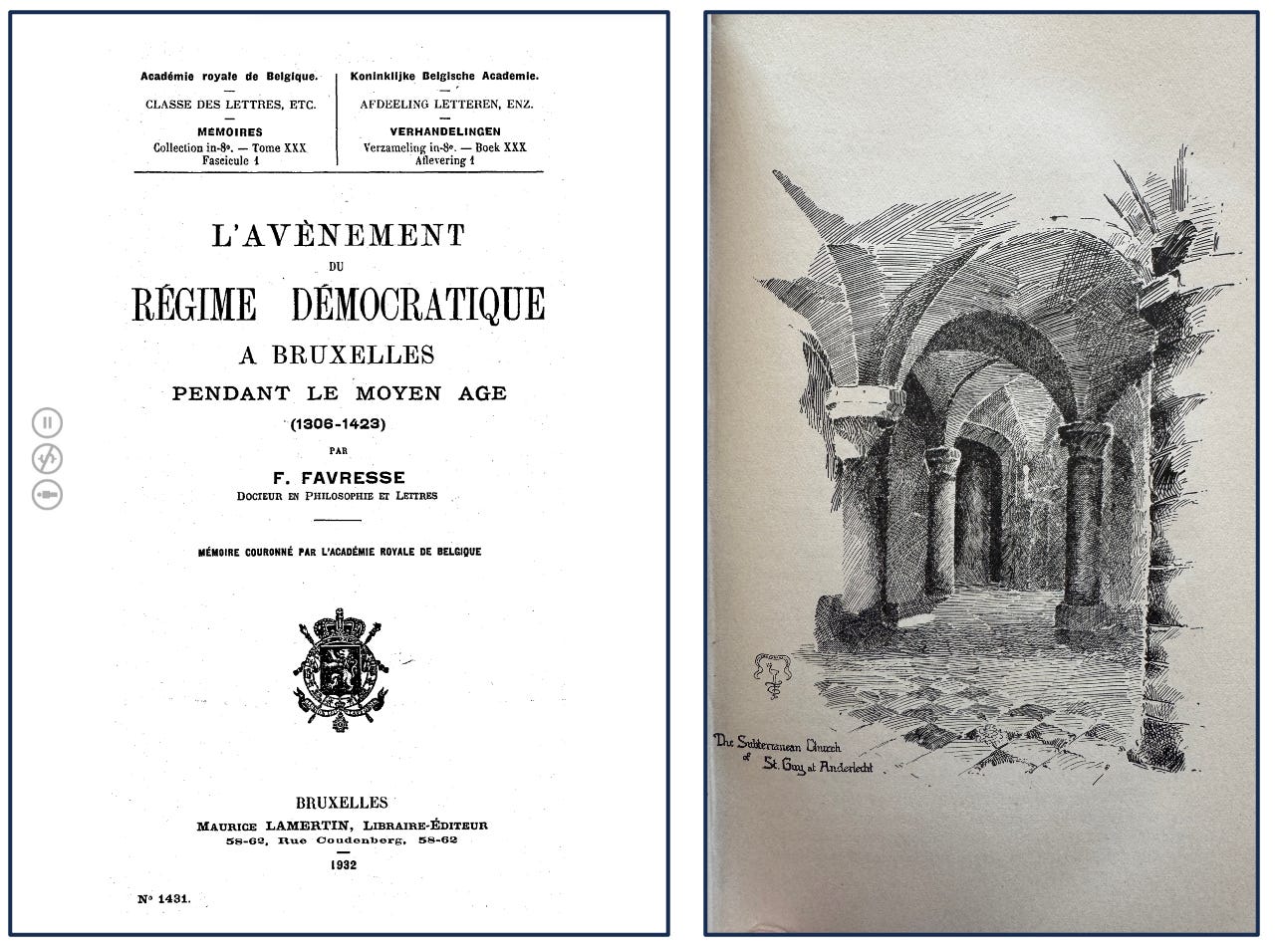
Favresse, the early 20th century Belgian historian, points out that “bitter intrigues” now concentrated on which of the three candidates for alderman would be chosen by the now empowered Duke. But, he said, “the authors of the statute of 1375 not only destroyed the influence of the [patrician] aldermen, but also sought to ensure that no other influence could, in this instance, become excessive … it was not an absolute triumph, but it was progress, significant progress … [the reform] expressed a very praiseworthy and sincere concern to purify the political atmosphere in Brussels.”
By 1386, Gilliat-Smith says, Brussels had paid off its debts entirely. In 1421, after another uprising, the city took another democratising step. The city’s 49 craft guilds, grouped into nine “nations”, won a constitutional say in the government of the city alongside the seven patrician aldermen. Candidates to become the representatives of the nine “nations” were also chosen like the patricians, by a sub-group of guild members randomly selected by lot.
“How great had been the evil resulting from the old method of election may be inferred from the stringency of the new rules,” Gilliat-Smit concludes, citing their solemn new vow that “by the Saints and the Holy Gospels that I am in no way bound or pledged to any man” and that “[I will select] the wisest and in every respect the fittest man … consulting only my own conscience.”
Athens, Venice, Florence … Brussels
Although information about the 1375 decision to bring sortition to Brussels is findable online, it is not widely known or discussed. The Brussels story doesn’t make it into Yves Sintomer’s The Government of Chance, the most complete survey of the history of sortition-based systems, or my late father’s own book on sortition, The Keys to Democracy.
The mediaeval burghers of Brussels did not invent sortition, of course. Ancient Athens was first. Although participation was limited to adult male citizens (that is, excluding women, foreigners or slaves), Athenians believed the liberties of their political system enabled their golden age achievements in philosophy, science, drama and much else. For two centuries until the conquest of Athens by Philip of Macedon in 338 BC, their main agenda-setting body was 500 citizens randomly chosen for a year, backed for major decisions by all male citizens in a regularly convened assembly.
Apart from Athens, about half of the thousand or so ancient Greek city states used similar sortition-based democracy at times. In another of the world’s most successful governments, that of the Most Serene Republic of Venice, the lot also played a key role in how thousands of elite citizens chose the most representative next doge or leader-for-life. This helped it last from 697 to 1796, or about 1,100 years. Florence also used the system for a time, as did other European cities.
“During the Middle Ages … in Early Modern Spain, Switzerland, and other European countries … sortition was widespread and took many different guises, though it was always combined with elections and co-option,” Yves Sintomer writes. “It was above all a means to channel the competition for power and resources among groups and especially among the elite.”
Academics debate exactly why sortition went out of fashion in government during the 18th century renaissance, even as randomly selected court juries became a respected pillar of strength in English-speaking societies. Some say elections usurped sortition’s place because voting was seen as better reflecting renaissance rationalism. Others cite Aristotle’s view that dominant elites find that elections best reflect their oligarchical interests.
Belgium as a pioneer of sortition
Seen in this wider context, Brussels in 1375 made use of a broad democratic tradition that included sortition. More than six centuries later, Brussels once again faces a situation in which random selection might strengthen democratic legitimacy.
The city of 1.3 million people – which is also one of Belgium’s three federal regions – is being crushed by a €16 billion debt (not to mention Belgium’s €692 billion national debt). As in mediaeval times, a major reason is badly thought-through infrastructure projects that are expensive and attract corruption. One, the M3 metro line, is stuck less than half way and may never be finished.
At the same time, the city-region’s tax base is hollowed out because its most valuable workers tend to live and pay taxes in neighbouring suburban areas in Flanders and Wallonia. Now, as in the 14th century, a huge challenge will be how any authority can persuade ordinary people they are fairly sharing in the sacrifices that will have to be made to pay off the debt.
On top of that, the existing electoral system has made Belgium a byword for dysfunction. Few understand where the responsibilities of national government, the three regional governments, and the nineteen Brussels communes begin or end. They often duplicate each other’s work and contribute to a bloated bureaucracy.
Then there is the continuing hangover from what Belgians call waffle-iron politics (for the two identical sides of the grill that makes Belgium’s most famous pastry): before 1988, if Dutch-speaking Flanders got money for something, then French-speaking Wallonia had to get the same too, and vice versa, even if it was to build a bridge to nowhere. The continued psychological domination of the old Flemish-Walloon divide seems completely outdated in today’s Brussels, where nearly half the population was born outside Belgium and only 22% has a fully Belgian background.
Today’s city rulers also sometimes seem to live in the same detached bubble as the patricians of the 14th century. Nepotism is rife thanks a plethora of political parties who stand in the way of any reform, yet at the same time happily appoint yet more loyalists to expensive positions. Infighting between parties is so egotistical that the city went without a government for a record-breaking 615 days after the most recent elections to February 2026.
Perhaps because of their experience with the long-standing dysfunction of electoral politics, Brussels residents and Belgians are once again at the forefront of modern experiments with sortition.
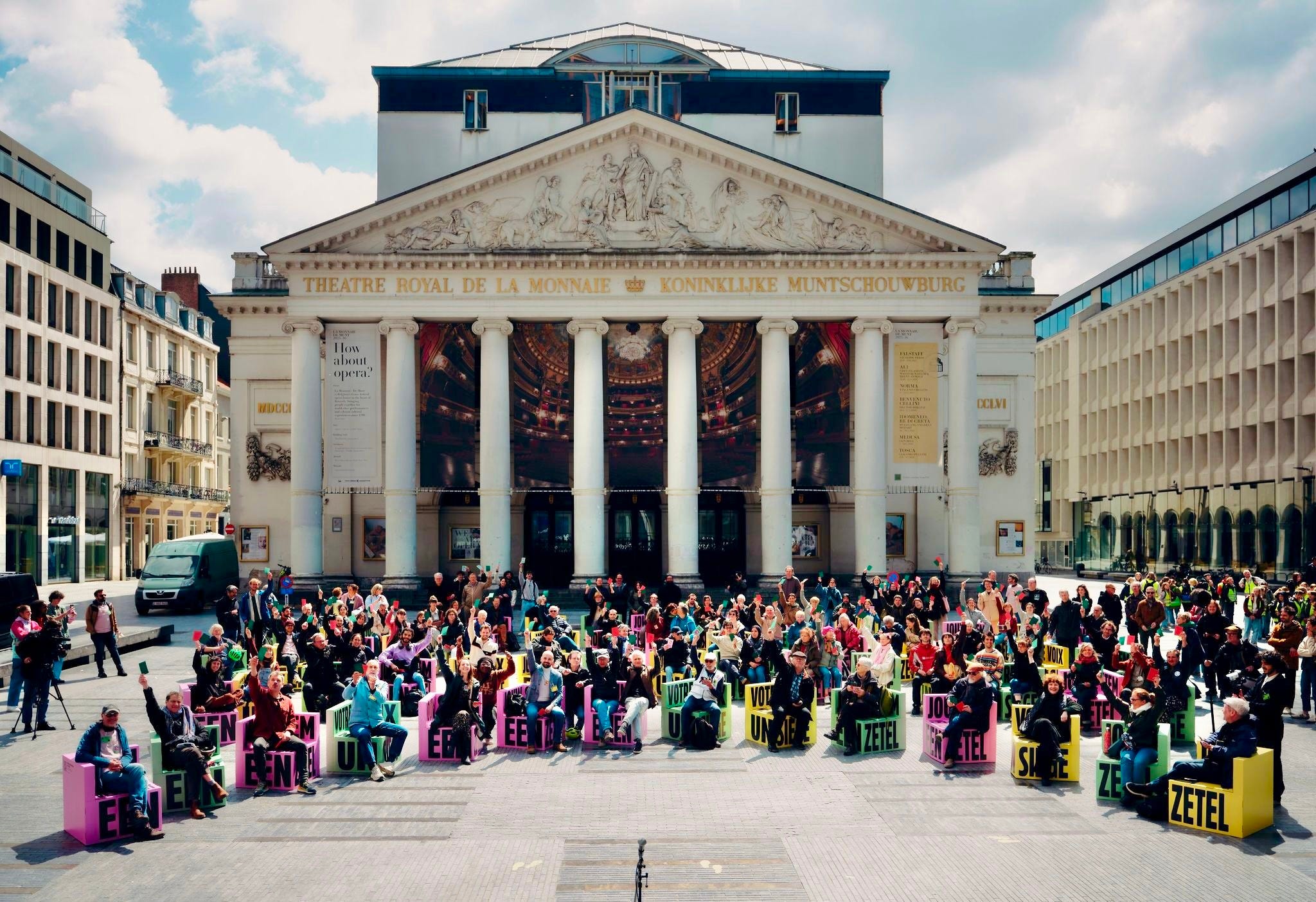
For instance, several Belgian political parties have long wanted to abolish the country’s outdated national Senate. G1000, a Belgium organisation promoting randomly selected citizens’ assemblies since 2011, has now launched a new campaign to replace the Senate with a 50-person citizens’ assembly. Belgian residents can support this by signing here!
Members of the new house would be selected for two years with a primary purpose of choosing topics for other issue-specific citizens’ assemblies. This two-tier division of labour is the same as that used by the successful ‘Ostbelgien’ citizens’ assembly that has operated since 2019 in the parliament of Belgium’s small German-speaking community (which is part of French-speaking Wallonia, if you were wondering).
In other words, the debate is very much alive over whether elections or random selection produce the most representative group of people to make policy. Whether modern citizens’ assemblies ultimately prove as transformative as their rather different mediaeval predecessors remains to be seen. (The seven patrician lineages are still available if called upon too!). History suggests that sortition is neither novel nor utopian. It is one of the oldest democratic tools we possess, and it can really work.
 Hugh Pope
Leave a comment