Hugh Pope

Author, Reporter, Editor

  • A major theme of Dining with al-Qaeda is the difficulty reporters like me faced in translating what I experienced in the Middle East into reports that really explained the situation to American readers.

    Sometimes I felt that we’d invented a virtual Middle East with our convoluted attempts to bridge this divide, using artificial one-label-fits-all concepts like “peace process”, “terror”, “Arabs”, or “Islam”.

    This difficulty stemmed from lots of different factors, including our readers’ physical distance from the subject, unfamiliarity with the peoples of the region, domestic US lobbies distorting national debates, misapprehensions about how different Islamic cultures are in every country and an overall cultural disconnect between America and the Middle East.

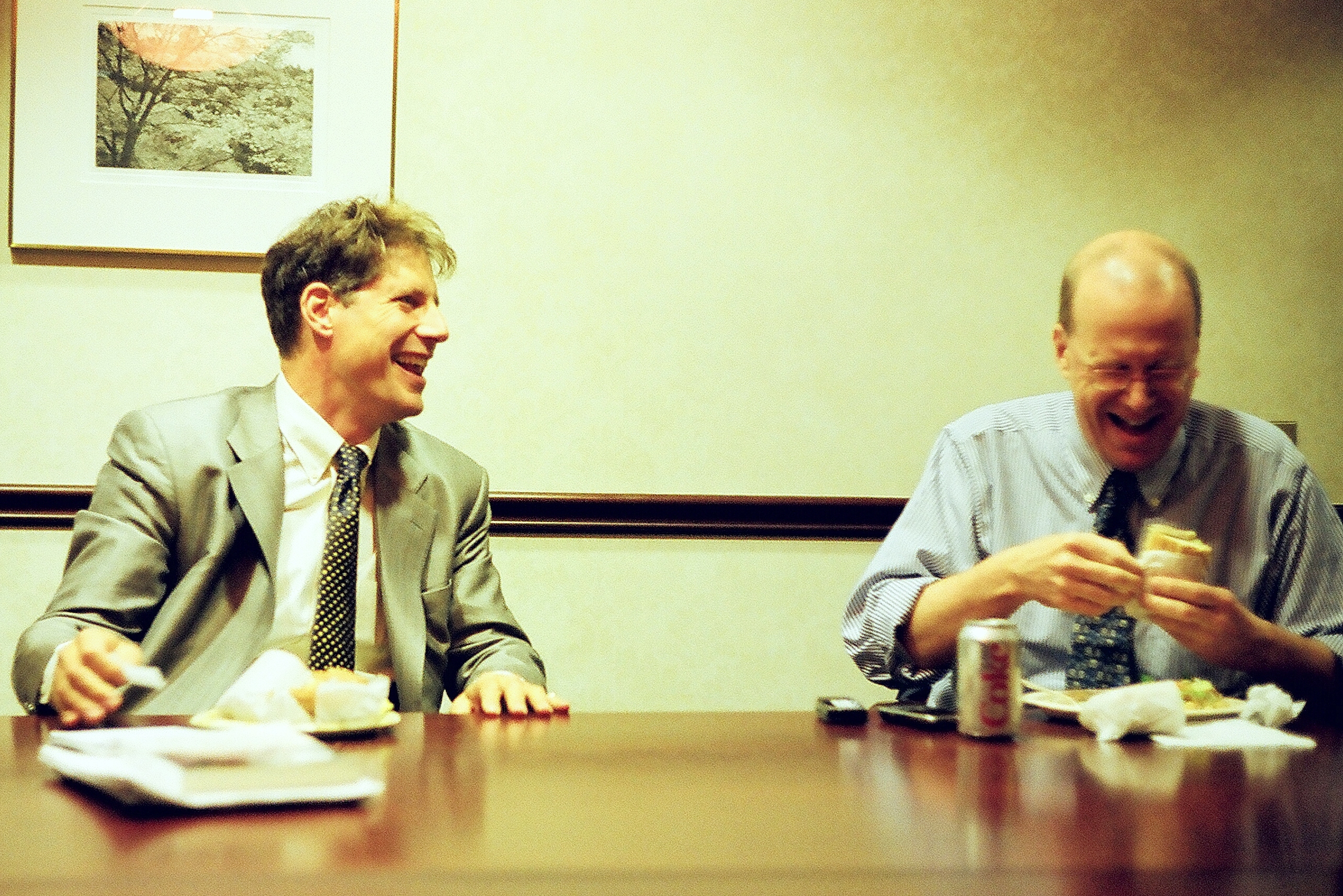
    Meeting up again in November with my charismatic former foreign editor at the Wall Street Journal, John Bussey, I told him how frustrated I had been by all this in the lead-up to the invasion of Iraq, when I was the only Journal reporter traveling to the Saddam Hussein’s domains. Bussey, now the Journal’s Washington DC bureau chief, immediately invited me in to discuss Iran, Afghanistan and the Middle East over sandwiches with my former Journal colleagues.

    For me, the occasion turned into a first chance to discuss in public these key themes of the book. I still had plenty to prove for some. But it was invigorating to feel how the intellectual climate in the US is changing, making it possible for people like me to make my case and feel like people are listening. Seven years ago saying the same things was like shouting in a gale.

  • A first formal review of Dining with al-Qaeda from Publishers’ Weekly — topping the bill in the non-fiction review section on 23 November 2009!

    The 30 years Pope (Sons of the Conquerors) has spent living and traveling in the Middle East, from a 1980 visit as an Oxford student through a decade-long stint as a correspondent for the Wall Street Journal, color this reflection on the region’s recent history. Moving back and forth through time in vignettes set in Syria, Sudan, Afghanistan, and Saudi Arabia, this fascinating memoir of his career tackles subjects as varied as the sexual attitudes of Middle Eastern men, the murder of Daniel Pearl, the Iraq-Iran War, and the poetry of the mystic Persian poet Hafez. The text has a loose episodic structure that sometimes feels desultory, though it does end with a series of chapters that focus on Iraq in the years before and after the American invasion. The author’s writing is journalistic but imbued with the author’s personality and long involvement in the region—he decries uncritical American support for Israel and the West’s tendency to treat Islam and Muslim cultures monolithically. Pope’s exquisite photographs accompany his vivid panorama of the region. (Mar.)

  • How Westerners see their heroes in the Middle East isn’t necessarily how people in the region see them — a misconception that is one of my central themes in Dining with al-Qaeda. A story posted on Inside Defense on 12 November 2009 showed that this problem is alive and kicking in relation to one of the most famous actors in the Middle East in the last century, Lawrence of Arabia.

    Senior leaders at U.S. Special Operations Command are laying the groundwork for a program designed to enhance and sustain regional and cultural expertise among elite U.S. combat forces. Work on the effort, known as “Project Lawrence” is still at the conceptual phase, essentially consisting of a “loose collection of initiatives” focusing on language skills and cultural awareness development for the myriad locations U.S. special forces operate in worldwide, SOCOM spokesman Ken McGraw said.

    The project is named after Lt. Col. T.E. Lawrence, aka Lawrence of Arabia, author of The Seven Pillars of Wisdom, his version of how he helped stir up the Arab revolt against the Ottoman Empire during the Second World War. SOCOM spokesman McGraw continued:

    The program aims to develop skilled linguists and regional experts, or “Lawrences” within SOCOM and the service special operations commands…During assignments to their focus country, they will develop their skills to enable them to understand the nuances of the language, customs, and culture and a thorough understanding of regional issues.

    The story is headlined with the idea that Project Lawrence is an exercise in “cultural awareness.” Unfortunately, nobody seems to have made the Pentagon generals aware that in the Middle East itself, Lawrence is a decidedly controversial character.

    In the Arab world, his promises of a united, independent Arab state proved to be treacherously empty, and his intervention is thus viewed by many Arabs as a great betrayal.

    lawrenceIn Turkey, which, despite plenty of difficulties is one of the United States’ most reliable and long-term partners in the region, Lawrence is viewed as a trouble-making, hostile agent who made the Arabs knife the Ottoman Empire in the back. To this day, Turks keep Lawrence’s name alive as a symbol of infamy: once when I was setting out my thoughts on a Turkish TV show a message flashed up on the screen from an angry viewer: “Who do you think you are, Lawrence of Arabia?”

    Indeed, when Lawrence’s famous picture in Arab dress appeared on an Istanbul street near my house as a poster for an exhibition of Orientalist paintings in Istanbul, I watched as it was first defaced with the words “English Spy” and then ripped apart with a knife so violently that it looked like a grenade had blown up behind it.

    As part of the Pentagon’s new cultural awareness offensive, it seems, Arabs and Turks will not be the only ones to enjoy new Laurentian moments.  Admiral Eric T. Olson, Commander of the United States Special Operations Command, told the Senate on 18 June 2009:

    We do have a number of initiatives—I euphemistically call it Project Lawrence, inspired by Lawrence of Arabia, but certainly not limited to Arabia—Lawrence of Pakistan, Lawrence of Afghanistan, Lawrence of Columbia, Lawrence of wherever it is—that we are operating around the world, or assisting, or working with our partners.  (p. 6)

    Lucky world, lucky Lawrences of America. Perhaps it is wise to remember that Lawrence certainly polished up his role to make his brilliant narrative glow, and that our image of him is indelibly bound up with the grace of Peter O’Toole in the classic David Lean film. Indeed, playwright Noel Coward noted wryly at the film’s premiere that if they’d made O’Toole any prettier, Lean would have had to call the film “Florence of Arabia.”

    Now, there’s a gender-aware warfighting project name for the Pentagon to juggle with.

  • In the early 1980s, Jon Randal‘s book on the Lebanon war was passed around young correspondents and aid workers like a sacred text. It is one of the first accounts of the misadventures of the Middle East to give a fair voice to all sides and satisfactorily explain what really goes on. In later years I was lucky to join forces with Randal on many assignments, and learned first hand from him the critical importance of old-fashioned reporting. Even though nearly 20 years older than me, he never tired, once forcing me to drive all night with him along the broken roads of northern Iraq to stand up a story of an incipient Kurdish civil war — a event that that only he was prescient and hard-working enough to see coming. This is his endorsement of Dining with al-Qaeda:

    “This rich personal history of a senior foreign correspondent is a must read by one of the very few real Middle East specialists, a man who speaks the languages, knows the history, and understands the people. Paradoxically, it stands as a monument to what the so-called golden age of newspaper reporting should have been but rarely was, and which is now vanishing anyway under the combined battering of distracted readers, instant communications and shrinking advertising. Read Hugh Pope and laugh, cry and learn about the deeper Middle East beyond the twitchings of twitter.”

    Jonathan Randal, former Washington Post foreign correspondent and author of Osama: the Making of a Terrorist; After Such Knowledge, What Forgiveness? My Encounters with Kurdistan; and Going all the Way: Christian Warlords, Israeli Adventurers and the War in Lebanon.

  • PROLOGUE

    I have lived and worked in the Middle East for more than three decades, and this book collects what I feel to be my most compelling insights from journeys and meetings in some two dozen countries. I have visited many of these states repeatedly, first as a traveller, then as a student of the Arabic, Persian and Turkish languages, and then as a foreign correspondent, most recently for the Wall Street Journal.

    I chose the stories that lie ahead of you to underline straightforward points that I believe are essential to understanding the people, governments and social forces at work in the region. They side-step the ins and outs of theoretical debates, acronyms and quickly forgotten politicians’ names. As I wrote these pages, I imagined before me an enthusiastic student or well-educated traveler, trying to make sense of the Middle East and frustrated with dry and theoretical approaches.
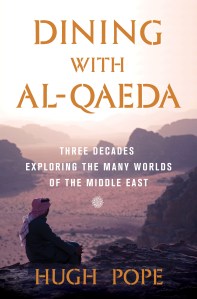
    full resolution cover image

    I want to share my confusion and the hilarious moments as I was educated out of my initial bafflement and into an understanding of the absurd paradoxes of dysfunctional states. I met people trapped between ruthless tyrants and an insensitive outside world. I experienced not only cruelty, fear and war, but also poetry, love and adventure. Along the way I want to explain how I came to terms with a very muddled East, and also suggest new ways how an insensitive and meddling West can better come to terms with the region.

    I believe that the U.S. and other states’ policy mistakes of the past decades are based on a fundamental blindness towards the people and circumstances of Middle Eastern countries, and an over-readiness to think of the region in terms of simplistic ideological labels like ‘Arabs,’ ‘Islam’ or ‘terror.’ As a new American administration is taking office explicitly promising to listen to and to re-assess its approach to the Middle East, I hope the observations in this book can be a source of new ideas, empathy and change.

    Avoiding classic territorial subdivisions, I have made the scope of this book the whole Middle East. This is not because of any belief that the Middle East can usefully be seen as a political grouping; in fact, every country of the region prioritizes its relations with outside powers over any mutual solidarity, and there can be bewildering differences of ethnicity, language and religion. I do however believe there are also continuities and overlaps in Middle Eastern societies, history and geography. This book ranges therefore from Turkey in the west to Pakistan in the east, from Afghanistan in the north to Sudan in the south. There is a particular focus on Saudi Arabia, Iran, Syria, Lebanon, Israel, and, of course, Iraq.

    The first five chapters recount my introduction to the Middle East, during which time I became a foreign correspondent. The next five chapters follow my deeper explorations, from dodging through the streets of Jeddah with a Saudi businesswoman to the chilling night I sat up until dawn talking with a missionary from the al-Qaeda camps in Afghanistan. Three chapters then take a frank look at state formation, dictatorship and governance in the region. The final five focus on Iraq, before, during and after the U.S. invasion.

    Above all, however, this is a book of stories, from unexpected hiccups with my Egyptian girlfriend, to reeling from explosions in the Iran-Iraq war, to enduring ten weeks trapped in a forgotten, besieged and famine-struck Sudanese town. Rather than trying to fit every idea into any single political or economic scheme, the artificial, virtual framework that traditional news reporting uses to explain events to readers, I have allowed myself to go with the flow of the truer and more interesting confusion of everyday life. I have tried to recreate on these pages the sense of plunging into the cumin-heavy vaults of the Aleppo bazaar or the edgy backstreets of Baghdad as if you were at my shoulder, so as to communicate as intensely as possible the Middle Eastern reality and vivacious human contact that makes the region so addictive to me.

    Along the way, I want to show why it was so hard to accurately report my developing understanding of the Middle East to a Western, and especially to an American audience. I was lucky to write for the Wall Street Journal in its golden age. Yet even in this most prestigious of American newspapers I found it hard to keep my stories out of the ruts of traditional coverage of good “moderates” versus bad “radicals”, a misleading focus on an Arab-Israeli “peace process” that never proceeded anywhere, and the way many people over-emphasize the role of “Islam” as an analytical tool in assessing the Middle East.

    The idiosyncracies of the region, I believe, are more the product of universal problems of inequality, circumstance and international politics, not uniquely Middle Eastern religions or ideologies. The lives of Middle Easterners, the majority of whom are only a generation or two away from an illiterate peasant background, differ greatly from those of Americans or Europeans, especially members of Western élites likely to read newspapers that I wrote for like the Wall Street Journal, the Los Angeles Times and London’s Independent. My argument is that this is not because of some insoluble “clash of civilizations” but because of bridgeable disparities in education, security, prosperity and expectations.

    Outsiders find it hard to see that despite the Middle East’s occasional agonies, its people are like any other and can have fun too. Westerners should be more aware that the stress and conflict in media reports are only part of a much larger reality, just as Middle Easterners should realize that the normality of Western countries is not all as presented in Hollywood films and TV sitcoms. I hope that this book can allow a wider audience to see the countries of the region in a new and less confrontational light, to hear the voices of its peoples and sometimes to make them laugh out loud.

    Hugh Pope

    Istanbul, April 2009
  • CONTENTS

    full resolution cover image


    Prologue

    Map of the Middle East

    1. Mr. Q, I LOVE YOU

    Oriental Studies Meets the Middle East

    2. IT’S A FINE LINE

    Journalism on the Road from Damascus

    3. THE PLOT IN THE CONSPIRACY

    Spies in the Syria-Lebanon-Palestine Triangle

    4. HUNTING FOR SCAPEGOATS

    Foreign interference and Misrule in Lebanon

    5. A PILGRIMAGE TO JERUSALEM

    The Israeli-Palestinian Entanglement

    6. THE DRUNKEN LOVER

    Revolutionary Iran’s Struggle with its Poetic Soul

    7. SUBVERSION IN THE HAREM

    Women on the Rise, from Cairo to Istanbul

    8. WAR, WAR TO VICTORY

    Iran’s School of Martyrdom and Love

    9. MAMMON IN MECCA

    Crushing Religious Diversity in the Name of Islam

    10. DINING WITH AL-QAEDA

    A Saudi Missionary and the “Wonderful Boys” of Sept. 11

    11. TEA WITH THE BRIGADIER

    Failing the Famished of South Sudan

    12. THE CENTRAL BANK GOVERNOR HAS NO SOCKS

    Taliban Warlords, Pakistani Feudals and the Nation State

    13. REGAL REPUBLICS, DEMOCRATIC KINGS

    Syria, Jordan and the Dimensions of Dictatorship

    14. SADDAMIZED

    Inside Iraq’s Psychotic Stress Machine

    15. JOUSTING WITH THE JUGGERNAUT

    How Not to Stop a U.S. Invasion

    16. STOP FIRING! THIS IS A MILITARY SITUATION

    One Step Behind the War with the Kurds

    17. THE YEZIDI HERESY

    An Alternative Approach to Military Liberation

    18. THE GENERAL AND THE PROFESSOR

    America Collides with History in Iraq

    Epilogue

    Acknowledgments

    Index

    <!–[if !mso]> <! st1\:*{behavior:url(#ieooui) } –>


    DINING WITH AL-QAEDA

    Three Decades Exploring the Many Worlds of the Middle East

    CHAPTER TABLE

    Prologue

    Map of the Middle East

    1. Mr. Q, I LOVE YOU

    Oriental Studies Meets the Middle East

    1. IT’S A FINE LINE

    Journalism on the Road from Damascus

    1. THE PLOT IN THE CONSPIRACY

    Spies in the Syria-Lebanon-Palestine Triangle

    1. HUNTING FOR SCAPEGOATS

    Foreign interference and Misrule in Lebanon

    1. A PILGRIMAGE TO JERUSALEM

    The Israeli-Palestinian Entanglement

    1. THE DRUNKEN LOVER

    Revolutionary Iran’s Struggle with its Poetic Soul

    1. SUBVERSION IN THE HAREM

    Women on the Rise, from Cairo to Istanbul

    1. WAR, WAR TO VICTORY

    Iran’s School of Martyrdom and Love

    1. MAMMON IN MECCA

    Destroying old Mecca in the Name of Islam

    1. DINING WITH AL-QAEDA

    A Saudi Missionary and the “Wonderful Boys” of Sept. 11

    1. TEA WITH THE BRIGADIER

    Failing the Famished of South Sudan

    1. THE CENTRAL BANK GOVERNOR HAS NO SOCKS

    Taliban Warlords, Pakistani Feudals and the Nation State

    1. REGAL REPUBLICS, DEMOCRATIC KINGS

    Syria, Jordan and the Dimensions of Dictatorship

    1. SADDAMIZED

    Inside Iraq’s Psychotic Stress Machine

    1. JOUSTING WITH THE JUGGERNAUT

    How Not to Stop a U.S. Invasion

    1. STOP FIRING! THIS IS A MILITARY SITUATION

    One Step Behind the War with the Kurds

    1. THE YEZIDI HERESY

    An Alternative Approach to Military Liberation

    1. THE GENERAL AND THE PROFESSOR

    America Collides with History in Iraq

    Epilogue

    Acknowledgements

    Index

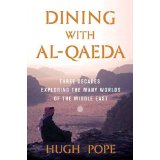
  • Image of book cover

    Mariane Pearl, widow of Danny Pearl, my late colleague killed by al-Qaeda in Karachi in 2002, has read Dining with al-Qaeda. It was very important to me that she felt I did justice to the subject of what it was like to meet jihadi folk — and that I had talked realistically through what I understood that Danny was trying to do as my co-reporter on the Middle East beat.

    “A very good book, and one that raises essential questions about journalism and our understanding of the world.”

    Mariane Pearl, author of  In Search of Hope and A Mighty Heart: the brave life and death of my husband Danny Pearl

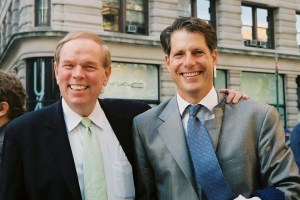
  • Hugh and Tom Dunne

    Authors love to complain about their publishers, but for me Thomas Dunne is one of the delightful exceptions, as I discovered once again in October when we lunched round the corner from Thomas Dunne/St Martins Press‘s magnificent quarters in Manhattan’s Flatiron building.

    Aside from enjoying fun conversation and hearing that Dunne’s corner of the book industry is looking rosier than expected, I learned that Dining with al-Qaeda will be printed in February 2010 and in the shops from 16 March. Hooray too for a supportive publisher – after a fine second course or perhaps because they’d slipped something into his diet Coke, Dunne promised to fly me in from Istanbul to help get the word out. We will have presentations of the book in New York and Washington in the second half of March. Early orders can be placed here at Amazon.com.

  • “A great learning experience” – Morton Abramowitz

    Image of book coverI first met Morton Abramowitz as a young reporter when I went to interview him as ambassador to Turkey in the early 1990s, little realizing that I would join the organization that he subsequently co-founded — International Crisis Group. Abramowitz has had a hand in almost everything impacting Turkey and the Middle East in recent decades, so I was really flattered when he took the trouble to give this endorsement of Dining with al-Qaeda:

    “Most people learn best from stories. And Hugh Pope’s latest book on his thirty years of reporting on the Middle East is a great learning experience. The tales of his wanderings from Sudan and Egypt to Pakistan are not only fascinating, but they also serve to illuminate Middle Eastern countries in a way that scholarly books often fail to do. His reflections sharply narrow the gap between popular Western perceptions of the region propagated by our media and many politicians and the more complex reality. Freed of the heavy hand of his daily editors on what the public wants to read, Pope has produced a highly informative, provocative, and enjoyable work.”
    Morton Abramowitz, former President of the Carnegie Endowment for International Peace and former US Ambassador to Turkey

  • Image of book coverI first met Tony Horwitz when he was a Wall Street Journal correspondent, determined to see every inch of every border with Iraq to test a theory about sanctions against that country during the invasion of Kuwait in 1990. We spent a week bumping up and down mountain roads along the Iraq-Turkey border together, and I helped him talk to every Kurd and practically every donkey that we came across. I really enjoyed his book Baghdad without a Map, which describes some of his adventures in those days. Horwitz has of course become a best-selling author since then – like his wife, former Journal correspondent Geraldine Brooks – and many thanks to him for taking the time to endorse Dining with al-Qaeda:

    “Hugh Pope goes behind the headlines to probe the world’s most volatile and misunderstood region. Balanced, deeply informed, and darkly fun, Dining with al-Qaeda is a must-read for Middle East junkies.”

    Tony Horwitz, author of A Voyage Long and Strange and Baghdad Without a Map