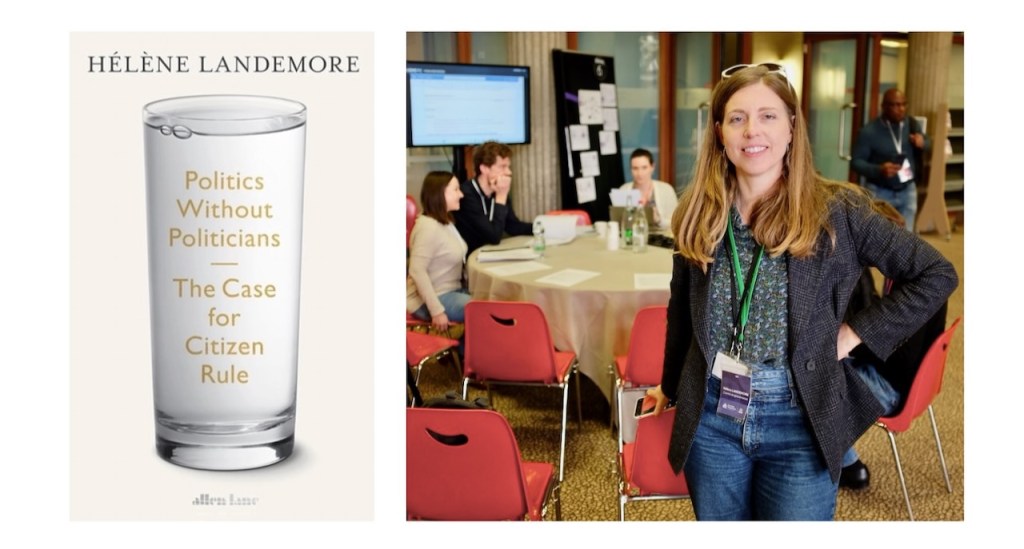
It took twenty minutes for the helpful shop assistant at Waterstones in Brussels to find Hélène Landemore’s fine new book Politics without Politicians: The Case for Citizen Rule. “It’s our only copy,” she said apologetically. The cover was slightly scuffed.
Not for the first time, I puzzled about this lack of public visibility for books about sortition, namely, the random selection of groups of citizens to take decisions on public policy in a fairer, more intentional and inclusive way.
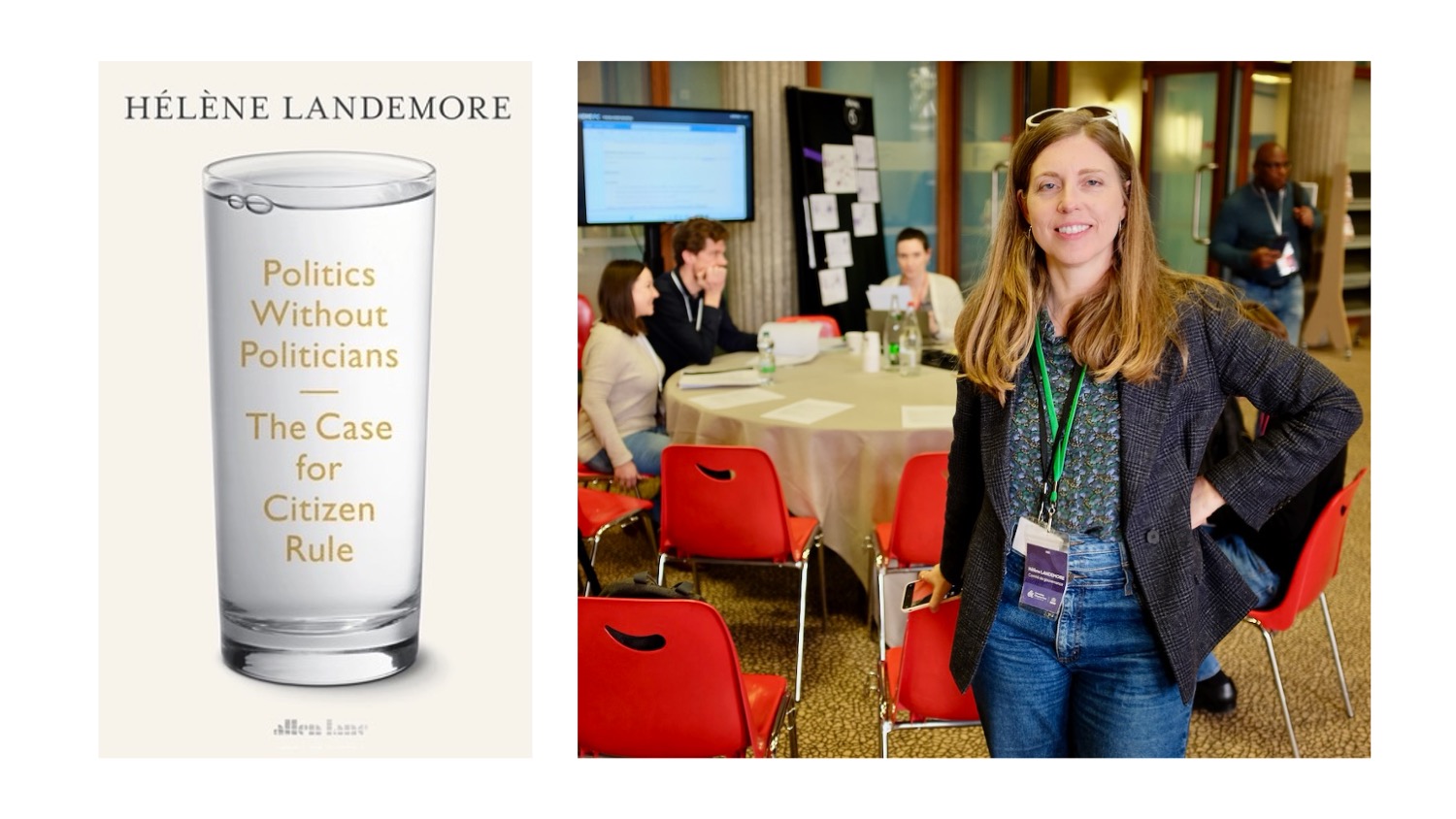
Good bookshops are a public face of political philosophy, and I checked out a few of them. All gave plenty of prominence to books analysing and lamenting the well-established breakdown in governance globally. But they very rarely offered alternatives to the electoral system that has created the problem. That includes the thinking and wide experience of pioneers like Landemore, who propose moving on from elections to modernise democracy through using more random selection.
Take Blackwells, the leading bookshop in the university town of Oxford, England. When I last visited in September 2025, I couldn’t find a single book that focused on sortition, participatory or deliberative democracy. A shelf labeled “Activism” was stuffed with studies of anarchy. Below came the three more shelves labeled “Democracy”. These books mostly featured gloomy, dead-end titles. The Problem of Democracy. Democracy for Sale. Degenerations of Democracy. Is Democracy Failing? Twilight of Democracy. Can Democracy Recover? How Democracy Dies.
I checked in with Blackwells on the absence of books on sortition while writing this review. The problem, one of their staff wrote back to me, was a lack of new books on “a really interesting topic”. The bookshop would be supporting Landemore’s Politics without Politicians, the bookseller said, and was looking forward to doing the same for another book out in February 2026, Peter MacLeod and Richard A. Johnson’s Democracy’s Second Act (my review of their book is here).
Let’s hope this signals a future breakthrough. Both books are great reads and winning attention with published excerpts, promotional interviews and public appearances. Landemore, a respected French-American professor of political philosophy at Yale University, even summited the Mount Everest of authorship with a bravura opinion piece that gave a detailed summary of her book in The New York Times.
A classical sweep
Politics without Politicians follows the now classical narrative sweep of recent books on sortition – the problem, the history, the new theories, the developing practice, the competing ideals, the path forward – and it is woven through with well-chosen personal anecdotes, empathy for the subject and authoritative philosophical asides. Chapter by chapter, Landemore establishes that:
🏚️ The current electoral system is broken beyond repair. “The people currently in power are seemingly incapable of seeing the problems … in a system that has worked so well for them.” But democracy can be fixed, if it can “deploy mechanisms that make minorities valued and heard, not just outvoted.” She envisages citizens performing a new “civic duty” in randomly selected assemblies that feature “ordinary people talking to one another with the goal of coming to a joint decision that works for most, rather than elites and interest groups bargaining with one another.”
🧐 Politicians are not fit to govern. The way our 250-year-old party electoral systems turn political types into an anti-egalitarian oligarchy is “a feature” of elections, not a bug. Politicians may be “individually decent”, but elections select “the alpha types, the charismatic, the daring, the entitled, the arrogant, even those with no shame whatsoever, and sometimes even the downright psychopathic”.
💰 Economic elites dominate the choices made by any electoral system. Research shows that the US is a plutocracy and most advanced democracies “have a plutocratic problem”. The grip of financial interests can only be broken by decision-makers rotating in and out of power, everyone “representing and represented in turn.”
🏛️ Classical Athens has much to teach us. Despite limitations, it was the first state to combine selection of decision-makers by lot with rotation in power. Its many achievements show that “politics is not primarily a matter of expertise and professionalism. It is, instead, the business of every citizen.” Despite the ascendancy of electoral systems today, vestiges of the use of sortition have remained: in Italian city states like Venice, where combining elections with the lot minimised corruption and nepotism; the random selection of juries for courts; and the modern trend of citizens’ assemblies.
🪷 Philosophically, sortition has “beauty”, and from many angles. Using the lot can deliver the French revolutionary ideals of “Liberty, Equality, Fraternity” better than other systems. It blocks corruption, careerism and concentration of power. Deliberation also fosters collective intelligence. “Voting is an incomplete decision-procedure because it can aggregate judgments only about predefined options. Deliberation, by contrast, creates the options over which we can make judgments.” Deliberation has also been shown to have a general therapeutic effect on communities’ mutual tolerance and civic engagement.
🇫🇷 The success of the first French national citizens’ convention – on climate in 2019-21 – has been underestimated. By 2023, implementation of the climate assembly’s 149 recommendations had been significant and had won moral, popular and scientific support.
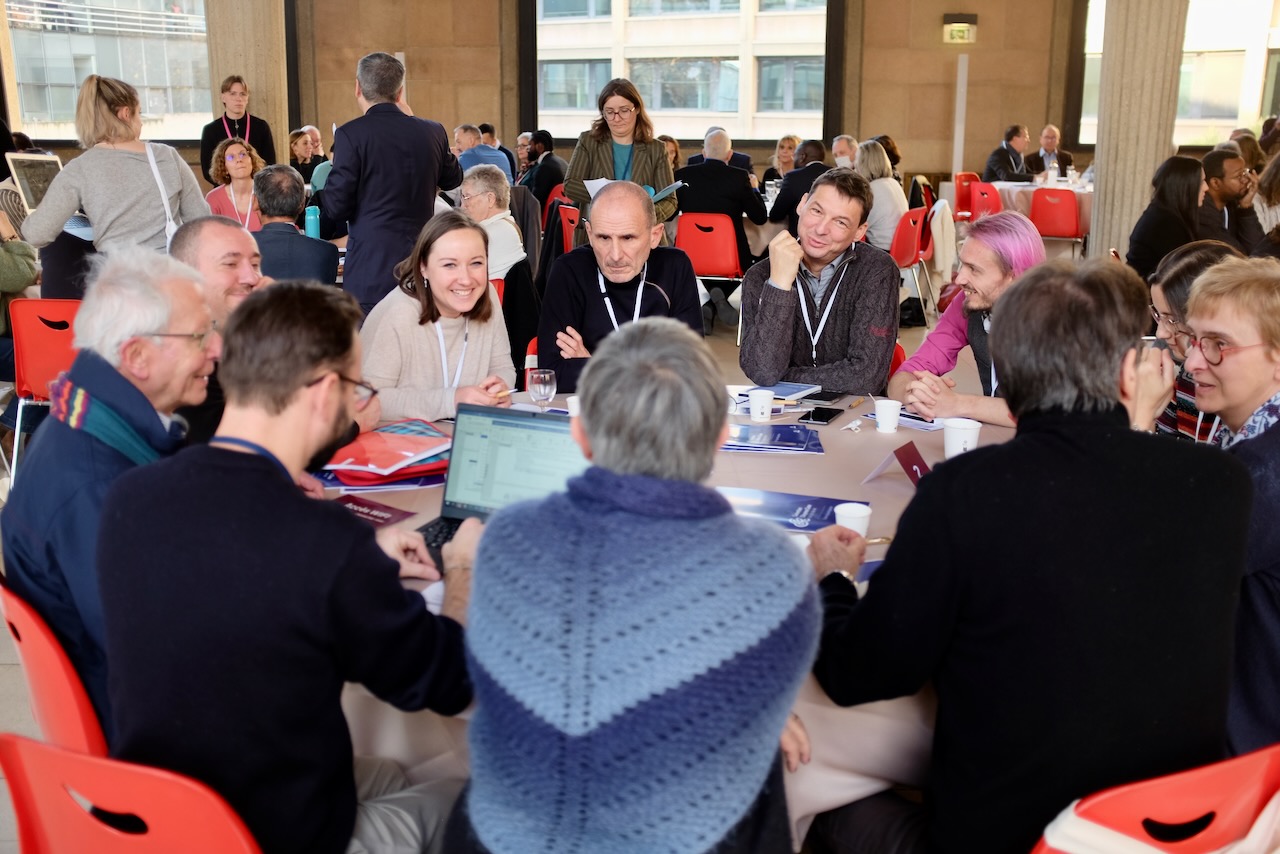
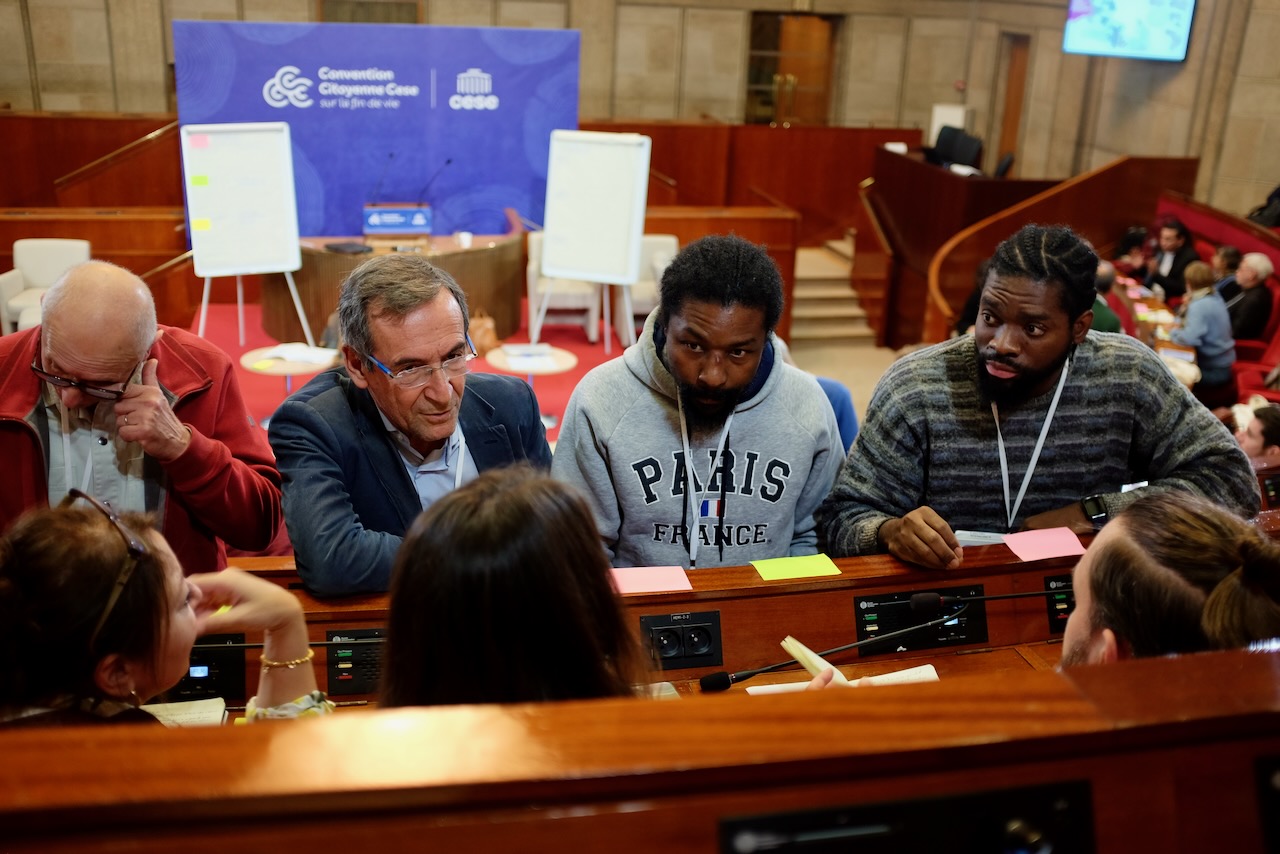
❤️ Civic love is real. Landemore gives a unique insider’s feel for the second national convention in France, which recommended lifting a ban on assisted suicide in 2022-23. Politicians took all the credit for the new law that eventually passed in May 2025. But citizens helped break the logjam, and along the way experienced a civic love that was “healing for the participants and instrumental to their deliberations, allowing everyone, including the shy, to contribute their views.”
🫣 Sortition brings shy people to the table. But that alone can’t make them speak. Intentional, thoughtful facilitation is critical to make sure that deliberation benefits from the full diversity of the community in the room.
✅ Hosting a citizens’ assembly takes a lot of work to allow people to be at their best. Landemore lays out six principles of things to foster trust between citizens and the organizers, and promote the citizens’ sense of agency (see Bringing out the Shy below).
🖼️ Citizens’ assembly design needs to pay attention to universal priorities. This includes physical accessibility, technical support, accommodating minority preferences, representing these on governance councils, making spaces comfortable, and training facilitators to amplify weak signals from deliberation.
👥 Doing away with politicians could be complete or partial; Landemore’s favoured solution mixes fully randomly selected assemblies and public referenda.
An ambivalent radical
Landemore’s book stands out for the practiced clarity of her argument, her compelling use of striking personal anecdotes, her choice chapter epigraphs from Taylor Swift to Liz Cheney, and the insights she gained from leading roles in modern citizens’ assemblies in France.
Landemore spells out occasional technical terms (maybe one day I will understand that “epistemology” is “a theory of political knowledge”) and there is little jargon. Name-dropping of philosophers and academic shorthand like “empirical evidence” and “instrumental properties” is rare. More frequent are telling, easily relatable asides, for instance pointing out that technology only amplifies the structural divisiveness that elections engender.
The book does a good job of explaining how sortition has been part of the democratic toolkit for more than two millennia, but has often slipped from view. The most recent disappearance dates from the 18th century Enlightenment, “which celebrated individual reason above all else.” The modern science of statistics has now allowed random selection to be an attractive, rational tool again.
Landemore also goes further than she has before in advocating for sortition to replace elected bodies in government, even if she remains somewhat ambivalent. Experimenting with random selection is “an exercise in political imagination, a call to invent what doesn’t yet exist … revolutionary, maybe even utopian,” she says. “It may serve best as a thought experiment–a way to step back, challenge the status quo and expose its flaws.”
In her last chapter, Landemore lays out the sortitionist visions currently on the table. One is a radical vision that foresees a fully sortition-based system without elections (she cites Lottocracy by Alexander Guerrero; for the record, my late father Maurice Pope’s Keys to Democracy lays out another all-sortition constitution). Such a system does away with elected politicians, Landemore points out, but would give citizens agency only through randomly selected civic service. Another vision is a hybrid arrangement mixing voting and sortition. Landemore notes this sets up a clash of legitimacy between representatives of the two systems.
Landemore herself proposes a third way, centred on an agenda-setting, lottocratic parliament, but with referendums too. “This setup would be combined with lower level assemblies, also based on lot and frequent multiple-question referenda,” she says. A single main coordinating chamber, she says, will be essential to manage the high-level trade-offs needed for major policy decisions.
Landemore takes another radical position – and a logical one – in saying it “probably should be” mandatory for citizens to accept their invitations to join minipublics like citizens’ assemblies. For all kinds of reasons, she notes, current response rates from the public are under 20%. (Other sources view a quarter of that as more normal). “Mandatory participation, as in jury duty, would of course offer a straightforward solution to these problems,” she writes, “although it does not seem desirable until the place of minipublics in existing political orders has been meaningfully institutionalized, legitimized, and stabilized.”
The French experience
A notable contribution of Politics without Politicians is to give a rare, insider’s account of French President Emmanuel Macron’s deployment of sortition. As Landemore says, “the French model is the Rolls Royce of deliberative assemblies,” with national citizens’ assemblies costing around €6 million each.
Landemore thinks critics miss the point when they criticise Macron for walking back on his promise to the 2019-21 climate assembly that their recommendations would be applied “without filter.” For her, his endorsement was a good way of conferring public legitimacy on the convention and raising its status in the national imagination. Also, unlike other national conventions, it produced a legal text, was very public, and highly politicised: “France came very close to fundamentally changing our vision of democracy.”
In the end, the climate assembly produced 149 recommendations that had 80% support in the assembly and nearly as much support outside. Two-thirds of the proposals were partially or completely implemented (according to the government – Landemore notes that nongovernmental organisations rated implementation at 10%-40%); none were ever discovered to be technically deficient; 1,000 scientists signed a letter of support.
The citizens’ deliberations were able to produce striking compromises between owners and renters of property, and the role of cars in rural and urban life. Citizens kept experts “on tap, not on top … they would not tolerate any attempt to guide or nudge them in a direction not of their choosing.” Notably, they collectively resisted pressure from the political establishment and organisers to endorse Macron’s original proposal of a carbon tax.
If there was a failure in the climate convention, Landemore points out, it was the fault of the government, not the citizens. On top of that, “few elected representatives bothered to attend its meetings, and many of them actively tried to undermine the convention’s work.” Indeed, one lesson of the climate assembly is that “greater self-regulation … is the right thing to do” in future citizens’ assemblies.
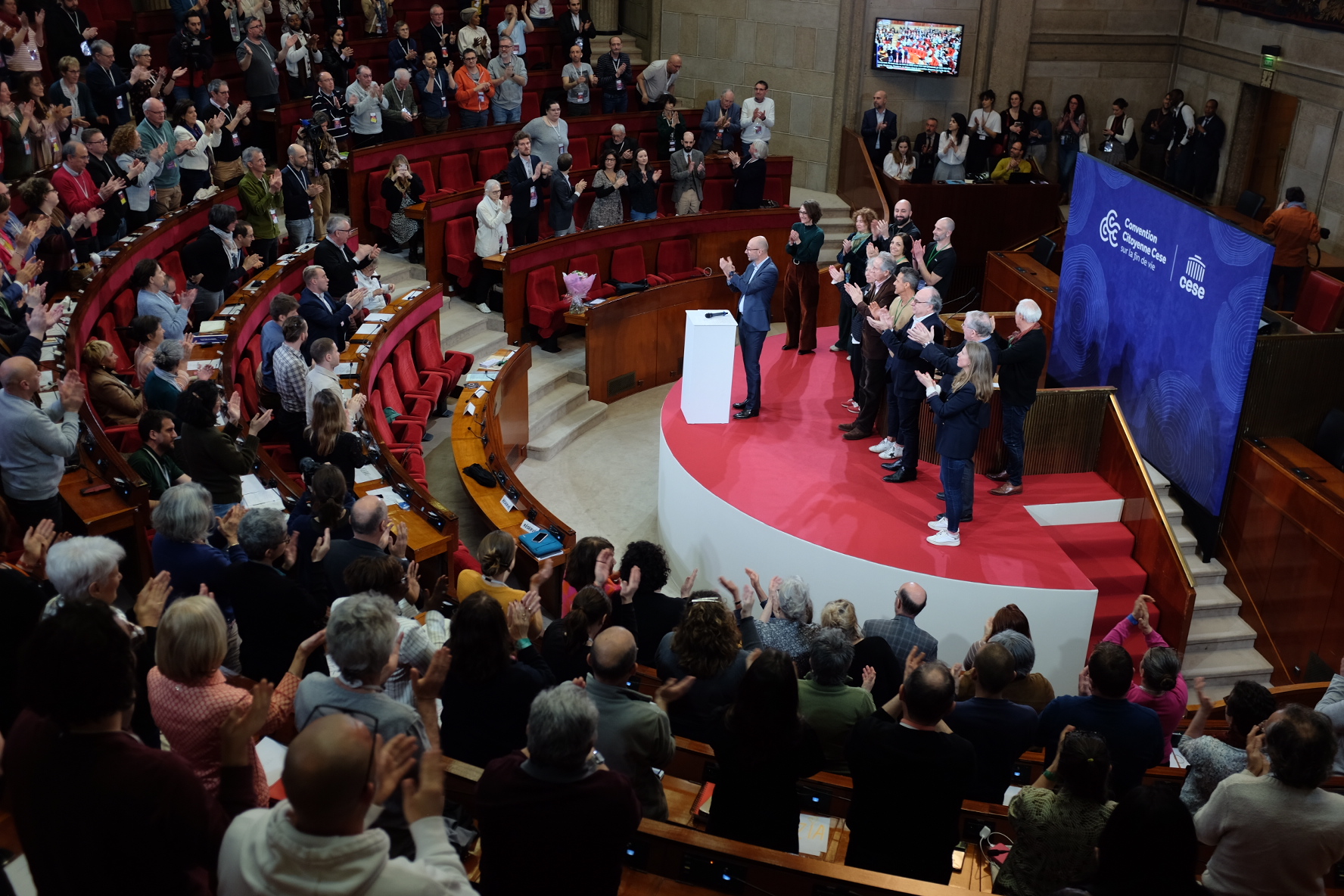
Landemore writes movingly about the civic love that is the theme of her chapter on the second French national citizens’ convention, on assisted suicide. Iceland and Ireland had already given examples of the depolarising effect of a well-run citizens’ assembly. A visiting French government minister comments on this positivity, contrasting this warmth with how people “hate each other” in the elected national assembly.
“The bond between the citizens flourished and lasted until the end because it was left to grow in this unique space of the randomly selected assembly,” Landemore writes. “Politics does not have to be only about conflict … one of the reasons why [ordinary citizens chosen by lot] succeed in solving problems, often precisely where politicians fail, is because they bond and learn to care for one another, and even to love one another.”
Bringing out the shy
Early on, Landemore establishes a touchstone criteria that, as British essayist G.K. Chesterton put it, “all real democracy is an attempt (like that of a jolly hostess) to bring the shy people out.” Landemore kindly credits her first encounter with this saying to its use as an opening epigraph in my late father Maurice Pope’s posthumous book The Keys to Democracy. (Landemore generously played a key role in getting this book to publication in 2023.)
Landemore tracked down the full quote – my Dad had skipped the bit about the jolly hostess with an ellipsis – and highlights the hosting role as a critical ingredient in making randomly citizens’ assemblies work. “Bringing the shy people out takes thought, intention, work, and structural and institutional design,” she writes. There needs to be pay for attendance, tech support, childcare, and highly trained facilitators to make sure everyone’s voice is heard.
Landemore also discusses the pros and cons of a unique experiment in France’s Citizens’ Convention on the End of Life, in which the assemblies decided to form groups where minorities of the same mind were able to deliberate together. She credits this with the great achievement of the convention: 76% of participants voted to lift the ban on assisted dying, but, because other points of view had been well integrated into the final recommendations, 92% of participants approved the final report, including the proposal to lift the ban. “To us on the governance committee, this reconciliation of majority and minority was one of the convention’s biggest achievements.”
The last two chapters draw on Landemore’s experiences as an observer, designer and organiser of citizens’ assemblies. She develops six principles: make it worth people’s time; make people feel welcome, valued, and well taken care of; trust first and by default; be trustworthy yourself; share power and agency; and make it fun. She says such thinking helped the end of life convention go from being “hyper-centralised” by the organisers, with no real citizen representation, “to a much more shared and decentralized form of co-responsibility with the citizens.”
Countering objections
Landemore usefully devotes her last chapter to talking through the common objections to giving more power to randomly selected groups of ordinary people.
Objection #1: Ordinary citizens have no legitimacy
No. Citizens look like the public writ large; that makes them good political representatives, and “history shows legitimacy is not fixed.” Power has devolved over time from theocrats, kings, aristocracies, and now elected parliaments, each losing legitimacy by turn. It’s not just citizens in assemblies who feel the right to decision-making power: one French poll showed 60% of people felt a citizens’ assembly had the right to propose policies.
Objection #2: Citizens’ assemblies exclude most people
Assemblies are now few in number, yes, but will they be so few in the future? If assemblies can be multiplied through the political system, and indeed through corporate life, everyone will become continuously involved. Still, for citizens to have collective power, Landemore argues that referenda should have a big role.
Objection #3: Sortition opens the door to manipulation of ill-prepared citizens
Not so far. Citizens’ assemblies have shown both a willingness to embrace difficult change (helping overturn a ban on abortion in Catholic Ireland) and also a certain conservatism (backing continued nuclear power in South Korea despite a presidential push to close the plants down). Landemore points out that citizens’ assemblies offer an ideal route to thinking through trade-offs to solve a community problem, and are not the place for chasing visionary ideals. Still, process is important. It’s possible, for instance, that unbalanced sortition may bring in more ‘radical’ activists.
Objection #4: People want pre-eminent, visionary leaders
Nobody is proposing to choose a single leader by lot. And if citizens’ assemblies want more power, it is for the randomly selected group they become part of, not an individual. We need to remember, Landemore says, that “the executive branch exists to ‘execute’ the laws, not to make policy or law itself. It’s a strange and rather undemocratic historical development, and perhaps a mistake on the part of constitutional designers, that we have let presidents become so powerful, and indeed so much more powerful than parliaments.”
Objection #5: Won’t money co-opt a sortition-led economy too?
Maybe, but that’s the subject of another book. Random selection and rotation implicit in citizens’ assemblies at least gives a plausible defence from cooption. Work is also progressing on workplace democracy.
Objection #6: Will we ever get to a world sortition-led decision-making?
Landemore notes “prospects of institutionalization [of citizens’ assemblies] in the United States are still far off.” But experimentation around the world is making headway, notably after the 2008 financial crash and France’s Yellow Vests emergency. “Change happens mostly during or just after crises,” she says, giving “a fleeting moment of disruption and uncertainty [in which] there is opportunity and potential for change.” Still, she hopes it will not be the nuclear war conjured up by Maurice Pope in The Keys to Democracy to wipe out the whole world beyond an Antarctic scientific station, thus clearing the stage for his utopia of sortition-led political development. Activists and academics – even politicians – all have a duty to prepare ideas for that moment when change is possible.
The problem with new ideas
Landemore devotes illuminating pages to the personal brush-offs she endured from established academics and politicians as she developed ideas about sortition. As she says, “first, they ignore you”. Innovations take time to percolate into the public realm. As Maurice Pope pointed out, it took four centuries for the mathematics of probability to develop the idea of sampling that is the theoretical underpinning of sortition. “It would be possible to … define history itself,” my late Dad wrote, “as the story of how experts have been proved wrong.”
To this slow uptake of a new idea could be added the absence of books on sortition available in a good bookshop near you. There are about 400 books in the political philosophy shelves of our excellent Waterstones in Brussels. Despite the fact that there have been at least two dozen books published over the past decade on sortition as a way forward – some of them very good – there was not a single one on display. There was no volume on deliberative and participatory democracy more broadly, either.
I worked out which big-picture books might offer even just a section on sortition. I paged through more than a dozen ambitious-looking volumes with titles like The Challenges of Democracy, On Politics, The History of Ideas, The World in 2050, For the People, After Democracy: Imagining our Political Future.
For the People does have a section on deliberative democracy, but I saw no reference to random selection. The same went for After Democracy. Exceptionally, the latter’s author Zizi Papacharissi offers detailed focus on citizens, participation, equality and varieties of democratic practice. Otherwise nobody deigned to discuss the topic.
In the indexes of all the likely books I opened, I only found one single reference to “sortition”. That was in On Politics, a 1,152-page juggernaut. That referred to a tiny snippet of text, where sortition was not even explained as a concept. Then author Alan Ryan immediately dismissed it in favour of other topics “of persistent interest to everyone else.”
So Anglophile policy bookworms are left to worry endlessly about the demise of electoral democracy, but are offered few fresh solutions. Some in Brussels may find reassurance, I suppose, from two full bookcases much closer to the Waterstones’ cash tills. These sell comfort foods like Marmite, HP sauce, English teas and chocolate digestive biscuits.
Waterstones in Brussels said they had reordered a copy of Landemore’s Politics without Politicians to replace the one that I bought. Let’s hope that many more brilliant new books like this one will push the movement for more citizens’ assemblies faster along the long road it still has to go.


Leave a Reply