
Anger, despair and a sense of impotence at new death and destruction in the Middle East were among the reasons I got out of the business of writing about the region. Indeed, up to now, I’ve had no idea what I could usefully add to all that’s being said about still-expanding consequences of the war in and around Gaza since 7 October 2023.
Which you might find odd, since I was a Middle East correspondent for three decades, including in all the places still consumed by conflict.

The reasons for my reticence go deep. I believe in context as well as details. I worry about empathising one side’s story rather than the other/s. I’m fearful of consequences for friendships and, to be honest, perhaps comfort zones too.
My caution is also informed by professional experience. University studies of Persian and Arabic make me look naturally partisan. Life as a reporter makes me reluctant to comment on matters I haven’t researched myself. Many years as an analyst seeking ways to defuse and end conflict at International Crisis Group taught me there’s little point in saying anything if it doesn’t offer at least a potential, long-term route out of the crisis in question.
It is also dispiriting that nothing has changed or seems about to change in the blanket US, British and European official backing of Israel. And I still have that censorious voice in my head, drummed in by years of far-away editors and in-my-face spokespeople, warning me that just writing that last sentence means that, for balance, I now have to say something cautionary about one or more of Israel’s or the US’s enemies.
But I still listen to the news every day, to brave reporters and indispensable aid workers like those from the UN Relief & Works Agency (UNRWA). I observe my daughter’s TikTok feed overflowing with desperate Palestinians begging for attention. I hear out the Israelis, both the my-way-or-the-highway types and those who don’t think that everything their government does is right.
Apart from the scale of the violence, I’m still not sure how much has really changed. Everything I read or hear seem to be reruns of qualitatively similar stories we used to report on more than 40 years ago. And just as it did so many times in the past, the escalation is spreading out from the Middle East in all kinds of ways, including to my new home in Europe.
The juggernaut will find us everywhere, even if we try to escape it. The sheer quantity of deadly developments seems to have reached a new critical mass. Events now proceed faster, and are more flagrantly naked in their ambition or blood raw in their desperation.
My first botcast
So I decided to ask NotebookLM what about my many experiences I could usefully share with a neutral onlooker. For those who have not used this miraculous new Google machine, it’s like having a second brain. You upload content and NotebookLM analyses that content (and no other source) in the light of everything that Google knows. Which is a lot.
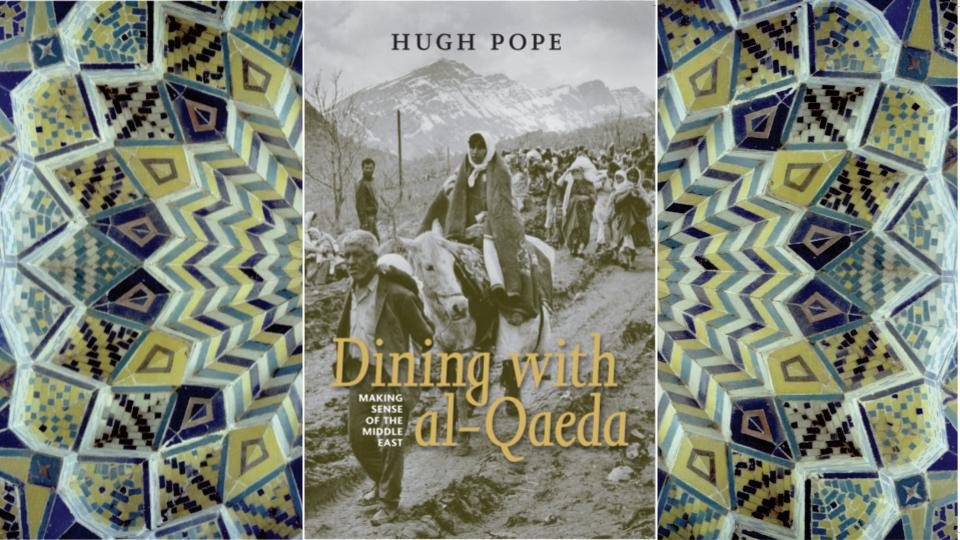
In this case, I simply uploaded one piece of work on the Middle East of which I am particularly proud, my book, Dining with al-Qaeda: Making Sense of the Middle East. It was first published in 2010, and I put out a paperback in 2022 with some minor updates and better photos. It lays out everything that I saw, heard and what I thought about the pattern of events. I didn’t give Google any of the reviews, old articles or supplementary material.
I then asked NotebookLM to explain what my three decades of experiences, findings and arguments said about the Middle East that could usefully be applied to analyse or resolve the current, post-7 October situation. I also asked it to phrase its response in such a way that would not offend any friends (that little voice never goes away).
Tilting the balance toward peace
To be specific, I asked: What seven policies can you extrapolate from the book that could strengthen any outside powers who actually wanted to tilt the balance toward peace in today’s Middle East?
Here, it replied, are the seven things your book suggests such powers should do:
- Embrace a one-state, democratic solution in Israel/Palestine in which Israelis would “fully share the country they have conquered with its native Palestinian inhabitants,” including equal rights and representation
- Adopt even-handed policies, especially in the case of the US
- Engage with Iran diplomatically and acknowledge its legitimate interests and concerns
- Reassess restrictive visa policies, promote people-to-people connections and foster a more positive image of the West in the Middle East
- Counter authoritarianism in the region by promoting good governance, provide assistance to civil society organizations, advocate for greater political freedoms, and hold authoritarian leaders accountable for human rights abuses
- Promote cultural understanding by moving beyond simplistic stereotypes, engaging with a diverse range of voices, fostering cultural exchanges and encouraging media coverage that goes beyond sensationalized headlines
- Address economic disparities by supporting economic development initiatives, promoting fair trade practices, and investing in education and job creation programs in the region.

Well, these mostly mild suggestions don’t have the blistering clarity of UN special rapporteur Francesca Albanese cataloguing the Israeli attacks on the Palestinian presence in Gaza and the occupied territories. But it does sound like the kind of thing I would say, in that I believe policy recommendations should usually only include what a state has the power to do and would make some difference if sustained over time.
“Surprisingly relevant”
But, I asked NotebookLM, why should anyone listen to me? What contemporary usefulness could there be in an account of experiences from the 1980s-2000s?
The “valuable insights” in Dining with al-Qaeda “remain surprisingly relevant to the situation today,” the machine replied. This “valuable historical lens through which to view current events” highlighted “the persistence of certain patterns and the challenges of achieving lasting peace and stability in the region.”
Specifically, it said, the book:
- Highlights a recurring pattern of pro-reform uprisings followed by state failures in the Middle East, noting the brutal survival tactics of regional regimes
- Critiques the United States’ continuous entanglement in the Middle East, particularly in Iraq and Afghanistan, and argues that the US failure to break free from a cycle of intervention often exacerbates conflicts and creates unintended consequences
- Explores the enduring power of authoritarian regimes in the Middle East, highlights their reliance on corruption, control of information, and suppression of dissent to maintain power … all this resonates with the challenges faced by pro-democracy movements across the region today
- Reveals through personal experiences and journalistic observations a deep-seated criticism of Israel’s policies toward the Palestinians … challenges the prevailing narrative surrounding the conflict, highlights the suffering of Palestinians living under Israeli rule and notes the power of the pro-Israel lobby in the United States
- Argues that oil wealth allows regimes to maintain their power structures and resist calls for change
- Provides insights into various cultural and societal dynamics in the Middle East, such as the role of Islam, the challenges faced by women, and the influence of tribalism … these observations offer valuable context for understanding the complex social fabric of the region
So there you have it: a set of policy recommendations for me to say and the reasons why I can plausibly say them. I’ve smoothed some of the phrasing but the content is neither more nor less than what NotebookLM suggested. And of course it is what I suggested too, in the form of my book, the only input I gave it.
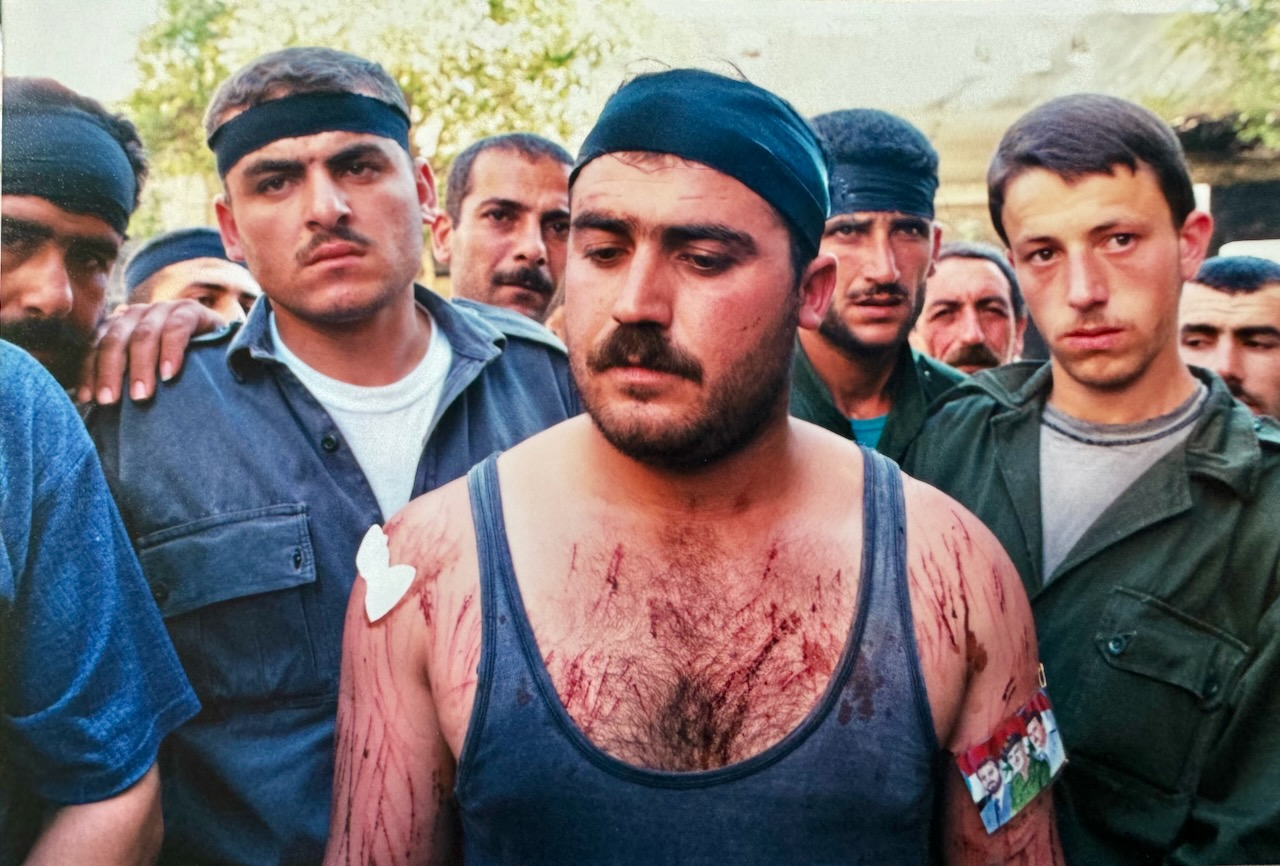
NotebookLM also gave me a recording of its two robot podcasters discussing the book. That alone is a technological marvel. If you haven’t heard one of these “pure” botcasts before – NotebookLM calls them “audio overviews” – you must listen to at least a bit of it. Yes, there are a couple of slips, there is something synthetic about it and I had to cut out some repetitions. But it’s true to say that the underlying patterns of Middle East crisis haven’t changed much, and so it sounds like what I might say. It even inspired me to dig up a selection of photos from my reporting days. They fit, mostly.
Double checking
Just to check, I then uploaded the relevant reporting about the Middle East situation from Crisis Group, which does a good non-partisan job of rounding up all the latest information all sides agree to. I then asked NotebookLM if that added anything to change its mind. No, it said, the report “underscores the ongoing relevance of Dining with al-Qaeda in several ways”. (It did however note that the book did not specifically focus on Iranian influence in the region as the “axis of resistance”, a term that has become popular in the past decade).
I loaded up three Israeli perspectives – from a right-wing US group lobbying for Israel, a retired Israeli colonel opposed to his country’s strategy, a liberal explainer article in the US magazine Jewish Currents and a centrist commentator. NotebookLM retained its general endorsement for relevance, especially in giving the broader context and complexities. However, it noted that Dining with al-Qaeda was originally published before social media and so missed that dimension, made no detailed argument on a one-state policy for Israel and would benefit from re-evaluation of some time-sensitive recommendations.
Finally, I also uploaded Francesca Albanese’s UN report on Gaza, and asked the same question. “The UN report adds a layer of urgency and gravity to the issues explored in Dining with al-Qaeda. It reinforces the book’s relevance,” NotebookLM replied.
Perhaps it is just telling me what I want to hear, or rather playing a new version of my old words back to me. All the same, what an extraordinary machine!


 Hugh Pope
Leave a reply to widarhal1 Cancel reply