Writer of books on Turkey, the Middle East and Central Asia. Formerly Director of Communications & Outreach and Turkey/Cyprus Project Director for International Crisis Group. Ex-Turkey & Middle East staff correspondent for The Wall Street Journal.
One-man broadcaster Brett Winterble is such a dynamo that his Covert Radio website homepage is topped by a quivering ammeter. This U.S. station may well be the only one dedicated to covering all aspects of the War on Terror for subscribers and a dozen affiliates. Winterble, who has a degree in ‘Homeland Security and Intelligence Methods’, flattered me with boundless enthusiasm for Dining with al-Qaeda during an interview that aired on 31 March 2010. Surprisingly, he was also open to all my hard-earned soft talk of empathy and engagement with the Middle East. This seemed extraordinary given that his show is dedicated to being the scourge of everything from al-Qaeda to Jundullah to Pirates to ‘black widow’ suicide bombers to Aztecas to European Eco-Terrorists. Given the likely profile of his listeners, it’s not surprising that his teaser for his show with me read “his answers will surprise you.”
Here’s a transcript of Brett’s own comments. It’s authentic post-9/11 Americana, but I reckon that if all conservatives acted like him, in terms of reaching out to find out about the motivations of people they consider their enemies, half of America’s problems in the Middle East would soon be on the road to peaceful resolution. His style is inimitable, and he’s generously offered a free link to our show here.
(Jingle) This is your place for American Intelligence.
Brett Winterble
I wanted to go out and talk to somebody who’s really lived it, in the Middle East, who understands it, up close and personal, a man who’s got extensive experience in the Middle East, author of a book that you need to pick up, you need to buy if you want to understand the way the world behaves, Dining with al-Qaeda: Three Decades Exploring the Many Worlds of the Middle East …
The book is fantastic. Everybody’s got to get out there and get a copy of this book, it really is a phenomenal insight. This book you did is really cool, man. I can feel the grit. I can feel the fear you feel at different times, and the confusion you feel.
It’ll transport you [listeners] to a place that most Americans most people in the West will never get to go…
(and after the interview was over …)
We didn’t agree … his bent was frankly for my taste too much in favour of the Barack Obama sort of world view, the Bill Clinton world view, he opposes the efforts made by George W. Bush [but] he raises a very important point which comes from the human intelligence point of view. You can’t project onto these people in the Middle East or Chechnya your pre-conceived notions. It is vital to get to know these people, not that we should go and find Chechen separatists, but it’s important to go on their websites … They post their propaganda. Your going to get a good insight into how they think about things, how they believe things are going to be in this country.
The more you can interact and interface with these bad guys, and read what they have to say, and listen to what they have to say, in the original texts, to go back to original sources, the better prepared youre going to be in the conflict. And make no mistake. The conflict doesn’t just occur in Kandahar, in Helmand, in Iraq, in Yemen or anywhere else. The conflict is inside your mind. The conflict is inside your life.
When you make your decisions politically in the United States, you’re not just going to make it based on healthcare, I would hope, you’re not just going to make your decisions based on whatever freebies are being handed out by Uncle Sam, I would hope … I would hope that a major component of that is foreign policy, as we become an increasingly intertwined global village. Not to sound clichéd, but we are. I can talk to somebody in Turkey in a flash. I can talk to somebody in Moscow in a flash. I can conduct business with people in Thailand that I may have never met in person.
We can reach out, we can talk to the bad guys too … We can reach out and talk to the Muslim Brotherhood in Egypt, if somehow they had an internet connection. We can talk to the freedom fighters, many of us did during the Green Revolution in Tehran, by using twitter and facebook. The more we have interactions with people in that area, the more we will learn that our pre-conceieved notions might not be accurate … The more you go to original, the better off you are going to be in this battle.
A guy like Hugh Pope can come on [my show]. This is a guy who got thrown out of Iran, a couple of times, he understands how these people think, he understands how these folks who are targeting us in the United States, targeting us and our allies, how they think, he gets it….
(Jingle) From 9/11 to today, it’s the latest from the enemy…
One of my favourite chapters in Dining with al-Qaeda is Chapter Eight, ‘War, War to Victory’, set in and around the 1980-88 Iran-Iraq War. In this part of the book I try to show the reader how the Iranians’ sense of martyrdom for God and Iran is not that different from the blind volunteering to fight for God and Country that decimated my grandfathers’ generation in the First World War.
The chapter also refers to the mortification of the flesh practiced by some Shia Muslims each year in the holy month of Ashura, a ritual practiced by some as they mourn the ancient murder of members of the family of the Prophet Mohammed. My father Maurice Pope, making his way through the book, wrote in to make the point that there is nothing uniquely Muslim about the tradition of self-punishment.
There is a marvelous Latin rhymed hymn (anonymous but thought to be 13th century) in which the singer seeks to identify himself with Mary as she watches her son being crucified and works himself up into a frenzy of self-flagellation, first:
“let me share your tears”
fac me vere tecum flere
then:
“no, let me share Christ’s own death, let me feel his suffering, let me feel the strokes of the whip”
fac, ut portem Christi mortem, passionis eius sortem et plagas recolere
and:
“make the strokes cut into me, make me drunk with the cross . . .”
fac me plagis vulnerari, cruce hac inebriari . . .
Solitary self-flagellation within Christianity goes back a long way, I suppose at least to the Desert Fathers, but this kind of rejoicing in it or making it a kind of celebration seems a bit different. Is there a link between it and the Shia practice – and if so what and where?
Christians try out a remedy for the Black Death
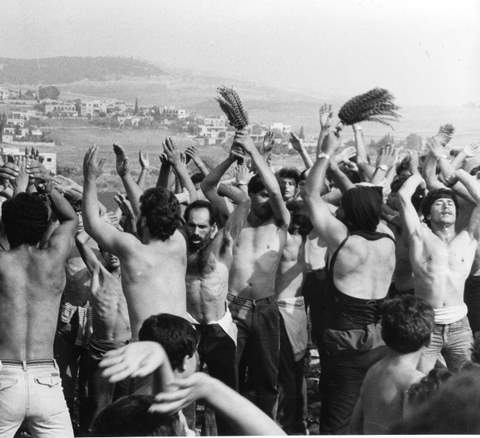
Rarely am I able to have the last word with my classicist father, but in this case my answer would have to be: mortification of the flesh is an eternal strand of human nature. As usual Wikipedia has many other answers about the phenomenon in various religions here. And their picture of Christian flagellants (above) reminded me of one picture taken as a young reporter in Lebanon that didn’t make it into the book (below).
Shia Muslims mark Ashura in Lebanon, in 1985, a time when passions ran especially high as all sought a remedy for the onerous Israeli occupation of south Lebanon
One of my fears in choosing to write Dining with al-Qaeda in the first person and as a compendium of personal stories was that I would be branded as an “Orientalist”, an abusive watchword when I was at university used against Middle East generalists. I always secretly thought that the old Orientalists knew a thing or two that we were missing, but didn’t know how to defend them. So it’s wonderful for me now to read that a Middle Eastern publication like al-Majalla (original version here) accepts the validity of my “patchwork” approach as adding up to a true portrait of the region
Found in Translation
——————————————————–
Reminiscent of Indiana Jones’ adventures, Hugh Pope’s account of his personal growth as a journalist in the Middle East is an epic book for anyone whose career interests have been driven by the mission of accurately representing the Middle East to Western observers. Honest and light-hearted, Dining with Al-Qaeda is more an autobiography than a historical or political account of Pope’s region of expertise.
Although this is not to imply that the book is without depth. On the contrary, in framing the political and socio-economic characteristics of the region around his experiences Hugh Pope manages to create what most educators aspire to do in a class. Teach and inspire, without having their students notice.
Taking you from his days as a student of Arabic and Persian at Oxford, to his days as a Middle East correspondent for some of the most well-known Newspapers in the West, Pope manages to traverse the region more times than one could imagine. It is in this way that he provides his reader the type of exposure to the numerous countries that make up the Middle East in a way that most other books on the region cannot. The essays that comprise his book may at first seem divided by space and time, but in the end comprise a comprehensive patchwork of the region ranging from post-revolutionary Iran to post-invasion Iraq. Most impressively however was how Pope managed to be present at every one of the most pivotal moment’s of the region’s history.
In his accounts, Pope does not limit himself to the factual accounts you could read in the media or a guide book, but rather explains countries and their histories as he experienced them at the time.
Instead, the aims of his book go beyond explaining the cultural encounters that one well-educated Westerner might have in his meetings with terrorists, officials, and women of a region that tends to fascinate. Rather, Hugh Pope embraces his journalistic training to expose the shortcomings and advantages that journalism itself has had on the region.
Although slightly disenchanting to those wishing to follow in his footsteps, Pope makes important strides in highlighting two issues with enormous effects on the relationship between journalism and policy-making. Pope eloquently argues that despite the ethics of the most prestigious journals in the West, obstacles stand in the way of presenting the Middle East accurately.
The preferences of editors, prevailing public opinions on the Middle East—all of these issues attenuate the message that journalists on the ground intend to get through to their readers. The most notable example Pope addresses is that of the Arab-Israeli conflict, which apparently was not news unless some prospect of peace could be incorporated into the journalist’s account. Pope thus demonstrates that despite the best intentions of journalists, at the end of the day, front page news is inhibited in a way that reduces its intended impact.
On a positive note, however, Pope takes advantage of this book to set the record straight. He tells not only of the obstacles but overcomes them giving its reader the better-late-than-never accounts. Combined with a first-person narrative, these insider’s views create a complicity between Pope and his reader that makes Dining With Al-Qaeda a pleasant and informative read.
Beyond the politics of Western journalism, there is also an important emotional dimension to Pope’s latest book. A student of the culture and languages of the Middle East, it is clearly difficult for Pope when instead of being acknowledged as an objective investigator, he is perceived of as a spy. Beyond the degree to which he is accepted in the region, Pope also brings to light the more serious risks journalism implies.
As a reader, one often tends to forget the dangers journalists in the Middle East expose themselves to in order to bring home accurate and interesting accounts. Pope’s ability to connect his reader to the day-to-day aspects of his profession is impressive. It is also a tribute to the colleagues and friends he lost in the field.
Dining With Al-Qaeda attests the ability of this journalist to speak to his audience. Despite the difficulty of explaining such a complex region during three of its most tumultuous decades, Pope succeeds in every one of the aims his book sets out to accomplish. Although not a historical or political reference work, Pope’s latest book is certainly a contribution to the study of the Middle East, if only for the moving and unique perspective his patchwork of essays provides.
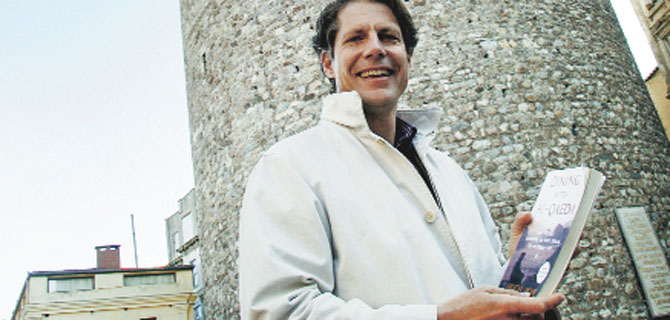
In the original newspaper version on 28 March 2010, there were some photos from the book and excerpts. The photographer even managed to fit my 1.80m against the full height of the Galata Tower, a great landmark that I walk past every day, watching tourists twist and turn their camera lenses as they try to perform the same near-impossible feat.
The interview below is as it appeared electronically (here), and Ipek Yezdani’s introduction also sets out the main themes of Dining with al-Qaeda for Turkish readers. (And if a Turkish publisher should wish to translate and publish the book, please contact Thomas Dunne/St Martins Press!)
30 yıldır batıya Ortadoğu’yu anlatıyor
İpek Yezdani
İngiliz gazeteci Hugh Pope 1980’de Suriye’de başladığı macerayı 23 yıldır İstanbul’da sürdürüyor. Pek çok önemli medya kuruluşu için çalışan Pope’un Türkiye’yi ve Ortadoğu’yu anlattığı kitabı nisan ayında ABD’de çıkacak.
Hugh Pope, Güney Afrika’da doğmuş, İngiltere’de büyümüş, yıllarca Reuters, The Independent, Los Angeles Times ve Wall Street Journal gibi uluslararası medya kuruluşlarının Ortadoğu temsilciliğini yapmış, bu sırada El Kaide militanıyla yemek yemekten tutun da Suudi Arabistan’da kadınlarla birebir röportaj yapmaya kadar birçok tabuyu yıkmış bir İngiliz gazeteci. 23 yıldır İstanbul’da yaşıyor.
Ortadoğu’ya ilk kez 4 yaşındayken arkeolog babasıyla birlikte ayak basan Pope liseden mezun olduktan sonra Farsça ve Arapçaya âşık olup Oxford Üniversitesi’nde Fars ve Arap dili okumuş. Ortadoğu’da yaşamaya başladıktan sonra ise doğunun, üniversitede kendilerine anlatıldığı gibi sadece egzotik şiirlerden, deve kervanlarından ve romantik çöllerden ibaret olmadığını, Ortadoğu topraklarının aynı zamanda tarih boyunca çeşitli travmalardan geçmiş, çoğu kez çatışma ve şiddetin hüküm sürdüğü topraklar olduğunu fark etmiş.
Irak Savaşı öncesinde Wall Street Journal’a yazdıklarıyla kendi deyimiyle “savaşı önlemeye çalışmış” bir gazeteci olan Pope’un, Ortadoğu’da geçirdiği yılları yazdığı “Dining with Al Qaeda” (El Kaide’yle yemek yemek) adlı kitabı, nisanda Amerika’da yayımlanacak. Pope kitabıyla, şimdi de Amerikalıların Ortadoğu’ya bakışını değiştirmeyi amaçlıyor.
Buralara nasıl geldiniz?
Annemle babam Türkiye’ye ilk kez balayı için gelmiş, Çeşme’den Bodrum’a kadar gezmişler. Küçükken onların Türkiye’deyken çektikleri videolardan çok etkilenmiştim. Türkiye’yi ve Ortadoğu’yu merak ediyordum. Oxford’u bitirdikten sonra Ortadoğu’nun gerçekte nasıl bir yer olduğunu merak ettiğim için buralara gelmeye karar verdim. Bundan tam 30 yıl önce, 1980’de Suriye’ye geldim.
Türkiye’den gönderdiğiniz en önemli haberler nelerdi?
1991’de 1. Körfez Savaşı sırasında Kürtlerin Irak’tan Türkiye’ye büyük göçü ile Orta Asya ülkelerinin bağımsızlıklarını ilan etmeleriydi. Bir de tabii Ortadoğu’da 11 Eylül sonrası ortaya çıkan yeni dönem var.
Dışarıda Türkiye’yle ilgili size daha çok ne gibi sorular soruluyor?
Herkes şunu soruyor: Türkiye Ortadoğu’da belli bir refah seviyesi bulunan, istikrarlı tek demokrasi. Peki, Ortadoğu’daki diğer ülkeler Türkiye’yi takip edip Türkiye gibi olabilir mi?
Sizin cevabınız ne oluyor?
Ortadoğu’daki diğer ülkeler Türkiye’yi, “Türkiye’yle aynı blokta yer almak” şeklinde takip etmeyecektir. Ama Türkiye’nin geçirdiği değişimlerin Suriye’ye, Mısır’a vs. öğretecek çok şeyi var. Güneydoğu’daki savaşı saymazsak Türkiye’de 90 yıldır genel anlamıyla barış hakim. Çok büyük travmalar yaşamadı, bu bölgedeki diğer ülkelerden çok daha istikrarlı.
“Gece hayatı çok pahalı” İstanbul’da yaşamanın en iyi tarafı ne?
Dünyanın her yerinden insanların ziyaret ettiği bir yer olmaya başladı. Yani İstanbul uluslararası bir çekim merkezi haline geliyor, bu heyecan verici. İstanbul’un Avrupalı olduğu kadar Ortadoğulu tarafının da olmasını çok seviyorum. Eğer buranın Ortadoğulu bir tarafı
olmasaydı kesinlikle burada yaşıyor olmazdım.
En çok nerelere gitmeyi seviyorsunuz?
Yürümeyi çok seviyorum. Arabam yok. Trafikten nefret ettiğim için araba almadım. En çok da Kapalıçarşı’dan Tünel’e yürümeyi severim. Kahvemi her zaman Eminönü’ndeki Kurukahveci Mehmet Efendi’den alırım. İstiklal Caddesi’ne yakın oturduğum için çok mutluyum, her yere yürüyerek gidebilirim.
Gece dışarı çıkınca nerelere gidersiniz?
Gece pek çıktığım söylenemez. İstanbul bizim gibi sıradan insanlar için pahalı bir yer oldu, hele de gece hayatı Avrupa’dan daha pahalı! Çıktığım zaman da özellikle yazın güneşin batışını seyretmek için Galata Köprüsü’nün altına gidiyorum.
Sevdiğiniz restoran da mı yok?
En sevdiğim yer ocakbaşı; Zübeyir ve Beyoğlu Ocakbaşı’na gidiyorum. Hatta ocakbaşıyla ilgili bir makale yazmıştım. Öğlenleri de Pera Palas’ın arka tarafındaki Karadeniz Pidecisi’nden pul biberli kaşarlı pide yemeyi seviyorum.
Sınıf arkadaşı Kral Abdullah’la yıllar sonra röportaj yaptı
Hugh Pope, 11 yaşındayken İngiltere’de, St. Edmund’s Ortaokulu’na giderken şu andaki Ürdün Kralı Abdullah’la sınıf arkadaşıymış. Pope
o zamanlar Abdullah’ın fotoğrafını çekmiş. Kralın o yıllarını “Neşeli, gülen bir öğrenciydi” diye hatırlıyor.
Aradan yıllar geçip Hugh Pope gazeteci olduktan sonra Kral’dan röportaj talep eder. Kral Abdullah, eski sınıf arkadaşı olduğunu bilmeden Pope’un röportaj talebini kabul eder. Kraliyet Sarayı’nda bir araya geldiklerinde Pope, Kral Abdullah’a 11 yaşındayken çektiği fotoğrafı hediye eder. Pope, Kral Abdullah’ın çok şaşırdığını, ancak okulu hiç de iyi hatırlamadığını anlatıyor. Fotoğrafı görünce şöyle demiş: “Ne, St. Edmund’s mu? Sen de mi oradaydın? O çöplükte!”
El Kaide militanını kendisini öldürmemesi için ikna etti
11 Eylül olaylarından hemen sonra herkes El Kaide’nin nasıl bir örgüt olduğunu merak etmeye başlamıştı. Benim de o sırada Suudi Arabistan’da tanıdığım bir arkadaşın bir başka tanıdığı, 11 Eylül’de uçakları kaçıran Suudilerle birlikte Afganistan’da aynı kampta eğitim almış bir militanı tanıyordu. Bu kişiyle ilk kez ortak bir tanıdığın evinde bir yemekte bir araya geldik. Ancak El Kaide militanı bana “Seni öldürmem gerektiğini düşünüyorum” dedi. Yarım saat boyunca beni öldürmemesi gerektiğine onu ikna etmek için uğraştım. En sonunda Hz. Muhammed’in izinleri oldukları taktirde kafirlere Müslüman topraklarını ziyaret etme hakkı verdiğini hatırlattım. “Peki böyle bir iznin var mı?” dedi, vizemi gösterdim. Bayağı gergin bir konuşmaydı. Vizeme baktı, “Ben Suudi Arabistan Kralı’nı tanımam, bu vize onun adına verilmiş” dedi. Ben de “Evet ama camilerde dualar da tamamen onun adına okunuyor, öyle değil mi?” dedim. Düşündü ve “Haklısın, seni öldürmeyeceğim” dedi. İnanılmazdı, oturmuş halı pazarlığı yapıyor gibiydik.
30 yıldır batıya Ortadoğu’yu anlatıyor
İngiliz gazeteci Hugh Pope 1980’de Suriye’de başladığı macerayı 23 yıldır İstanbul’da sürdürüyor. Pek çok önemli medya kuruluşu için çalışan Pope’un Türkiye’yi ve Ortadoğu’yu anlattığı kitabı nisan ayında ABD’de çıkacak
Issandr El Amrani has posted this blog about Dining with al-Qaeda here on www.arabist.net. I hope he likes the rest of the book!
For my part, I love arabist.net’s signature use of cartoons – this one from P. Jacobs’s series Blake et Mortimer (thanks for the reference, Max Rodenbeck!) and others from Tintin ‘s adventures with the Pharaohs. For all their old-fashioned attitudes, those drawings have a lot that’s empathetic towards the Middle East.
I’ve just started reading Hugh Pope’s journalistic memoirs, Dining with al-Qaeda. It’s really good fun so far, and the second chapter — covering Pope’s first job with UPI in Beirut — has a great story of his disenchantment with Robert Fisk, who always magically had more exciting stories than anyone else. His secret: he made them up. Pope went to great length later on to investigate claims by Fisk, in his Independent reporting and in his magnum opus, about Turkish “starving” of Kurds that nearly got the Independent banned there and caused Turkish authorities to blow a gasket, almost kicking Pope (a lowly stringer for the Indie) out of the country. He’s calls all this “Fiskery” — others call it Fisking, especially when Fisk goes after individuals — and while he’s not bitter about it there’s a real sense of disappointment that Fisk jeopardizes his position of authority and emotional power on these made-up stories. He writes:
Fisk’s writings, more than almost anyone else’s, manages to step around the cautious conventions of Middle Eastern reporting and drive home at an emotional level the injustices of the dictators and the cruel side of U.S. policies But facts are facts, indispensable legitimizing agents of readers’ emotional and political responses.
The thing is, Fisk’s over-active imagination makes it easy for Pope to find holes in his reporting, for instance when Fisk refers to getting onboard an Apache helicopter even though they don’t have passenger seats. If you hang around journalists with several decades of Middle East experience, particularly ones who were in Beirut in the 1980s, you keep hearing these stories again and again about Fisk. It’s a great, great shame that this otherwise powerful writer keeps on doing that.
In any case, do pick up this book, especially if you have an interest either in foreign correspondents in the Middle East. I’ll do a proper review later, but I see that the Economist loved it (and if you read the review, you’ll note a mea culpa about the paper’s support for the Iraq war at the bottom).
S. McGee is one of the top reviewers on amazon.com, and she has awarded Dining with al-Qaeda a “solid four stars” – a category McGee defines as representing “a book that is very good, albeit with a few significant flaws or shortcomings.”
The flaw cited by McGee is that I bang my readers too hard on the head about the difficulties of getting stories about the Middle East onto the front page of the Wall Street Journal. Members of my own family have long been the first to object to any hint that I might be riding a hobby horse, but apparently they haven’t trained me as well at hiding this trait as I thought. To prove it: I stick to my position that reporting on the Middle East puts up unique obstacles for journalists, which must be exposed!
And I note with satisfaction that McGee says her stated reservation is mainly for fear that other readers might not be interested, and acknowledges that she herself is “fascinated” by my look at this very same process.
An intriguing look behind the scenes at covering the Middle East
By S. McGee (amazon.com top 100 reviewer)
March 21, 2010
Hugh Pope’s new book is a different kettle of fish from the stellar but straightforward Sons of the Conquerors: The Rise of the Turkic World, which was a great (and highly recommended) look a the world inhabited by the Turks today, from Turkey itself to the southern reaches of Russia and all the way to western China. That was a straightforward book of journalistic reportage; this is more of a hybrid, a book that focuses as much on Pope’s experiences living and working in the Middle East over the last three decades as on the regions that he has lived in and traveled through.
Unlike Robert Fisk’s massive The Great War for Civilisation: The Conquest of the Middle East, which is a similar kind of book in focus but far more ambitious in both scope and message, Pope’s survey has no single compelling theme that sets current events in a historical context. That’s a strength in some ways — certainly, reality is hard to shove into a nice, neat little analytical framework, particularly in this region. On the other hand, it doesn’t give the reader — particularly one who is new to reading about the Middle East and with a familiarity with the issues gleaned only from cursory glances at newspapers and CNN — much to hold onto as they follow Pope as he skips back and forward in both time and place, moving from his early adventures living atop a brothel in Aleppo, Syria, to his efforts to avoid frontline combat reporting in Iraqi Kurdistan during the American-led invasion of 2003. But then, Pope, unlike Fisk, doesn’t make himself the hero of his own narrative (indeed, Pope’s early discussion of Fisk’s own recasting of reality in his book are eye-opening), although they start from a similar philosophical viewpoint: that over the last half-century or more, Europe and North America have tended to oversimplify the complexities of the Middle East and have remained dangerously unaware of the consequences of their often-clumsy political manoeuverings in the region.
Many of the observations, anecdotes and arguments put forward by Pope are at once fascinating and eye-opening. There are some “oh my god” moments, as when he has to bargain for his life with a Saudi recruiter with Al-Qaeda, and some sobering moments when the reader gets a glimpse of the reality behind the ‘glamorous’ life of a foreign correspondent, as when he spends six weeks or so trapped in a besieged town in southern Sudan after he decides to hitch a ride out the next day only to find that rebels have declared a ‘no fly’ zone. Pope tries to shed light on the Persian/Iranian character by probing into the writings of a long-dead poet, Hafez; and writes about the irony of Saudis destroying their own Muslim heritage when they level historic buildings in Mecca in order to build McDonalds franchises and glass office buildings and malls.
When Pope is weaving stories like this, I was caught up in the moment, and felt I was gaining more insight into a region that I’ve traveled through, at least insofar as I’ve been able to as a woman and a North American who prefers to travel on her own. (In other words, Jordan, Syria, Egypt, Turkey — yes; Yemen and Saudi Arabia or Iran, nope.) His language skills (Arabic and Persian) give him an edge in reporting; the reader can have confidence that what Pope writes is what he has actually heard people say, rather than having it filtered through an interpreter who may have a separate agenda. That said, Pope has his own agenda: that Americans are too narrow-minded about the Middle East, and that may, unfortunately limit the audience for this book.
My only reservations come with this book as journalistic memoir. Pope goes back, over and over again, to his difficulties getting his stories on the front page of the Wall Street Journal, and the compromises he has to make to make them work for his editors and readers. Eventually, these endless variations on a single theme became wearing, even for me (and I spent years running the same gauntlet, albeit not from the Middle East, and was fascinated by his look at a process I know all too well and the personalities involved, whom I also knew.) For anyone outside the rather incestuous world of journalism, I would imagine these would become either wearing, or feed into theories that the media is deliberately withholding “the truth” about the world. (In fact, in my experience, the Journal’s page one editor are simply in search of counterintuitive “man bites dog” stories, and too many of the stories about which Pope felt strongly just didn’t meet that threshold.) There’s a case to be made that that is too narrow an approach to take, particularly when it comes to covering such an important region, but it really isn’t about bias, and if that’s the story Pope wants to tell, it would probably work better in a separate book. The two themes in this story — what has happened in the Middle East over the last 30 years and Pope’s frustrations with his editors and publishers as he tries to write about those events — don’t always coexist easily, and make it a less fluid and focused book.
Still, Pope pulls no punches and that’s refreshing, as is his point of view. He has witnessed enough tragedy on a massive scale that this book deserves a wide and open-minded audience of readers willing to think about his observations. As he notes in his brief conclusion, there are no uplifting endings — but then, that’s the reality of the world we inhabit and our yearning for a happy ending, for a pat resolution, can actually undermine our geopolitical efforts. Pope’s ultimate and idealistic plea is for a kind of pragmatism that is all too thin on the ground. Perhaps it’s appropriate that Pope has left journalism to work for the International Crisis Group, an independent body that does remarkable work in trying to identify the causes of some of the conflicts he has chronicled and find a way to defuse them before it’s too late.
This is a solid and well-written book that tells uncomfortable truths, without cloaking them in dramatic feats of derring-do by the author or splashy revelations about foreign policymaking. Anyone with any interest in the Middle East should read this, as it brings a stubbornly independent perspective and an eclectic set of memories and experiences to the mix. It’s not as compelling or streamlined a narrative as Fisk’s book, but in some ways may be both more raw and more honest. But it’s probably not a good introductory book on the Middle East, simply because of the way it jumps from one region and time period to another, and because of the frequent diversions into the art of reporting. A solid 4-stars.
Pope, formerly the Middle East correspondent for the Wall Street Journal, here recounts a career’s worth of regional reportage that began in the early 1980s, an arc that follows his pursuit of interesting stories and interviews, as with an Islamic militant who debates with Pope about whether to kill him. Danger is often present in Pope’s stories, and his daring stories reflect his determination to break out from templates in which Middle East news, in his view, is presented in America. Perceptions that radicals represent the whole of Islam is one that Pope seeks to dispel, an intention realized in his journey to Shiraz, Iran (associated with a fourteenth-century Persian poet) that indeed textures a variegated Islam, while his drive to find a new angle also characterizes the many wars he’s been compelled to cover, such as the Lebanese civil war and the American-led invasion of Iraq. His criticisms of the invasion and of Israel may grate some readers, but those interested in the interpersonal rather than the international will enjoy Pope’s bold curiosity in meeting people all over the Middle East. — Gilbert Taylor
I love reading the Economist from cover to cover. Their Middle East coverage can be especially good, even if I sometimes disagree with their editorials. The way the Economist really writes the news makes a more lasting imprint on my mind than other media. I always envy the pithy puns in the headlines, too. In the 30 January edition, however, I found that it had fallen prey to the more subtle and often inadvertant problem that I often dealt with as a reporter in U.S. newspapers – omission.
The 2-1/2 page article, the showcase of the International section, laid out plausibly effective measures to counter al-Qaeda. Three lines did quote Osama bin Laden saying he’d fight on until the U.S. dropped its support of Israel, but mostly passed over the way so many of the main actors in al-Qaeda say that what first pushed them into the group or its way of thinking was anger over Israeli policies towards the Palestinians.
These include Mohammed Atta and Khaled Sheikh Mohammed of 9/11 notoriety, or the recent bomber of the CIA in Afghanistan, Humam Khalil Abu-Mulal al-Balawi, at least according to the testimony of his Turkish wife. In Dining with al-Qaeda, I also recount how mayhem in Israel-Palestine overshadowed a visit I made a few days after Sept. 11 to the home of one of the pilots, Marwan al-Shehhi, in the Gulf sheikhdom of Ras al-Khaimah.
Bringing up the subject is not to justify the terrorist acts of these people, or the warped way in which such groups brain-wash their adherents before sending them to kill and be killed. But one of the points I try to illustrate in Dining with al-Qaedais that as long as we refuse to acknowledge and deal with problems that fill the swamp of frustration and anger from which al-Qaeda has emerged, nobody will be able to settle the problems that result.
So for once I gathered myself up and wrote to a letter to the Economist. To my astonishment they printed my letter, as below, on 27 February. They even used my suggested headline.
Minding your Ps and al-Qs
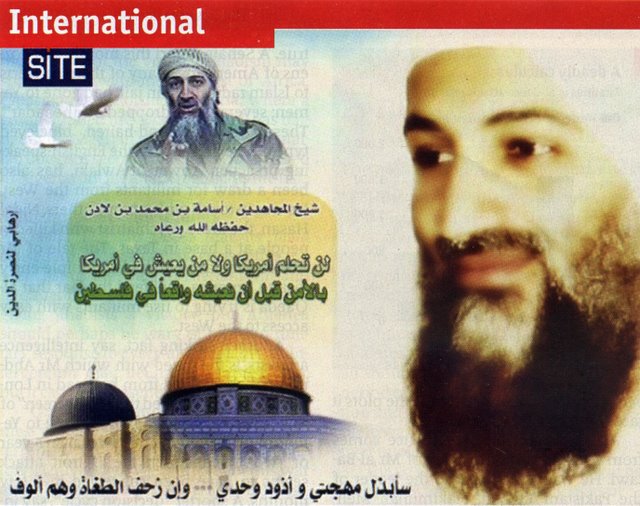
SIR – Prevention, Pursuit, Protection, Preparation, and Perseverance: all may help parry al-Qaeda, as you proposed (“The bombs that stopped the happy talk”, January 30th). But you neglected a principal plank of al-Qaeda propaganda, spelled out in Arabic in the picture accompanying your article: “Neither America, nor any person living in America, will dream of security until we really live in security in Palestine.”
Al-Qaeda may be duplicitous in exploiting Muslim opinion about the West’s bias towards Israel, but the West would be imprudent to pass over the real anger provoked by unbalanced support for Israel. Al-Qaeda militants have often said their first steps were motivated by a desire to exact revenge for Israeli actions. So how about promoting a sixth P to plug the flow of recruits to such groups: peace, through fair play in the Middle East? That way, the plosives might indeed begin to overpower the explosives.
In its Spring 2010 edition, the Washington DC-based periodical Democracy: A Journal of Ideas published this letter from me arguing that American media’s responsibility for the U.S. invasion of Iraq results from a broader problem than just a tendency to kow-tow to the former government of President Bush … a situation I’d come to see clearly while writing Dining with al-Qaeda.
Issue #16, Spring 2010
Letters to the Editor
by Democracy:A Journal of Ideas
The Media and Iraq, Eight Years On
Leslie Gelb and Jeanne-Paloma Zelmati make useful points about the failure of the “elite press” to be critical enough of U.S. policies before and during the invasion of Iraq [“Mission Unaccomplished,“ Issue #13]. As the only correspondent who reported from Iraq in the year before the war for one of the newspapers they refer to, The Wall Street Journal, I would like to raise more fundamental issues that foreign correspondents like me faced in tackling the onrush of the Iraq war. These are the problems that are endemic in reporting anything about the Middle East in a U.S. newspaper.
Some of these obstacles are cultural, not political. American readers like, and editors look for, stories with American characters, transparent motives, and happy endings. We pulled punches in order not to disturb Americans’ comfort zones: minimizing bloody violence, boiling hatreds, and the Western role in plotting coups and stoking up at least 15 major wars and revolutions that have crippled Middle Eastern societies over the last century.
Instead, we all played roles in constructing familiar but artificial narratives: an Arab-Israeli “peace process” that has never proceeded anywhere, a misleading scenario of regional struggle between “moderates” and “radicals,” a myth of American neutrality, and analysis confused by one-size-fits-all labels like “Islam,” “Arab world,” and “terror.” The “elite press” thus helped build a wall of incomprehension between American readers and the realities of the region. Unsurprisingly, the average American in 2002 had a hard time understanding what was going on anywhere in the Middle East, let alone in Iraq. Additionally, especially in the case of the Journal, readers’ and policy makers’ opinions in the run-up to the war were surely swayed by largely unchallenged articles in the opinion pages by hard-line Israelis and their American supporters, making what soon proved to be fallacious assertions about America’s duty to invade Iraq. At the same time, for much of the 2000-2002 period, the Journal’s news pages didn’t even have an Israel correspondent.
It was hard to see all this while working in the field. At the time, when I tried to alert readers to the folly of the Iraq war, I felt like a blade of grass flattened by a gale force wind of pro-war sentiment. I often just felt depressed, even emasculated, and I understood how tempting and empowering it must have felt to be able to join the militarist charge.
It is humbling to realize that this flattened-grass effect is how journalists in authoritarian regimes feel most of the time. I remain thankful that, unlike them, I was not also trampled underfoot. In the Journal’s news pages, my editors were honest and rigorous, and they printed my dissident stories, even if the problems mentioned above did distort, diminish, and delay our coverage. My field-based analysis on the historic folly of invading Iraq or any Middle Eastern country did eventually grace the front page of the newspaper. But it only appeared on the day before the tanks started rolling in.
Hugh Pope
Istanbul, Turkey
This should be a set text on how to write a neutral review!
Reviewed by L. Carl Brown
March/April 2010, Vol 2, Number 89
Ranging geographically from southern Sudan to Afghanistan, this book covers not just terrorism, wars, and occupations but also sexual mores, architecture, and poetry. Pope chronicles his three decades
covering the Middle East as a journalist in 18 short chapters (the last five of which concern the war in Iraq). His approach is introspective and autobiographical, linking each story to the people he met and the places he visited. A few themes recur: the West (especially the United States) has been egregiously bad in dealing with the Middle East; the Middle East is neither so good nor so bad as Western stereotypes depict it to be, just more complex; and the Western media is hobbled by ethnocentric ideas of what is newsworthy and by a pro-Israel bias.
 One-man broadcaster Brett Winterble is such a dynamo that his Covert Radio website homepage is topped by a quivering ammeter. This U.S. station may well be the only one dedicated to covering all aspects of the War on Terror for subscribers and a dozen affiliates. Winterble, who has a degree in ‘Homeland Security and Intelligence Methods’, flattered me with boundless enthusiasm for Dining with al-Qaeda during an interview that aired on 31 March 2010. Surprisingly, he was also open to all my hard-earned soft talk of empathy and engagement with the Middle East. This seemed extraordinary given that his show is dedicated to being the scourge of everything from al-Qaeda to Jundullah to Pirates to ‘black widow’ suicide bombers to Aztecas to European Eco-Terrorists. Given the likely profile of his listeners, it’s not surprising that his teaser for his show with me read “his answers will surprise you.”




 Hugh Pope