
Nonprofits aim to make the world a better place. But could they and their leaders do better themselves?
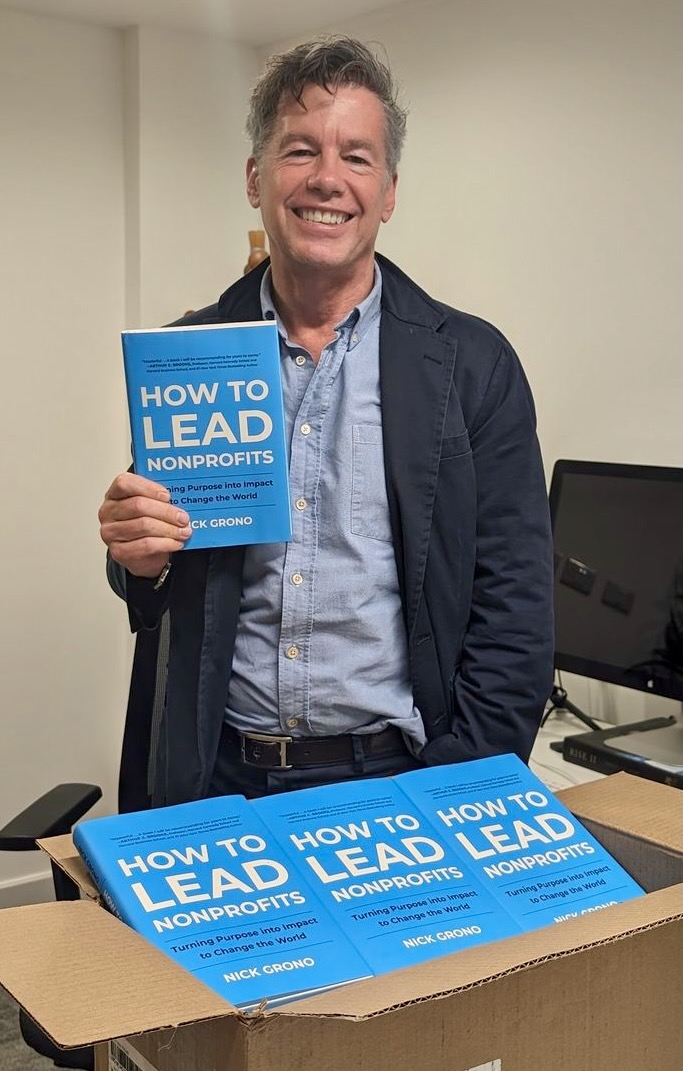
In How to Lead Nonprofits: Turning Purpose into Impact to Change the World – to be published on Tuesday 16 July – long-time nonprofit executive Nick Grono points out the pitfalls and the best-case scenarios of his (and for many years my own) line of work.

Books aren’t that common about the skills needed to manage one of the world’s 1.5 million nonprofits, also known as charities or nongovernmental organizations. Those on general release can often be uplifting but one-off personal stories, for instance about how the gift of a pencil or a sweater inspired a world-changing mission.
While Grono’s handbook is aimed squarely at non-profit CEOs, his insights are useful to anyone interested in a more idealistic style of management. Short, practical chapters distil the principles that he believes should guide nonprofits’ mission, impact, strategy, staff, corporate culture, boards, partners, diversity, funders and fundraising. Grono sets the bar high. He shares only the occasional cautionary vignette of what goes wrong, even though this is a business in which expertise and reputation are often prized far higher than the ability to manage.
The lodestar of purpose
Purpose, Grono says, must be the lodestar of the nonprofit and its CEO: “All highly successful nonprofits put purpose and impact at the very heart of everything they do, and they maintain a disciplined and relentless focus on them.”
Grono further advocates that CEOs should concentrate on the communities their nonprofits serve, build “resonant relationships” with funders, and include local partners at all levels of the international nonprofit. He explains in detail how to measure evidence of impact, arguing that activities, outputs and meetings count for little if they don’t directly serve the nonprofit’s theory of change, that is, the means by which its purpose will be achieved.
An Australian lawyer by training, Grono compellingly illustrates his arguments from his three decades’ experience of running a rich variety of organizations: one took youngsters sailing on a square-rigged ship, others aimed to prevent war, support human rights or stamp out people-trafficking.
Personal anecdotes include the amazing day that he took what seemed to be a random phone meeting and learned that his organization had won a (hard-earned) gift of $35 million. Nuggets from his research include a study showing that the twelve highest-performing nonprofits have had CEOs in place for a decade or more – echoing similar findings from the for-profit world about the value of nurturing long experience.
Most of the real-world examples Grono gives are uplifting stories about how things go right in the end. There are plenty of gold stars (and more than 100 mentions) for the Freedom Fund, the anti-slavery nonprofit that Grono has led from its creation a decade ago. That said, he also makes space for other top nonprofit CEOs to give their insights and pithy case studies.
Each chapter – in the best tradition of the how-to book – ends with clear action points on how the non-profit CEO can overcome each of the challenges outlined.
Coercive leadership
Grono assumes good intentions and that all nonprofit leaders aspire to be best-in-class. Still, he does note the perils of mission creep beyond an organization’s core purpose, a nonprofit tendency to avoid tough decisions and that “at worst … badly led nonprofits can operate for many years without being held accountable”.
There is also a warning for CEOs who are too dominant. “A version of coercive leadership too often found at nonprofits is the “hero” or “charismatic” style … These leaders bring huge passion and charisma to their roles. They are often founders who have created organizations in their image. But the problem with this style of leadership is that its important strengths – the ability to inspire others and sell a powerful vision – [is that] often the hero leader thinks that their interests and the organization’s are one and the same, or even that their interests take priority. Such leaders often verge on being narcissistic, and frequently bully subordinates.”
If staff don’t feel safe and trusted, Grono says, they won’t be productive. Persuasion and teamwork works better than diktat, especially when power is actually diffuse in an organization. CEOs need to be aware, he says, of how they define the culture of the organization: if they do not admit mistakes, nobody under them is likely to do so either. He points out the irony that a lack of self-confidence can lie behind an unhealthy desire to control everyone and everything.

What should staffs and boards do when an authoritarian CEO has such a grip on an organization? Grono could have made more space for advice. Furthermore, what should a CEO or other board members do when a single, usually rich individual begins to dominate a nonprofit board and all major decisions? How should CEOs react when individual directors turn their positions or programs into highly-reputed and untouchable silos? Decrying physical harassment is a given, but what should leaders do when high-performing colleagues indulge in another bane of nonprofit life, intellectual bullying?
On another level, Grono assumes that the nonprofits, donors and the communities they serve have the purest of motives – that is, not financial gain, paying high salaries, serving a general strategic or ideological interest or simply wanting to defeat an enemy. However, there are nonprofits that do make money from their activities or serve national causes. The grey zone between the two poles – with international, change-the-world impact at one end and making money or seizing advantage at the other – is quite wide and might have been worth more exploration.
Also, serving and including exploited or vulnerable communities seems logical for organizations interacting directly with them, like Grono’s own Freedom Fund. But what about nonprofits whose “communities served” are something as large as the oppressed of the world, the global poor or any nation at risk of war? Are some nonprofits just one part of the global elite engaged in serving another part of the global elite? Can this be good too, and if so, what service criteria should be applied to these organizations? And are there different principles involved in running a nonprofit of a few hundred people compared to some that have thousands of employees?
Perhaps these more detailed management conundrums would have overloaded the book, which keeps its focus tightly on helping CEOs themselves define their vision, prioritize, collaborate with peers, delegate to avoid burnout, think through strategies and remember that “the planning process is often more valuable than any written strategic plan”.
Turning rebellion into consultation
When writing about building teams, Grono describes a time when he was deputy president of the International Crisis Group, a conflict-prevention organization. The 2008 financial crisis had hit the outlook for revenue and his management team prepared a cull of employees. At a retreat soon afterward, he relates how senior Crisis Group staff rallied after dinner to find another way to save the necessary amount of money; those involved in the intervention even demanded that one of them chair retreat discussions on the topic. Grono says he felt “deeply distressed at the way events were unfolding and the realization that my mishandling of the process had let to a staff revolt.”
I was a Crisis Group project director back then and do remember how Grono and other bosses looked uncomfortable at this uprising. But despite hearing one or two fiery speeches, it didn’t occur to me at the time that many people felt he or our president had done anything wrong.
Instead, it was a tribute to Grono’s ability to keep the organization running smoothly that the meeting took place undisturbed, the senior staff’s suggestions were largely adopted, the retreat ended with a standing ovation for the then departing CEO and Crisis Group came out of the storm stronger.
Small wonder too that Grono went on to become a successful CEO himself. This operating manual on how to run nonprofits is sure to help others follow in his footsteps.
 Hugh Pope
Leave a comment