Hugh Pope

Author, Reporter, Editor

  • Image of book coverI’ve long been a fan of Azadeh Moaveni‘s writing, and especially enjoyed her book Lipstick Jihad, which tells about her Iranian-American childhood and her attempts to return to Iran. So I was really happy that she agreed to endorse Dining with al-Qaeda:

    “Hugh Pope’s deftly told account of 30 years in the Middle East recounts the region’s troubles with bracing honesty, and its charms with genuine affection. Often a page-turner, populated by a colorful cast of deeply human characters, Dining with Al-Qaeda goes beyond the day’s headlines to offer a nuanced and compelling portrait of the region. Pope brims with remarkably brave and crucial insight into the Western media’s coverage of the Middle East.”
    Azadeh Moaveni, author of Honeymoon in Tehran and Lipstick Jihad

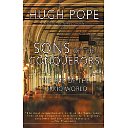
  • Sons cover thumbnailThe third section from my book on the Turks and the Turkic world that relates my experiences with and conditinos of the Uygurs in the northwestern Chinese province of Xinjiang.

    Hugh Pope, SONS OF THE CONQUERORS: The Rise of the Turkic World, pp. 13-19, 41-171 (New York: Overlook Duckworth, 2005)

    10. THE ANT AND THE ELEPHANT

    THE UYGUR STRUGGLE TO SURVIVE CHINA

    An elephant can crush an ant with one footstep. But an

    ant inside an elephant’s trunk can madden it to death.

    —Uygur proverb

    ASLAN’S DAGGER BLADE GLINTED IN THE LATE AFTERNOON SUNLIGHT

    streaming through the pointed archways of a bare room on the roof of

    the Emin mosque. The young Uygur lovingly watched the knife turn in

    his hand, and conversation came to a halt. Distant donkeys brayed as

    they pulled carts back from the vineyards that carpeted the ancient oasis

    town of Turfan with a luxuriant green. A tock-tock-tock of hammering

    floated over from mud-brick towers in which desert winds dried grapes

    into small grains of sweetness. From below came the squeak of wheelbarrows.

    Chinese workers were ending a day’s work laying out an immaculate,

    soulless socialist park right beside the 300-year-old place of prayer

    where we sat.

    Chinese communist ideologues had long brushed aside the Muslim

    identity of the monument. The authorities have named it the “Sugong

    Tower,” after its imposing minaret. British traveler Francis Younghusband

    was no more respectful of its intricate brickwork when he passed by in

    1887, saying it looked “much like a very fat factory chimney.” For me,

    however, the minaret was a lighthouse that marked the easternmost

    promontory of my journeys through the Turkic world. The Turfan oasis

    is the last large Uygur settlement on the road eastward toward China’s

    heartland. It lies about 500 miles west of the Great Wall. Abandoned

    deep in the desert lie what are said to be the remains of the Jade Gate,

    through which trading caravans once passed as they left the realm of

    undisputed Chinese sovereignty. There are Turkic communities further

    to the east, but here in Turfan, the Turkic world can be said to properly

    begin. Wooden-collonaded architecture just like the Emin mosque can

    be seen in medieval structures as far west as Turkey, a fragment of a

    Central Asian style carried along the Silk Road during the many centuries

    of Turkic migrations.

    Aslan proudly showed the blue hilt of his knife: “Made in Kashgar,”

    it said in English, with the S of Kashgar the wrong way around.

    “Why do so many Uygurs carry knives?” I asked.

    “When you go out in the dark, you feel safe with a knife,” he said.

    “You hold it like this.” The thin 22-year-old wrapped the handle in his

    fist, lifted the wickedly curved tip of the blade slightly upwards, and

    gripped the lethal weapon close to his belly. A shadow crossed his face,

    and the skin tightened on his high cheekbones. “If you pull out a gun,

    people challenge you, ‘Go on, shoot.’ But a dagger, they’re frightened of

    that.”

    A dagger hangs in a scabbard from the waist of many Uygur men in

    Xinjiang. Such knives are one reason why ethnic Han Chinese newcomers,

    who prefer electronic pagers on their belts, steer clear of Uygur neighborhoods

    at night. Most Uygurs, of course, only use the blades for cutting

    open the melons they share with all comers throughout the summer.

    Aslan resented Chinese rule. Ten years earlier, he said, the authorities

    had shut down a religious school in the mosque. “Small groups of

    students were saying bad things about the Chinese,” he recalled with

    pride.

    But daggers and the odd terrorist bomb have proven no match for

    the world’s most populous superpower. In the lengthening shadow of the

    Emin mosque’s minaret, the Chinese workers had finished their civilizing

    mission for the day. A young architect wearing rimless glasses and

    cargo-pocketed shorts inspected a new brick terrace. Blank-eyed workers

    slaked their thirst with beer and plucked with chopsticks at their

    dumplings. The skimpy shirts and trousers, the alcohol, the forbidden

    pork meat in the mosque precinct would have horrified a devout Muslim

    of the Middle East. Their behavior did not faze Aslan, however, who

    quite liked the neat lines of the park. What bothered him was that there

    was not one Uygur among them.

    “Most of us here in Turfan are Uygurs, but not one of us can get

    work in our own mosque,” he said.

    Aslan invited me home. Once I picked up speed on my rented bicycle,

    he jumped up onto the rear carrier frame. In the old Uygur quarter,

    the centuries had worn smooth the remaining beaten-earth streets.

    Across a wide new boulevard we walked through a rough, narrow passage

    between brick walls that led to a gate in his garden wall. His family

    came out to greet us in a dirt courtyard. Aslan’s father took me to pick

    a bunch of small Turfan grapes from the tangle of vines on the trellis

    overhead, and then his mother invited me to sit on a square platform in

    a corner of their garden. Aslan cut open a melon. A conversation of sorts

    got cautiously under way with his father Mohammed.

    “How is it in Turfan?”

    “It is good.”

    “I see you have cotton, grapes, melons . . .”

    “We have cotton, grapes and melons.”

    “So life here is good?”

    “Life is good.”

    Silence fell. On one level, the common language and gestures made

    me feel as though the Uygurs were close to other Turkic nations. On

    another, they seemed to know remarkably little of the world outside their

    almost medieval domain, or of the broad Turkic resurgence of the past

    decade.

    “Where are you from?” Mohammed asked.

    “From Istanbul, in Turkey,” I responded.

    “Oh, isn’t Turkey Muslim?” he asked, brightening considerably.

    “Yes, Turks are Muslims,” I said. “But they are also Turks, like the

    Uygurs. Aren’t Uygurs Turks as well?”

    “Turks?”

    The family group perched on and around the wooden platform

    looked puzzled before they got my meaning. The name of Turkey had a

    positive ring to it, but even though two of Aslan’s friends were studying

    there, it seemed to these Uygurs to exist in another, unattainable uni-

    verse. Uygurs who heard me speaking an approximation of their language

    assumed it was because there were Uygurs where I lived. Few had heard

    of Turkish republican founder Kemal Atatürk. Eighty years out of date,

    many thought Istanbul was still the capital of Turkey.

    My courage faltered in this increasingly political terrain.

    “What do you think makes the Uygurs special?” I asked the assembled

    company as the evening darkness softened the heat into a dry, blanketing

    warmth.

    “Once we were great,” volunteered Mohammed, flexing his forearms

    and clenching his fist. Then, with a meaningful, silent look and a nod,

    he added: “We are nothing now. I’ll leave it at that.”

    Mohammed’s sense of a modern Turkic identity might have been weak,

    but he was aware of the Turkic empires of the past. The Uygurs first

    appeared in the eighth century AD in what is now Mongolia, taking over

    leadership of a federation of Turkic tribes from the rulers of the first

    explicitly “Turk” state, the Göktürks. They ruled a wide empire for a century

    before themselves being forced to move southeast to the area now

    known as Xinjiang. New leaders arose in Kashgar in the mid-tenth century,

    known as the Karakhanids. The first Turkic encyclopedia, the Divan

    ul-Lugat al-Turk, the Compendium of the Turkic Languages, was written

    by a Karakhanid nobleman, Mahmut of Kashgar. Around the same time,

    Yusuf Hass Hajib of Kashgar wrote his Kutadgu Bilig, a book of advice for

    princes, whose 6,700 couplets are the first work of Turkic literature. Two

    centuries later, when the Mongol leader Genghis Khan conquered most of

    Asia, the educated, literate Uygur elite supplied the bureaucracy of his

    empire. Later, I would meet educated Uygurs who noted with satisfaction

    that the Mongol, or Yuan dynasty actually ruled the whole of China for

    nearly a century from 1279. But the dynasty fell in 1368, and thereafter the

    Uygurs and Chinese began to compete for territory and trade. The name

    Uygur fell into disuse for centuries and was only revived by Soviet ethnic

    planners in 1921.

    “Where did the Uygurs go wrong?” I asked Aslan’s father delicately.

    That question was answered with a heartfelt sigh. No one spoke. I

    had touched on a subject that perplexes Turkic peoples everywhere:

    their weakness, disunity and failures in the past century. The Uygurs

    have a better excuse than most: their lands were a battlefield between

    the far greater powers of the Soviet Union and China for the first half of

    the 20th century. After being cast away by Moscow in the late 1940s,

    Xinjiang was subjugated by China for the second half of the century.

    I tried to compliment him on his bright and hardworking son, Aslan.

    But Aslan complained that he could not speak or write proper Chinese,

    which blocked his access to good work.

    “I always wanted to be a mechanic,” he said bitterly. “Whenever I see

    a broken bike, I want to fix it. TVs, watches, radios too. I’d like to open

    a shop. But I can’t. I couldn’t get the parts. We’re not allowed permits to

    get them. The Chinese don’t let us do anything. All we’re supposed to do

    is pick our grapes.”

    Even a half-century ago, there were clear signs that told travelers

    they were passing westward from a Chinese to a Turkic domain. The

    high-wheeled Turkic arba carts cut wider ruts into roadways than did the

    trucks belonging to the Chinese. Bread appeared in roadside stalls, and

    rice became rare. The ubiquitous children’s kites were thinner and flew

    higher, and the flat faces of the ethnic Chinese gave way to high Turkic

    cheekbones. The sing-song staccato of colloquial Chinese would switch

    to the more guttural sounds of Turkic. Today, many of these signs have

    vanished; the physical geography has been blurred as the Chinese

    expand their settlement around roads and towns and push the Uygurs to

    the margins. Although the main body of China is hundreds of miles to

    the east of Turfan, it is largely the Chinese who benefit from new highway

    connections like the one I followed westward to Urumqi, the capital

    of Xinjiang. Uygurs are condemned to a parallel economic, social and

    political system, their villages bypassed by the new main roads. China

    clearly hopes such policies will lead their culture to dry up in a desert

    dead-end.

    I boarded an intercity bus in Turfan’s characterless new main square,

    and soon we were skirting the edge of the Taklamakan desert. Once the

    bed of a great sea, it is now a forbidding expanse of sand dunes whose

    Turkic name means “place-where-one-gets-stuck.” Merchants used to

    set their course by the bleached bones of dead animals. For the Chinese,

    travel is far easier now. The driver of the bus careered around brand-new,

    still-empty toll booths. The highway was even and smooth—and, I

    learned later, partly financed by the World Bank. Gas stations built to

    resemble great pyramids and cartoon fantasies whizzed past, as if in defiance

    to the harsh desert haze that hung over us.

    After an hour, the rocky east-west range of hills that divides Xinjiang

    into two vast, shallow bowls loomed ahead. The bus climbed out of the

    Tarim basin and up the rocky river gorge that leads to the northern

    plateau. A howling wind lashed the river beside the highway into galloping

    waves, whipping spray off the crests in long sheets that hung in the

    air over the water for dozens of yards. As we emerged onto the plain at

    the top of the gorge, a gigantic icon of China’s modernity stood before

    us. With memories of the Uygurs in their shady, timeless Turfan oasis villages

    still fresh in my mind, I was amazed to encounter among the barren

    hills the swooping propellers of a vast complex of Chinese windmills,

    purposefully feeding electricity into a network of high-tension powerlines.

    With a new railway line shooting straight into the heart of distant

    Kashgar, and new highways all over the territory, there is no doubting

    Chinese determination to impose control. Reasons are not hard to find.

    Apart from defending China’s northwestern frontier, officials believe

    nearly 80 billion barrels of oil may lie under the province, nearly as much

    as Iraq or Iran possesses, although so far only 2.5 billion barrels of those

    reserves are proven. Gold, uranium, iron and coal are also abundant.

    Showing a rare willingness to integrate, the Uygur bus conductress

    wore an immaculate uniform and had adopted a no-nonsense, egalitarian

    style. But a tacit apartheid otherwise divided our motley caravan. While

    a cheerful group of young Chinese workers noisily joked and ate at the

    front, Uygur families sat impassively toward the back. One couple jointly

    studied a text on how to be good Muslims, and another man cradled a

    cage with two canaries. Mildred Cable, a Christian missionary who

    worked here in the 1920s, wrote that the “stream of Turki and Chinese

    people in the bazaar only mingles superficially for, in fact, each keeps

    separate from the other and follows his own way of life. The Chinese

    buys at Chinese stalls, the Turki shops among his own people and the

    food vendors serve men of their own race. The mentality and outlook of

    each nation are profoundly different and neither trusts the other.”

    By the time we pulled into the hubbub of the Urumqi bus station, it

    was clear that the city had changed out of all recognition since Cable’s

    day, when the Turki town and Chinese cantonment were wholly separate.

    Urumqi had participated fully in China’s orgy of development in the

    1990s, and a dozen tall glass-fronted buildings shimmered in the baking

    July heat. The city’s skyline had become the most modern in the whole

    of Central Asia. Still, on street level, I was constantly reminded of the

    sharp divisions between Chinese and Uygurs. My first stop was to

    change money at the regional headquarters of the Bank of China, set in

    the shiny new city center. I pushed up the steps to the entrance. I had

    not expected a crowd of Uygur wheeler-dealers to accompany me, each

    of them waving a wad of currency. I asked them to let me through.

    “Don’t go in there!” one scruffy fellow said, answering my Turkish.

    “They give a lousy rate.”

    The brassy Uygur surprised me by sticking to my shoulder throughout,

    right up to the window inside, plastered with credit card and dollar

    signs.

    “I’d like to change dollars,” I said to the Chinese bank clerk.

    The clerk typed out the numbers 80.7 on a calculator. My Uygur

    companion coolly picked up the calculator and typed the figure 87.0. I

    expected a quick-stepping troupe of Chinese police to come and drag us

    both away at any moment. But they didn’t. I looked at the young clerk,

    who watched me impassively. The Uygur’s devil-may-care attitude made

    me more confident. I began to bargain.

    “Give me 89,” I said.

    “OK, 88,” he retorted.

    “What about the police?” I asked.

    He laughed. “Oh, they won’t do anything, those Chinese. But we

    should step outside.”

    I began to walk with him. The Chinese teller betrayed no sign of

    interest. Outside, the moneychanger produced a fat bunch of notes

    and began to count them into my hand. He didn’t appear to care

    whether I had any money myself. My trust broadened. It seemed just

    a small step from this pavement in China to my home street in Turkey.

    Turks feel honor-bound to act as though the actual transfer of money

    to complete a deal is a matter of supreme indifference to them. This

    habit can infuriate foreign business partners. But it is a boon when I

    step out to the shops in Istanbul and find I have forgotten my wallet.

    Still, it was odd that the Urumqi bank tellers were almost exclusively

    Chinese, while the black market was staffed entirely by Uygurs, hungrily

    waiting for Chinese men in sleek cars to pull up to them and slide down

    their electric windows.

    “Why are the Uygurs the only ones who work the currency market?”

    I asked as we shook hands warmly on concluding our transaction.

    “There are no jobs for us,” he said.

    Our exchange had probably netted him a day’s factory wage, but he

    clearly didn’t regard what he did as a ‘real’ job. Throughout the Turkic

    realm, paternalistic regimes make the local population believe that the

    only jobs that matter are sinecures in the state bureaucracy, which often

    come with lifelong access to housing, health benefits, privileges and

    pensions. Yet official employment was hard to come by. A hard-working

    Uygur teller in a bank in Kashgar told me that she was one of just four

    Uygurs working among 25 employees in the branch, and had no hope of

    becoming the boss. Xinjiang Airways in-flight magazine talked of a happy

    family of minorities in the province. But no Uygurs were allowed to be

    taxi drivers at the airports. Jazzy Central Asian silk neck-bows decorated

    the collars of the air hostesses, but all of them appeared to be Chinese.

    A kind of apartheid was in operation at Urumqi airport. The Chinese

    restaurant above the departure hall came complete with attentive waitresses

    and excellent food. The pokey little “Muslim Restaurant” could

    only be reached through an ouside service door, where one might have

    expected to find a public toilet.

    The Chinese bank building was built on the edge of the Uygur quarter,

    where it dwarfed what was left of the poor, untended, two-story

    Uygur houses across the street. I wandered into the old neighborhood

    over broken pavements and dusty roadways.

    “Hey!” someone called.

    I stopped in my tracks on a twisting street between the houses. A

    neatly dressed figure squatting by a pile of melons was waving me over.

    His arm’s urgent “come on” gesticulations were an exact pantomime of

    an Istanbul traffic policeman. Choosing a melon, he flashed his dagger

    through the yellow flesh, and we shared slice after slice of cool, succulent

    sweetness. Erkin was his name, and he explained that he owned a

    clothes shop in the old quarter. Ten yards behind where we squatted,

    Chinese bulldozers had cut another great hole in the fabric of the Uygur

    town. A colony of Chinese laborers was laying out the foundations of a

    new mammoth structure. We exchanged looks.

    “The Chinese,” he said flatly.

    Erkin invited me back to his shop. We strolled on together through

    the fragmented architectural battlefield in which modernity was visibly

    crushing tradition as each day went by. Chinese women, scrupulously

    clean and purposeful, cycled by in neat short skirts and straw hats made

    of plastic. By contrast, the disenfranchised Uygurs of Urumqi generally

    adopted a ragged, shambolic look.

    Private Uygur gathering places were equally unprepossessing: at one

    restaurant I passed with Erkin, kebabs sizzled on outdoor metal braziers,

    the workhorse of Turkic restaurants from here to Europe. But the grubby

    plates and stringy mutton seemed poor cousins to the marinated grills

    that emerge from under the embossed and polished copper chimney

    hoods of Turkish city restaurants. Here, a layer of grime seemed to coat

    every surface, including chairs, tables and walls.

    Erkin caught me looking disapprovingly at the street scene.

    “You see?” he said. “The Chinese have done nothing for this street,

    just because it’s Uygur.”

    I disagreed. “Why don’t local people do anything to clear up this mess?”

    “What can we do?” Erkin replied with a sigh of defeat. We reached

    his shop, a corner of a cooperative where he had four trestle tables. The

    priciest, fanciest dress cost $2.50.

    “So the Chinese let you do business? Can you get rich?” I asked. I

    hinted at the success of Uygur businesswoman Rebiya Kader. A mother

    of 11, working from near this very spot, she had built up her Urumqi

    laundry into a clothing and trading empire that did business with Central

    Asia and Turkey. But she was already falling out of favor, accused of trying

    to foster Uygur independence. The Chinese authorities jailed her

    one month after my visit.

    “They let you do business, as long as it’s just business,” Erkin replied.

    To prosper under Chinese rule, Uygurs had to submit and work in

    the small, undeveloped space allotted to them by the regime. While the

    Chinese built with bulldozers, steamrollers, piledrivers and tall cranes,

    pairs of Uygur men still solemnly swung great five-foot lengths of tree

    trunk in an ancient rhythm to settle foundations and beat earth floors

    flat. Erkin didn’t need to show me the way back to the Chinese new

    town. A 40-story blue and silver hotel, built by the Chinese Ministry of

    Communications, reared up overhead like a tidal wave about to engulf

    the district. As I headed for it, I walked passed dwellings that had been

    bulldozed that very morning. The era of separate, independent cantonments

    for Uygurs and Chinese described by 19th century travelers

    seemed to be over. Tall Chinese buildings were converging on the Uygur

    quarter from all sides, gobbling it up, house by house. Grim-faced

    Uygurs, who said they had been allocated new apartments in soulless

    modern apartment blocks on the edge of town, picked their way through

    the rubble to retrieve roofing beams, windows, doors and bed frames.

    China is taking a risk by stoking up Uygur resentment while brushing

    aside Isa Alptekin’s model of peaceful Uygur national development.

    An old Turkish proverb has it that “you can hit a Turk a ten times, and

    he’ll do nothing. The eleventh time, he’ll kill you.” I was to stumble onto

    many signs of rising fear, stress and anger as I began my journey home

    to Istanbul.

    I had hoped to make my first stage through the mountains into the

    Kyrgyz Republic.Like many a traveler before me, and the Uygurs themselves,

    I found that the great mountain ranges that rise up round much

    of Xinjiang are often its prison, cutting its people off from the outside

    world. My car toiled up the foothills towards peaks wrapped in dark,

    angry clouds. Wide riverbeds that lay dry for much of the year overflowed

    with rushing brown waters that tossed boulders and splintered

    tree branches like pebbles and twigs. I reached the Chinese customs

    gate just as a minibus full of Chinese soldiers arrived from the passes

    high above. The soldiers were streaked with mud and soaked to the skin.

    The passport officer gleefully reported that the pass would remain closed

    for weeks. The road had washed away.

    To by-pass the mountains, I had to use Xinjiang’s far-flung border

    with Kazakhstan. This gave me the excuse to visit Yining, known in

    Uygur as Guldja, the capital of the province of Ili. It was off the tourist

    trail, and was the scene in February 1997 of some of the worst clashes

    between Uygurs and the Chinese security forces. After a crackdown on

    Uygur traditional public discussion groups known as meshreps and a

    bloody altercation during the detention of popular religious leaders, hundreds

    of Uygurs had taken to the streets, shouting Islamic slogans,

    demanding jobs and calling for equal treatment of Uygurs. Protests, knifings

    of Chinese, attacks on government buildings and burnings of cars

    continued for two days. Riot police sealed off the city for two weeks, during

    which time up to 5,000 people were arrested and hundreds of

    detainees treated with extreme brutality. At least nine people were killed

    in the disturbances, including four policemen. Nine others were later

    executed, mostly Uygurs.

    I felt the continued raw tensions of this frontier town during my first

    evening meal, at a pavement restaurant in the Chinese part of town. The

    meal of stewed snake, cooked in a fiery sauce in a wok on my table, was

    challenging enough. But as I sat gnawing on an unyielding cartilage, a

    scuffle started outside a nearby nightclub. After much shouting and

    brawling, a badly beaten Chinese man emerged from the scrum in the

    half-darkness. His face streaked with blood, he galloped past my table to

    the restaurant’s open-air kitchen. Grabbing a meat cleaver, he charged

    back, hurling the knife past my head towards his assailants. The heavy

    blade missed and clattered along the concrete. The combatants melted

    away. I was frozen in surprise. My Chinese fellow-diners watched in rapt

    passivity. Within seconds, it was as if nothing had happened. A chauffeur-

    driven car pulled up, and a sharply made-up girl stepped out and

    sauntered over to the nightclub doorway. She simply ignored the shadow

    of at least one man beaten in the scuffle, who still lay unconscious on

    the ground.

    Back at the hotel, I asked a Chinese woman in the lobby why

    nobody had intervened. Her answer exposed a Chinese weakness. “The

    problem for us Chinese here in Xinjiang is that if an Uygur gets into a

    fight, all the other Uygurs come to help him. But if a Chinese person

    gets into a fight, all the other Chinese look the other way,” she

    explained. When ethnic tension rose in Yining, she said, any Chinese

    residents who could quickly found business in China proper. Indeed,

    many of the Chinese I spoke to were required by law or jobs to stay in

    Xinjiang, and longed to go back to the safer, developed, go-ahead east of

    the country.

    Most Chinese depended on the central government for work. About

    one third of the Han Chinese population in the province, or 2.4 million

    people, worked in the “Bingtuan,” or Xinjiang Production and

    Construction Corps. This organization had its origins in settlers from

    Mao’s disbanded Chinese army units, and since 1953 it has colonized

    Xinjiang’s borderlands. It controls nearly half of the territory of Xinjiang

    and works nearly one-third of its arable land. But its budget and politics

    answer directly to the central government. It seems possible that if state

    support collapses for some reason, this subsidized Chinese presence

    might pour out again as fast as Chinese statistics show Han Chinese are

    now flowing in. Something similar happened in neighboring Kazakhstan,

    which was taken over by Russia at about the same time as China formally

    annexed Xinjiang as the ‘New Borderland’ in 1884. When the

    Soviet Union fell apart and Kazakhstan won independence in 1991, ethnic

    Russians quickly haemorrhaged out, even though there were more

    Russians than Kazakhs and they had grown much closer than Chinese

    and Uygurs have ever done. For sure, Chinese garrisons have frequently

    held sway over part or all of Xinjiang since ancient times, making one

    name for the region “Chinese Turkestan.” Mao ordered he colonization

    to rebalance the paradox that he himself articulated: “We say China is a

    country vast in territory, rich in resources and large in population; in fact,

    it is the Han nationality whose population is large, and the minority

    nationalities whose territory is vast and whose resources are rich.” Still,

    over the centuries, the region has spun out of Beijing’s control more

    often than not.

    The next morning in Yining, I discovered that the placid appearance

    of an enchanting Uygur quarter was deceptive. The houses were large

    and comfortable, and several owners were rebuilding their houses even

    more grandly. In an exception to the aggrieved Uygur mainstream, the

    border trade had been kind to the town’s Uygur entrepreneurial class. A

    group of young men stood chatting at an intersection.

    “How are you, well?” I asked.

    “How are you, well?” one of them replied, the traditional Uygur

    response.

    “What a lovely area this is,” I went on. “How old are the houses

    here?”

    “About 70 or 100 years old. They’re real Uygur houses,” the man said

    proudly.

    “How many people live in each one?”

    “Eight or nine.”

    “How much does a house cost?”

    “Oh, $4,000, $6,000, maybe $8,000 for a big one. The Chinese, you

    know, they have to pay $8,000 for a much smaller house elsewhere in

    the country.”

    The Uygur houses were indeed palatial by Chinese standards. This

    seemed to be a lovely place to live. Except for one thing. They were

    Uygurs in China, and for them, threats lay everywhere.

    “What’s that written on the wall?” I continued, pointing out the

    Uygur Arabic lettering that was one of the only decorations on the

    smooth mud plaster.

    “It says, ‘Don’t make children,’” the man said, laughing and ruffling

    his young son’s hair.

    Sometimes one, sometimes three slogans were printed neatly across

    the walls next to each doorway, spray-painted through stencils. The ones

    I could read exhorted inhabitants to remember that “Family Planning is

    Good,” “Making Few Babies is a Virtue” and “Few Babies is a Top

    Government Policy.” Even though allowed one more child than Han

    Chinese in China’s strict one-baby population control system, Central

    Asian tradition pushed many to try to beat the system, registering new

    babies with all manner of female relatives. I remembered other Uygurs

    talking resentfully of Chinese officials coming into their houses to feel

    the bellies of women, and their fear of forced abortions, carried out even

    late in pregnancy.

    Watching me puzzle through the anti-baby slogans, one of my interlocutor’s

    friends whispered something in his ear. Apparently a warning

    not to talk to me, he brushed it aside. I kept smiling.

    “What happens if you have more than two children?” I asked.

    “I just wouldn’t,” he said.

    Another chipped in: “You’d have to pay a $2,000 fine.”

    That was a huge amount of money.

    “What job do you do?” I asked the boy’s father.

    “None of us here has a job. We just sell shirts and socks in the market,”

    he said.

    The suspicious man intervened again. “What sort of questions are

    these? You’d better be careful.”

    “They’re normal questions,” the friendly man replied.

    “But he asks about everything you’re doing!”

    “So,” I said, trying to brazen it out. “It’s all very quiet here, then…”

    “Quiet??” the friendly man shot back.

    A liquid fear surged through his body. He looked at me with wideopen

    eyes, went pale, and staggered back to squat at the base of a garden

    wall. He took his head in his hands and started shaking it from side

    to side. He plucked his shirt off his chest between his thumb and forefinger,

    and flapped it back and forth, as if to fan himself with cooling air.

    “Don’t ask me any more questions. I’m afraid,” he said in a small

    voice.

    Just watching him set my heart racing. It seemed so incongruous on

    this delightful soft suburban morning.

    “I’m sorry, I don’t think I understand,” I started to say, backing away

    to beat as dignified a retreat as possible. Only later did I learn that three

    Uygurs who spoke to foreign reporters in Yining after the 1997 riots disappeared

    into the Chinese gulag, and were rumored to have been sentenced

    to more than 15 years in jail. The reporters were expelled.

    “You should be sorry,” the man’s sharp-eyed comrade shouted. After

    I’d put a dozen yards between us, he followed with a parting shot:

    “Mister B.B.C.”

    I walked hastily out of the Uygur quarter. Its edge was marked by a

    squalid restaurant where a fat, sweating chef gyrated round a flaming

    fire, hedged in by smoke-blackened walls. Somebody hustled up behind

    me. I expected a policeman to grip my elbow. Instead I turned to see a

    mad-eyed boy waiter rushing past. He disappeared into a gap in a wall

    that passed as the restaurant’s doorway and popped up on the other side.

    “You English?” he called out at me. “You want hashish? Good hashish?”

    I did not need hashish to make my head spin as I made my way onto

    the wide modern boulevard that marked the beginning of the “civilized”

    Chinese part of town. I felt doubly guilty. I had no plans to betray

    anyone. But I had put these Uygurs in danger simply by talking to them.

    Then I had sought refuge in the part of town built by their Chinese

    oppressors.

    It was hard to predict the future for one of the Turkic world’s oldest

    settled and urban cultures. Still, as recently as the 1980s, few would

    have foreseen the emergence of an independent Kazakhstan or

    Turkmenistan, countries dominated by Soviet methods of government

    and whose indigenous pre-Soviet state traditions were often as fluid as

    that of the Uygurs. Indeed, many of the more rural Turkic populations

    are often barely a generation or two away from their nomad past.

    President Nazarbayev of Kazakhstan herded sheep in his youth, as did

    Turkey’s former President Demirel. Some Kazakhs still make their way

    by truck each summer to the high pastures of northwest China. My visit

    to their camp was the moment on my journeys that I came closest to the

    Turkic idyll, a glimpse of the pre-modern life of the Central Asian hills

    and steppe.

  • 51Q02AWQ0EL._SS128_SH35_Second posting of Uygur-related extracts from
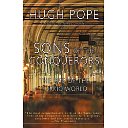
    Hugh Pope, SONS OF THE CONQUERORS: The Rise of the Turkic World, pp. 13-19, 41-171 (New York: Overlook Duckworth, 2005)

    9. THE GHOST OF ISA BEG

    KNIGHT-ERRANT OF TURKESTAN

    I was never carried away by the valuable Chinese gifts of gold,

    silver, silk and sweet words. I did not forget how many Turks

    who had been deceived by such things had died, how many

    had been forced under the Chinese yoke.

    —Stone inscription by Bilge Kagan, an 8th century AD

    Turkic ruler in what is now Mongolia

    FROM HIS SPARSELY FURNISHED APARTMENT IN AN OUTER SUBURB OF

    Istanbul, Isa Alptekin, the late leader of the Uygur Turks of China, never

    imagined that he could free his people by force. The grand old man of

    this large but little-known Turkic minority always spoke the language of

    passive resistance, as did his much better-known comrade in the struggle

    with China for greater rights, the Dalai Lama of Tibet. Alptekin clearly

    felt vindicated by the fact I had sought him out for a news agency

    interview in 1988, a rare moment of recognition after an extraordinary

    series of protests in China during which his name had been chanted by

    Uygur crowds. Alptekin chuckled lightly when I asked him if he had

    agents at work, as China alleged.

    “Let’s just say I’m popular,” the nearly blind old gentleman said, his

    tall frame motionless on a sofa. Although happy to be noticed, he was not

    sanguine about the outcome of the unrest in Xinjiang. The Uygurs might

    number eight million souls, but they were a drop in the ocean of 1.2 billion

    Chinese. “We are few, and they are many,” he said. “They have the

    guns; we don’t.”

    In Chinese, Xinjiang means “new borderland.” In the hearts of the

    Uygurs, who still number half of the population of this remote region

    that makes up one-sixth of China’s landmass, it is still old East

    Turkestan. They remember that two millennia ago China built the Great

    Wall to keep their unruly ancestors out. They also know that 1,200 years

    ago the Uygurs founded the first major Turkic state, and that Han

    Chinese only started arriving in large numbers after the communist

    takeover in the last half of the 20th century. The arrogance and highhandedness

    of the Beijing authorities have made them as resented

    among local people as they are in Tibet.

    It wasn’t just Isa Alptekin’s archaic turns of phrase that told of his

    origin in a distant corner of the constellation of Turkic peoples. The pre-

    20th century links between western and eastern Turks were alive in his

    memory, too. The Ottoman Sultan Abdulaziz had sent advisers and arms

    to the Uygurs in China in the 1860s. “My grandfather was trained by the

    Ottoman officers and saw battle,” he recalled. They raised a substantial

    army and won diplomatic recognition from both Russia and Britain in

    what for thirteen years would prove to be the Uygurs’ most successful

    rebellion. “When I was five years old, my grandfather used to tell us

    about it, and when he got excited, he’d stand up and order us about in

    Istanbul Turkish: ‘At ease! Attention! March! One, two, one, two!’’

    The old man’s mood darkened as he recounted how China crushed

    his experiment in Turkic nationalist government. This bloomed after the

    nationalist group of which Alptekin was a leading member won the

    region’s first and last free local election in 1947, part of the confused

    interregnum as Russia began to disengage from Eastern Turkestan in the

    1940s. It was snuffed out when the communist army of Mao-Tse Tung

    re-established full control in September 1949. Subsequent resistance,

    mainly from Uygurs and Kazakhs, was stamped out. Waves of Turkic

    refugees scattered for safety. Isa, his family and 450 others fled in midwinter

    to Pakistan over the 14,000-foot passes of the Karakorum mountain

    range. One of Alptekin’s sons, Arslan, today living in Istanbul, was

    five years old during the 10-week trek. The pain, cold and misery were

    so intense, Arslan would later tell me, that he even saw a horse weep.

    The frostbitten toes of one of his feet had to be amputated when they

    arrived in Pakistan. His younger sister died.

    In the ensuing years of exile, Alptekin traveled widely to drum up

    international support for the Uygur cause. Like his ally, the Dalai Lama,

    he preached against violence, terrorism, intolerance or Islamic fundamentalism.

    But he died without seeing his native land again.

    My first conversation with the elder Alptekin lasted all afternoon.

    Little did I realize that our chat would lead me, more than a decade later,

    to his birthplace in Yengisar, on the edge of the Taklamakan desert in

    northwestern China, nearly 2500 miles away from where I sat. Much

    had changed by then. The old man had died in 1995. The last time I saw

    him was on a chilly winter morning, and he was depressed. It was soon

    after Azerbaijan’s “Black January” in 1990, and he believed the Soviet

    government had crushed the Azeri Popular Front in order to send a warning

    shot across the bow of all nationalist movements active in other

    Turkic republics. I asked him whether the bravery of the Azeris would

    inspire the Uygurs.

    “There is a thrill going through the Turkic world,” he said. When I

    asked what this meant for the Uygurs, he paused. He spoke of the need

    for caution, remembering his own futile attempts to enlist international

    help in the past. He correctly predicted that the Turkish state would do

    nothing for his people. In the late 1990s, in order not to offend China,

    it re-issued a ban on the public display of the blue-and-white star-andcrescent

    of East Turkestan, even as Uygur youths were being sentenced

    to death for hanging it on the vast statue of Mao in Kashgar.

    “A little help would have meant a lot to us,” Isa sighed. “It would

    have told us we were not alone, that we had a friend, that we could one

    day be happy too.”

    It was in Kashgar in 1999 that I boarded a crowded bus to reach Isa

    Alptekin’s birthplace. The two-hour journey to Yengisar was a bumpy

    ride. Chinese workers swarmed over the highway leading out of town.

    They were busy knitting mats of steel reinforcing bars to turn it into a

    vast concrete boulevard. The new carriageway looked able to carry

    columns of tanks, which was probably the point. Alongside the raw

    swathe that Chinese roadbuilders had cut through the ancient fabric of

    the city, mudbrick Uygur houses and gardens lay ripped open and abandoned.

    By the time we reached the outskirts, dust kicked up by this and

    other engineering works had brought visibility down to a few dozen

    yards. The leveling of the ancient city had been going on for decades.

    Militants of Mao’s Cultural Revolution had started in the 1960s by cutting

    down the trees that used to shade the roads. Next to go were the

    cooling water channels that ran beside the streets. Now, apparently, it

    was the turn of the streets themselves to be erased from memory.

    Likewise, the wide tarmac highway that entered Yengisar bulldozed

    right through the heart of the mud-brick town that Alptekin would have

    known. It was a hot midday, and there was little traffic and few passersby

    on the street. Over the road from the small, white-tiled bus-station,

    however, people stirred among the shaded tables of the New Silk Road

    Muslim Restaurant. I wandered over. It was a rough-and-ready Uygur

    establishment where the chef, 19-year-old Suleyman, sweated over a

    flaming wok on a stove made of an old oil drum.

    Suleyman quickly whipped me up a standard Kashgar goulash—

    strips of beef, green pepper, tomato, and lashings of chilli pepper—

    served with steamed white bread dumplings. He and his family joined

    me at the table, friendly and curious. They loved a joke. When I showed

    off my tool-filled American knife, Suleyman pulled out his Uygur blade

    and laughed hugely at the fear in my eyes as he played out a lightningquick

    game of dagger slashing. The point flashed within fractions of an

    inch from my chest and arms. Later, while I ate, I asked Suleyman tentatively

    if anyone in Yengisar remembered someone called Isa Alptekin.

    He shook his head; if he recognized the name, he didn’t show it. I tried

    Isa Beg, the name by which he is known to generations of Turkic nationalists.

    Suleyman seemed genuinely ignorant of it, so we went back to discussing

    a topic he found of much more pressing importance: how he

    would get the money he needed to wed.

    Fortified by the hearty repast, I set out to determine whether

    indeed Yengisar’s most famous son had become a non-person in his

    hometown. Shady tree-lined paths wandered between earthen roads

    flanked by water channels that brought a delightful coolness. Tanned

    children splashed happily behind little dams. Stopping from time to

    time at garden gates that stood ajar, I looked into the courtyards of

    houses. Many sported small charcoal forges and piles of scrap car

    parts, where craftsmen kept up a knife-making tradition that makes the

    name of Yengisar famous among Uygurs. A group of brightly dressed

    women observed my investigations and, giggling over my Turkish-style

    Uygur, paused to chat.

    The women, too, denied knowledge of Isa Beg. But after a few

    whispers, they directed one of the girls, a pretty young teacher, to take

    me to a man called Karim, who, they said, would be able to answer my

    questions. As she and I headed back to the town center, she recognized

    a man passing by on a moped as Karim’s relative. He stopped, flashing

    us a big smile. We hailed a horse-drawn cart and he led the way to the

    other side of town, past big plots of farmland fringed by tall poplar trees.

    We stopped at a new, concrete house of unusually grand dimensions.

    The relative led me through a big door and a tunnel, like the entrance

    to a medieval English inn. Then we were suddenly out in the sun again.

    Here in a courtyard oasis of greenery, sat Karim, a man in his 60s with

    big, heavy spectacles, a diamond-studded gold watch and a goatee

    beard.

    Karim spoke fluent Turkish. After the usual pleasantries about my

    journey, I came round to the subject of Isa Beg, delicately, I thought, by

    talking of living in Turkey and the new park in Istanbul that had been

    named in his honor.

    “Ah, so you’re a journalist, I suppose?”

    “No, no, well, perhaps a kind of writer,” I lied. I felt like an imposter.

    China forbids foreign writers from touring Xinjiang without lengthy

    arrangements for guides, interpreters and minders. I had come here on

    a tourist visa, and all of us could be in deep trouble if my true purpose

    were revealed. Human rights reports cite “political conversations” as a

    reason that Uygurs are sentenced to many years in jail or “re-education

    through labor.”

    Karim patted me on the knee and smiled knowingly. I met his eyes

    and we let the subject drop. But he gave away little about the story of his

    life. In his childhood he had been a next-door neighbor of the Alptekin

    family, and had joined the column of Uygur refugees who escaped over

    the mountains with Isa Beg to Pakistan as the Chinese communists took

    over. After exile in Pakistan and India, he moved, as did several hundred

    Uygurs, to Saudi Arabia. Enriched by a restaurant business, he had

    retired to Istanbul and taken a much younger Uygur wife, Fatima. But

    seven years before he had given in to her entreaties that they return

    home to Yengisar. He had let out his Istanbul flat, and his foreign income

    made him a wealthy man here.

    “We manage. Everything we need is smuggled between here and

    Turkey,” Karim said.

    “Are you free to travel?” I asked as he invited me to pick a peach

    from one of the fruit trees in the courtyard of his two-story mansion. The

    fruit’s flesh was white, juicy and exquisite.

    “Coming back is easy. Going away again is hard. They won’t give us

    our passports. I feel like one of my parrots,” Karim said, pointing to his

    large collection of caged birds. One of them was in a pagoda-style cage,

    which, paradoxically, had actually been made in Turkey.

    “Is Isa Beg’s house still standing? Can I visit that?”

    Relatives of Isa Beg lived in the old Alptekin family house, Karim

    said, but his land was now buried under the asphalt of the new crossroads

    in the center of town. He passed me some soft apricots and slices

    of a watermelon brought over by Fatima. He spoke of the former delights

    of wandering through old Kashgar’s orchards, now entombed under

    Chinese urban development.

    “Who remembers Isa Beg? What about The Cause of Eastern

    Turkestan?” I asked, using the title of one of Isa Beg’s books.

    “It’s finished. Oppression has buried it,” he said with conviction.

    “There’s nothing left here. People don’t have enough money to think

    about Eastern Turkestan. Everyone is afraid.”

    Fear had not crushed Uygur resentment or the dreams of Isa Beg,

    however. Back in Kashgar, one man dared to speak openly of the Uygurs’

    burning ambitions. I was in the knife market, and my Turkic chatter with

    the owner of a knife-sharpening stone—I was trying to get a respectable

    edge on my personal blade, and he required me to spin it by pulling a

    long strap—attracted the attention of a well-dressed Uygur gentleman.

    He introduced himself. In his thirties and of middling height, he spoke

    fluent Istanbul Turkish. After awhile, our increasingly intense conversation

    began to draw stares in the bustling thoroughfare, and he invited me

    to dinner at his house that evening.

    Mahmut met me at the entrance of Kashgar’s great Idgah mosque. I

    followed him through a maze of streets into a narrow alleyway, where he

    suddenly ducked into a low doorway. The entrance gave no clue to what

    lay inside, a fine, well-kept house. Built round a spacious courtyard, it

    shared the comfortable privacy and the wooden-colonnaded verandah of

    traditional Central Asian townhouses over the mountains in Tashkent,

    Samarkand and Bokhara.

    When we walked in, Mahmut’s family was sitting on carpets on the

    verandah, watching television. The womenfolk looked up and were

    about to scatter modestly, but Mahmut told them to stay since we were

    going inside. Mahmut’s father and brother got up to greet me with a

    warmth that put me at ease. My host poured water from an old, intricately

    beaten copper pitcher to wash my hands, catching it afterwards in

    a matching wide-rimmed bowl on the ground. Then I was led through to

    the main reception room. Mirrors winked behind white stucco tracings

    and intricate woodwork. After I took my seat on a floor cushion against

    a wall, Mahmut pointed out brass and porcelain family treasures in little

    onion-domed alcoves. A feast of dried nuts, fruits and melons lay on

    the table waiting to be eaten. The political diet, however, would have

    made a Chinese secret policeman choke.

    “We can’t get a homeland without bloodshed,” Mahmut declared

    matter-of-factly, when I asked him an innocuous question about the

    Uygurs’ future. “Back in the 1980s, we might have succeeded with nonviolent

    methods. But now it’s too late.”

    I had stumbled onto an educated Uygur who could speak candidly

    for the Turkic cause. It was a far cry from the caution of Isa Alptekin.

    Mahmut had lived abroad for many years. His father began to send his

    children to Turkey in the 1960s, just in case the Uygurs were driven

    out of Xinjiang entirely. I supposed that it was this familiarity with another

    world that made him comfortable confiding some of his more incendiary

    thoughts with me. I revealed to him my identity as a writer and assured

    him I would not reveal his true name. Our shared fluency in Turkish and

    love of Turkey facilitated communication immeasurably.

    “Our model should be a violent uprising, like that of the Chechens,”

    he continued. I protested that the prospect of an endless, unspeakably

    bloody civil war against a powerhouse like China was hardly an appealing

    model for national liberation. He shook off my objections. “The

    Chinese are frightened of us,” he insisted. “That’s why you can’t see one

    of them on the streets after 9 p.m. They never come into our quarter

    here. There’s no furniture in their houses! Just one incident, and they’ll

    all run away. All the new building you see going on is just for show.”

    He paused to allow his words to sink in, and then he proclaimed

    gravely, “In fifteen years, either China or communism will have collapsed.

    There will either be a democratic China, or we’ll have an independent

    state.”

    A knock on the door from Mahmut’s mother signaled the arrival of

    hot food and gave me a moment to collect my thoughts. Mahmut stood

    up and brought in the tray. I savored the scent rising from the deep bowls

    of coriander-flavored mantı, a kind of ravioli, a dish served throughout

    the Turkic world. As we began to eat, Mahmut continued his story. It

    was in Turkey, he said, that his nationalist consciousness was born.

    While living in Istanbul, he discovered that just a few hundred words

    separated Uygur and Turkish. He also found that he felt completely at

    home when visiting with other Turkic peoples, such as the Uzbeks. “The

    Uzbeks are the same as us,” he maintained as he reached for another

    spoonful of food, “The only difference is in the accent. They speak in the

    back of the throat, we speak with our tongues.”

    Mahmut’s profession as an importer and exporter of goods from

    Turkic lands, a rare incarnation of trade along the full length of the “Silk

    Road,” seemed to fulfill his dream of Turkish togetherness. From Turkey,

    he ordered clothes, which are preferred in Central Asia for their quality

    and stylishness over competing Chinese or Pakistani brands. These

    arrived by truck and plane in the neighboring Kyrgyz Republic, where an

    Uygur partner received them, packaged them and sent them down to

    Kashgar over the high mountain passes. In return, appropriately enough,

    Mahmut sent back scarves made of silk.

    I asked if Mahmut’s trade with other Turkic countries-almost all of

    which was conducted illegally-translated into outside support for the

    nationalist cause.

    He shrugged his shoulders. “Once we do something,” he said evasively,

    “I’m sure we’ll get support. In the meantime, all we ask is that that

    other Turkic countries don’t sell us out.”

    The portents, though, were not auspicious. Support could once be

    counted on from the main Uygur expatriate communities in nearby

    Kazakhstan and the Kyrgyz Republic. The latter was even home to what

    may be the world’s only Institute of Uygur Studies, thanks to past Soviet

    indulgence of the Uygurs as a tool against China. But the Soviet Union

    was no more and the Central Asian states were vulnerable to pressure

    from China. Any Uygurs there had to cease providing aid to the rebels.

    Mahmut’s partner had been interrogated and harassed in the Kyrgyz

    Republic for giving interviews to a separatist radio station.

    Uygur exile groups also existed in Europe, Mahmut said, particularly

    Germany, to where Uygur students who joined in China’s 1980s prodemocracy

    movement had fled after the massacre in Tianammen Square

    in 1989. The Eastern Turkistani Union of Europe claimed at one point

    to have thousands of members. But amid accusations of Uygur Islamist

    terrorism after Sept. 11, 2001, a crackdown by the German authorities

    curtailed the group’s ability to raise funds and remit them home.

    I mentioned my meeting in Istanbul with Isa Alptekin, who had

    complained bitterly at the attention the outside world lavishes on Tibet,

    while ignoring the Uygurs. Uygurs are cold-shouldered by Muslims

    because they are Turks, Alptekin had said to me, and by the West

    because they are Muslims.

    Mahmut nodded in solemn agreement, and began to recite the litany

    of Uygur protest and Chinese repression. The modern protest movement

    was born in 1985, he said, when students demonstrated against Chinese

    nuclear testing at Lop Nor, deep in the Taklamakan Desert. Hardliners in

    Beijing blamed the “open door” policy of the late 1970s-which liberalized

    travel, economic enterprise and mosque-building-for awakening Uygur

    national sentiment. Others pointed to the erosion of Russian control over

    its Central Asian territories, culminating in the Soviet collapse and rise of

    Turkic states. Whatever the cause, the violence in Xinjiang soon escalated.

    Riots against discrimination broke out in the late 1980s. Some crowds

    chanted the name of Isa Beg, prompting my colleague in Beijing to alert

    me in Istanbul to this novel event. Chinese police met them with teargas,

    bullets and mass arrests. In 1990, riot police killed up to 50 Uygur protestors

    at Baran, south of Kashgar, after the entire town, angered by the

    sudden closure of a mosque, had risen in rebellion against Chinese rule.

    Uygur nationalists retaliated with attacks against government targets

    throughout Xinjiang. The separatists even struck in Beijing, where they

    carried out a series of bus bombings in the early and mid-1990s.

    When China launched its ‘Strike Hard’ campaign to crush domestic

    dissent in April 1996, Mahmut told me, it only strengthened Uygur

    hatred of the Chinese. Ten months later, during the Muslim holy month

    of Ramadan, Uygurs in the industrial city of Yining staged the largest

    demonstrations yet. Though he opposed the murder of civilians,

    Mahmut said he had no reservations about attacks on Chinese police or

    military targets. The inevitable reprisals, he said, were justified by the

    greater cause.

    “A lot of young men are ready to die,” he added, abandoning his now

    cold bowl of manti and calling to his mother for a new pot of pale green

    tea.

    I had certainly met Uygurs who seemed bitter enough to follow

    the old Turkic proverb of suicidal rebellion: “Better to be a wolf for a

    day than a mouse for a hundred.” But I doubted it was the case with

    Mahmut. He’d had his own share of run-ins with the authorities, who

    accused him of helping Uygur rebels. But he seemed far too pragmatic

    to jeopardize his comfortable standing for an abstract cause. He couldn’t

    even challenge his mother over her decision on a bride, while he preferred

    his lover in Istanbul. In many ways, Mahmut seemed more of a

    frustrated businessman than a revolutionary.

    A distant muezzin sang out the call to prayer, and our conversation

    drew to a close. Mahmut and his brother joined the family for prayers

    in the courtyard. The father declaimed the Arabic cadences in a deep,

    unaffected voice. It was moving to see such natural piety, passed on

    from father to son for generations. I was asked to leave soon afterwards.

    Mahmut said his mother, who had overheard snippets of our

    conversation, was nervous that there might be another police raid on

    their home.

    “We don’t know whom to trust,” he said glumly as he led me to the

    door, “There are spies on every corner.”

    The Uygur cause could look doomed in perpetuity. It has almost no

    foreign support, its diaspora is fractious and far-flung, and the best-

    known local Uygur nationalist leader, businesswoman Rebiya Kadeer,

    was thrown in jail by China in 1999. She was sentenced in 2001 to eight

    years in prison, later reduced to seven, for “providing secret information

    to foreigners”—namely, mailing two local newspapers to her husband

    abroad. At a meeting in Germany in April 2004, most mainstream exile

    opposition groups founded a World Uygur Congress that firmly backed

    the late Isa Alptekin’s policy of peaceful struggle to free the people of

    East Turkestan. But it still tussled with a rival and more aggressive East

    Turkestan Government in Exile, set up a few months later in the United

    States. It was small wonder that Isa Alptekin used to lament that the

    Uygurs risk extinction, like panda bears.

    Still, there was another way of looking at the Uygurs’ chances.

    China’s jailing of Kadeer propelled her into Uygur public consciousness,

    and the adoption of her cause by groups like Amnesty International gave

    her international fame. Powerful outsiders were beginning to take

    notice: in 2004, the Uygur Association of America received $75,000

    from the U.S.-funded National Endowment for Democracy, a first such

    grant for an Uygur exile group.

    More importantly, China was not winning the hearts and minds of

    the Uygurs. Their resistance was not just in the fervor of their prayers or

    in gestures like keeping their clocks and watches two hours behind

    Chinese standard time on an unofficial “Xinjiang time.” It was a broad

    cultural rejection of China that reaches its most vivid and anarchic

    apogee each week in the pageant of the Kashgar Sunday Market.

    Streams of people begin arriving at dawn, with long queues of donkey

    carts from Uygur villages jostling past the usual traffic of Chinese-driven

    motor vehicles. Plunging through narrow, dusty alleyways into the

    pushing crowds, I felt as if I’d landed in a different century, and, if not a

    separate future country, certainly a region and people that showed no

    sign of becoming a homogenous part of China.

    In fact, I felt that as a Briton I might be culturally closer to the tidy,

    westernized Chinese tourists in the market than to the Uygurs, who

    were resolutely Central Asian. In a clearing between donkey-cart parks

    and animal enclosures, a street circus re-enacted the entertainments of

    a medieval Turkic court. An Uygur man with a reedy horn cajoled a boy

    tightrope walker through faked stumbles and dramatically petulant

    protests. The boy was slowly making his way up a thick cord strung at a

    steeply ascending angle from the ground towards two long poles crossed

    at their tips. Then came a flatter section of cord to the other end, a tall

    mast hung with triangular pennants. It all looked like the rigging of a

    sunken galleon. I later came across exactly the same set-up in an early

    Ottoman Turkish miniature, portraying celebrations of the circimcision

    of one of the sultan’s sons in Istanbul. Pushing deeper into the crowded

    market’s amorphous maze of beaten earth streets and clearings, I passed

    an eatery built almost entirely of smooth mud bricks. A man fed wooden

    branches and old housing beams into blackened holes under cauldrons

    cooking on a rough and ready range. Wielding an outsize colander

    on a stick as a ladle, he dipped into bubbling mess to serve his customers

    bowls of froth and bones. The scene could have been conjured to life

    from a Bronze Age archaeological site.

    My sense of cultural difference was underlined by the Uygur treatment

    of animals. I visited an ill-defined forum where horses were traded,

    and found it to be a latterday kind of slave market. Bearded men in

    striped gowns and turbans inspected teeth and bargained implacably. I

    dodged boy jockeys as they tore round a dusty clearing, testing mounts

    for would-be buyers. At other times these boys poked and tormented

    horses that were helplessly tethered up to wooden rails. Beside a ramshackle

    cart stood a man surveying the scene and chewing slices of

    melon. He occasionally passed the rinds on to his donkey to munch on.

    But as often as not he followed the gesture with an absent-minded

    punch on the animal’s nose. It was all as if the Uygurs wanted to punish

    the animal world for the stress of their own lives. In return, a stallion

    fixed me with a vengeful stare, then whacked me with a well-aimed kick.

    Another horse made a dramatic bid for freedom while its owner was

    washing it in the turgid waterway that ran beside the market. Running,

    bucking and kicking, the horse valiantly fought for several minutes to

    evade re-capture, but to no avail. Peter Fleming, a British traveler

    through Xinjiang in the 1930s, was horrified by Uygur attitudes, especially

    when he passed a donkey abandoned on the roadside to die of its

    hideous sores. “The Turkis are completely heartless with their animals,

    whose breakdown is accelerated by callous neglect,” he wrote. Even

    today, there is so little trust between man and beast that in order for a

    Uygur blacksmith to shoe a horse, he has to suspend it from a great

    wooden frame, bound up with slings and rope bonds under its belly.

    I retired for the afternoon to a one-room museum near a Muslim

    shrine on the outskirts of town, and found that education did not patch

    over that sense of Uygur-Chinese separateness. The diminutive Uygur

    archaeologist in charge was determined to prove that Uygurs were a fundamentally

    separate people as he showed me round the findings from

    one of Xinjiang’s many 2,000-year-old tombs. All dated back long before

    any putative arrival of Turkic peoples to these desert oases. The centerpiece

    of the exhibition was a mummified corpse, which the curator

    insisted proved that his homeland lay beyond the Chinese pale. With

    growing excitement, he pointed out the Uygur-style leather soles on the

    dead woman’s slippers—not Chinese-style layers of fabric, he declared

    —and the way her chin and feet were bound with a fabric band, a tradition

    that persists among the Uygurs to this day. The painted wooden coffin

    also looked like nothing in China.

    “Look at the onion-dome shapes! These ancient people were certainly

    our ancestors, not the Chinese,” he concluded with a flourish. “We

    Uygurs just don’t know our history well.”

    But informed Uygurs like him were becoming more common, and

    their story was getting out. The Uygur catastrophe of the past half-century

    was partly because information about the Uygurs was so scarce, and

    there was thus no check on China’s actions. The days are gone when the

    Alptekin family’s great victories would be a report handed to a U.S. president

    by the Dalai Lama or an invitation to discuss matters at a panel in

    a university in Malta. China is opening up to inspection as it integrates

    with the world, and, in intellectual circles at least, is becoming more

    sensitive to domestic grievances. Both Chinese and international travelers

    are visiting Xinjiang as never before. Quite a few of them, to judge by

    some professional-looking camera equipment in the Kashgar Sunday

    Market, are reporters posing as tourists.

    “I used to pin up each article that was published about us and just

    gaze at it. Now I can’t keep up. There are just hundreds,” Isa Beg’s eldest

    son and political heir, Erkin Alptekin, told me in 2002. Two years

    later, he was elected as the first president of the World Uygur Congress,

    a stronger new platform that would build on his years as the General

    Secretary of the Netherlands-based Unrepresented Nations and Peoples

    Organisation.

    I left Kashgar the next day convinced that rooting out the Turkic

    identity of the Uygurs would not be so easy for China as it had been to

    destroy the character of Xinjiang’s cities. The Uygurs had preserved their

    culture through the worst of what China could do to them. But as I traveled

    more widely in Xinjiang, I found that this isolated and embattled

    history had left many Uygurs in a brittle, explosive mood.

  • Sons cover thumbnailThe first of four Uygur-related extracts from my book on the Turks and the Turkic world.

    Hugh Pope, SONS OF THE CONQUERORS: The Rise of the Turkic World, pp. 13-19

    PROLOGUE

    God Most High caused the Sun of Fortune to rise in the

    Zodiac of the Turks; he called them ‘Turk’ and made them

    Kings of the Age. Every man of reason must attach himself to

    them, or else expose himself to their falling arrows.

    —MAHMUT OF KASHGAR, author of the

    first Turkish encyclopedia, 11th century

    ONE SPRING DAY TOWARDS THE END OF THE COLD WAR, A TIME OF

    surprises, my teleprinter shuddered into action at the Istanbul bureau of

    Reuters news agency. A colleague in Beijing was sending a message:

    members of an ethnic group called the Uygurs, of whom I had never

    heard, were demonstrating in the streets of Urumqi, capital of the

    northwestern Chinese province of Xinjiang. The protesters were

    denouncing the communist leadership in Beijing and chanting the name

    of an exiled leader said to be living in Turkey, a man named “Isa.” My colleague

    had a simple and urgent request: Could I track Isa down?

    The strangeness of the message took a few moments to sink in: thousands

    of miles from Turkey, in a place I believed to be firmly within the

    pale of a monolithic China, demonstrators were risking their lives to

    honor the name of a Turk. A quick check revealed that the Uygurs are a

    people known as Turkic, an adjective also then unfamiliar to me. I lived

    in Turkey, and its inhabitants were until then the only Turks or Turkic

    people I knew of. It took several phone calls to lesser-known Turkish

    journals and exile associations to track down Isa, the Uygur activist, to

    an outer suburb of Istanbul by the Marmara Sea. His family name was

    Alptekin, and when he opened the door to his modest apartment, I took

    my first step into this new world. Then 87, the tall, dignified Alptekin

    had, forty years earlier, led an explicitly Turkic nationalist uprising

    against Chinese rule in Xinjiang. His Republic of Eastern Turkestan last-

    ed just 14 months. The nearly-blind old gentleman impressed me not

    only with his elegant bearing and sharpness of mind, but also by the oldfashioned

    language he spoke. Certain turns of phrase hinted at a religious

    education in Arabic. Others sounded strangely familiar, a living

    echo of the Central Asian ancestors of the Turks of Turkey among whom

    I lived.

    It was 1989. The Soviet Union was showing its age, protests were

    gathering pace in Beijing’s Tiananmen Square and the Berlin Wall would

    soon fall. Cold War-era Turkey was an isolated, lonely place, despite its

    loyal membership of the North Atlantic Treaty Organization. It was

    shunned by co-religionists in the Islamic world for its alliance with the

    Christian West, at daggers drawn with its neighbors Greece and Cyprus

    and cut off to the north by a whole third of the iron curtain between

    NATO and the Warsaw Pact. When the Soviet Union collapsed in 1991,

    all the political boundaries would be redrawn from Albania to the China

    Sea. What I did not realize, like many at the time, was that this broad

    buffer zone where Europe meets Asia was mostly straddled by Turkic

    populations. As a century of restrictions fell away, Turkey suddenly felt

    at the center of something, a more exciting and international place to be.

    I was hooked, fascinated by this new dimension of the country where I

    had chosen to live.

    My conversation lasted all afternoon with Alptekin. But it was not

    until ten years later that I found my way to his birthplace in Yengisar, on

    the edge of the Taklamakan desert in northwestern China, nearly 2500

    miles away from where we had talked. By then much had changed. For

    one thing, Alptekin himself was dead. But he would not be forgotten; in

    the intervening years, the Turks of Turkey became conscious of a new,

    wider national identity, shared with more than a dozen Turkic peoples.

    They rediscovered Alptekin and his history. A park was named after him

    in the historic heart of Istanbul, next to the old Byzantine hippodrome.

    When China officiously objected to this honor to a “separatist,” municipalities

    all over the country named streets, bridges and monuments in

    his honor.

    By the time I reached Alptekin’s Uygurs in China I had spent a

    decade criss-crossing the Turkic states and communities that emerged

    from the break-up of the Soviet Union. It was my good fortune to experience

    at first hand the breaking down of the frontiers that had divided

    the Turkic peoples among the West, Russia, China and the Middle East.

    Numerous journeys to the booming new capitals and remoter deserts of

    Central Asia convinced me that from such roots a wider new Turkic consciousness

    is putting up shoots. I listened as Turkic dialects once relegated

    to second-class status became state languages, now confidently

    dominant on the streets of Baku, Ashgabat and Tashkent.

    Unlike their fellow Muslims, the Arabs, the Turkic peoples are lucky

    that their interests have largely coincided with the policies of the United

    States. Washington made its opening move quickly in February 1992,

    when U.S. military flights were allowed for the first time over the airspace

    of the former Soviet Union. I was one of a few journalists invited

    to join for an inaugural American aid flight from Ankara, over the

    Caucasus, the Caspian Sea and then to Tajikistan in the heart of Central

    Asia. The U.S. had deliberately routed the flights of this “Operation

    Provide Hope” through the Turkish capital in order to underline its wish

    that the new states follow the Turkish model of secular government, pro-

    Americanism and a market economy. Our plane bore a 26-ton gift of

    medicine from Japan, raisins, sugar and cigarettes from Turkey and supplies

    of cookies, pasta and vanilla puddings from the U.S. This token

    offering was hardly likely to save the ailing and wary Central Asian

    republic of Tajikistan where we landed. But aboard the plane’s flight

    deck we all knew we were entering a new era, as the enthusiastic,

    Russian-accented voices of air-traffic controllers crackled over the radio

    to welcome our plane to long-forbidden airspace over Baku, Bokhara and

    Samarkand.

    These enlightened U.S. moves were mostly about preventing post-

    Cold War chaos. But the U.S. also single-mindedly led Western nations

    in pushing for access to the oil and gas of the Caspian basin—estimates

    of proven reserves start at the equivalent of the Gulf of Mexico or the

    North Sea—and to develop a strategic Turkic buffer zone between

    Russia, China and Iran through which that oil and gas could flow to

    Western markets. The European Union, with its own vision of opening

    up new markets, offered a program of loans to replace the old Moscowcentric

    lines of communication with east-west transit routes. Governments,

    companies and international organizations began to treat parts or

    all of the Turkic-speaking world as a coherent region of operations, if not

    yet a strategically important bloc. And the need to export energy resources

    to markets in the West may soon force more cooperation among the

    often rival Turkic regimes themselves.

    The longer I studied the Turkic peoples, the harder it was to account

    for the fact that they had been overlooked for so long. Together, they

    constitute one of the world’s ten largest linguistic families, numbering

    more than 140 million people scattered through more than 20 modern

    states in a great crescent across the Eurasian continents, starting at the

    Great Wall of China, through Central Asia, the Caucasus, Iran, Turkey,

    the Balkans, Europe and even a fledgling community in the United

    States. The Turkish spoken by its biggest and most developed member,

    Turkey, is widely spoken by significant ethnic minorities in European

    states like France, Britain, Austria, the Netherlands, Belgium, Russia

    and Romania. They are most prominent in Europe’s most powerful state,

    Germany, where Turkish can be heard on every other street corner of the

    capital, Berlin. Having brushed against the language in my undergraduate

    days at Oxford and having spoken it for nearly two decades, I found

    that whether buying a carpet in a bazaar in Iraqi Kurdistan, interviewing

    Kosovar refugees high in the mountains of Albania, or discovering a

    common language at a conference in Tashkent, fluency in Turkish

    offered an invaluable introduction to an exclusive and unusual club. As

    a major in the British Army wrote to a fellow officer in 1835, while he

    traveled near Merv in modern-day Turkmenistan: “A knowledge of

    Persian will aid a traveler in these countries; but the Toorkey [Turkish]

    is of infinitely greater consequence.”

    The 19th century rise of the West now obscures the historic

    prowess of Turkish dynasties, which dominated the Balkans, Middle

    East and Central Asia for most of the past millennium. The extraordinary

    scope of their success in history inspired me to name this book

    evlad-ı fatihan, or sons of the conquerors, an honorific the Turks use for

    the colonizer descendants of the Turkic nomad armies who forged one

    of the greatest Turkic states, the Ottoman Empire. Turkish historians

    trace this tradition back to the ancient armies of the Huns. Arab caliphs

    hired tough Turk fighters as mercenaries for the armies of Islam from

    the 7th century onwards, and soon afterwards Turkic warriors became

    the military backbone of the Muslim world. From the tenth through the

    fourteenth centuries, Turco-Mongolian horseback fighters and their

    families spread westwards across the Middle East under conquerors

    such as the Seljuks, Mamluks, Genghis Khan and Tamerlane. Then

    came the Ottoman dynasty, Turkic raiders who captured Constantinople

    in 1453 and who, within a century, had completed their conquest

    of the Balkans and marched on to seize the holy cities of Mecca

    and Medina, Egypt and most of Arabia. The Ottomans proclaimed

    themselves caliphs of the Sunni Muslim world and spread Turkic settlers

    far and wide. They ruled over this vast empire for five centuries.

    Few people today realize that many other conquerors who seized the

    thrones of Iran and India—Mahmud of Gazna, the Safavids, Nadir

    Shah, the Qajars, the Moguls—were also of Turkic stock.

    Turkic-populated lands have not drawn intense Western interest

    since the time they were a chessboard for the rivalries of 19th century

    empires. Turkic dominance had turned to weakness and defeat.

    Diplomats and monarchs debated the “Eastern Question,” which

    focused on whether the Ottoman Empire should be kept on life support

    as “the sick man of Europe” or carved up. Moscow and London played a

    “Great Game” for power and control over the Caucasus and Central

    Asia. In today’s new Great Game, however, the major players and forces

    have changed. The U.S., a newcomer, is at the height of its power, and

    long-distracted China is now pushing forward. Formerly dominant

    Russia is still influential, and Great Britain, once so strong, is marginal.

    But another big change is that the Turkic actors, although still weak, are

    back in the game, and have to be taken into account. As the U.S. discovered

    in the Iraq war in 2003, the Turks cannot be taken for granted.

    And the Turkic world stretches like a long bow over what the Pentagon

    now describes as “arcs of instability,” its new strategic worry in the post-

    Sept 11 world. “We will have to be out acting in the world in places that

    are very unfamiliar to us,” a senior Pentagon planner told a colleague at

    my newspaper, The Wall Street Journal, in 2003. “We will have to make

    them familiar.”

    This book is the fruit of more than a decade of travel through the

    lands of the Turkic-speaking peoples, including extended expeditions

    along the ancient tracks that became known in the 19th century as the

    Silk Road. I visited communities in a belt of Turkic speakers which, if

    one accepts evidence of a Turkic link to the native Indians of America,

    literally girdles the globe. They took me from the edge of the Taklamakan

    desert in China’s “Wild West” province of Xinjiang to mosques alongside

    Dutch canals leading to the North Sea and onward to the Appalachian

    Mountains in the western United States. I took many flights, of course,

    but I also crossed all their borders in Eurasia overland. I returned to several

    places repeatedly and was able to observe dramatic changes. I have

    steamed across the Caspian Sea both ways by ship and paid no less than

    four visits to the isolated Azerbaijani exclave of Nakhichevan. I have

    criss-crossed the Caucasus a dozen times by train, by bus and by car.

    It was tempting to start my story in the east, following the great westward

    movement of the Turks that started more than a millennium ago

    and continues to this day. But having distilled my experiences from more

    than 20 countries, of which a dozen merit extended treatment here, I

    feared that a travelogue might prove confusing. Instead I have divided

    my impressions into six sections that I believe reflect the collective qualities

    of the Turkic peoples: their military vocation; their strong, quarrelling

    leaders; their shared history and neighbors; their pragmatic experience

    of the Muslim religion; their love-hate relationship with the West

    over issues like oil, corruption and human rights; and their conviction

    that the coming decades must bring better fortunes than the devastating

    experiences of the 19th and 20th centuries.

    My argument is that Turkic peoples can no longer be treated as marginal

    players on the edge of Europe and the Middle East, or crushed

    subjects of remote parts of the Russian and Chinese domains, or distant

    allies taken for granted by the Europe Union and the United States.

    They are becoming noteworthy peoples and prosperous states in their

    own right, and are developing numerous new connections between each

    other. I hope this book will give a broader context to those who know

    Turkic peoples only in one guise: perhaps as minority immigrants in

    Europe and America, as go-getting businessmen in Istanbul, as displaced

    refugees in the Caucaus, as oil negotiators in Central Asia, or as dissident

    rebels in China. I know of few other attempts to put the Turkic peoples

    in the center of a narrative frame, and certainly none of this scope.

    I believe it reflects the Turkic peoples’ attempts since the end of the

    Cold War to set a course to a better future—sometimes breathtaking and

    daring, often clumsy and controversial, but always with a passionate

    determination to regain control of their fate.