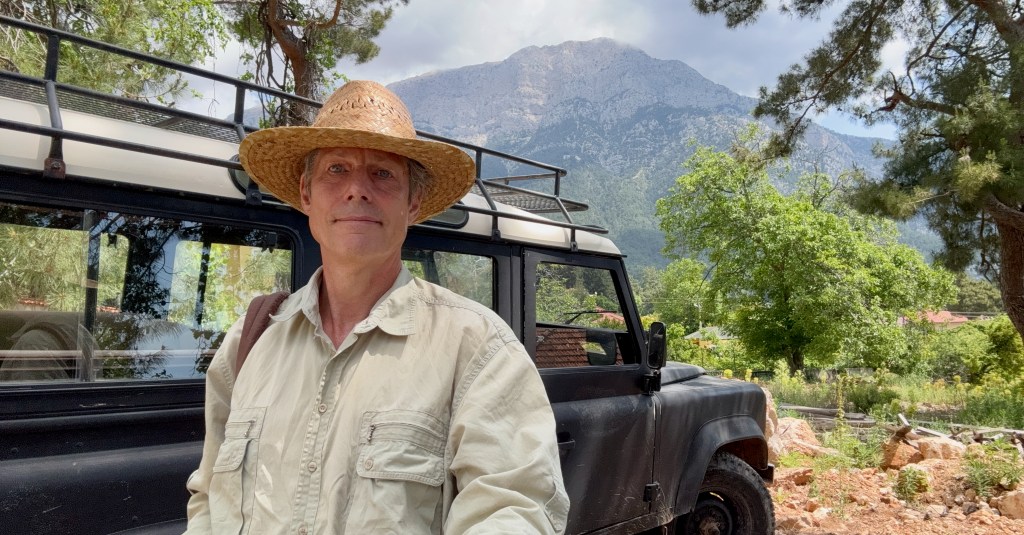
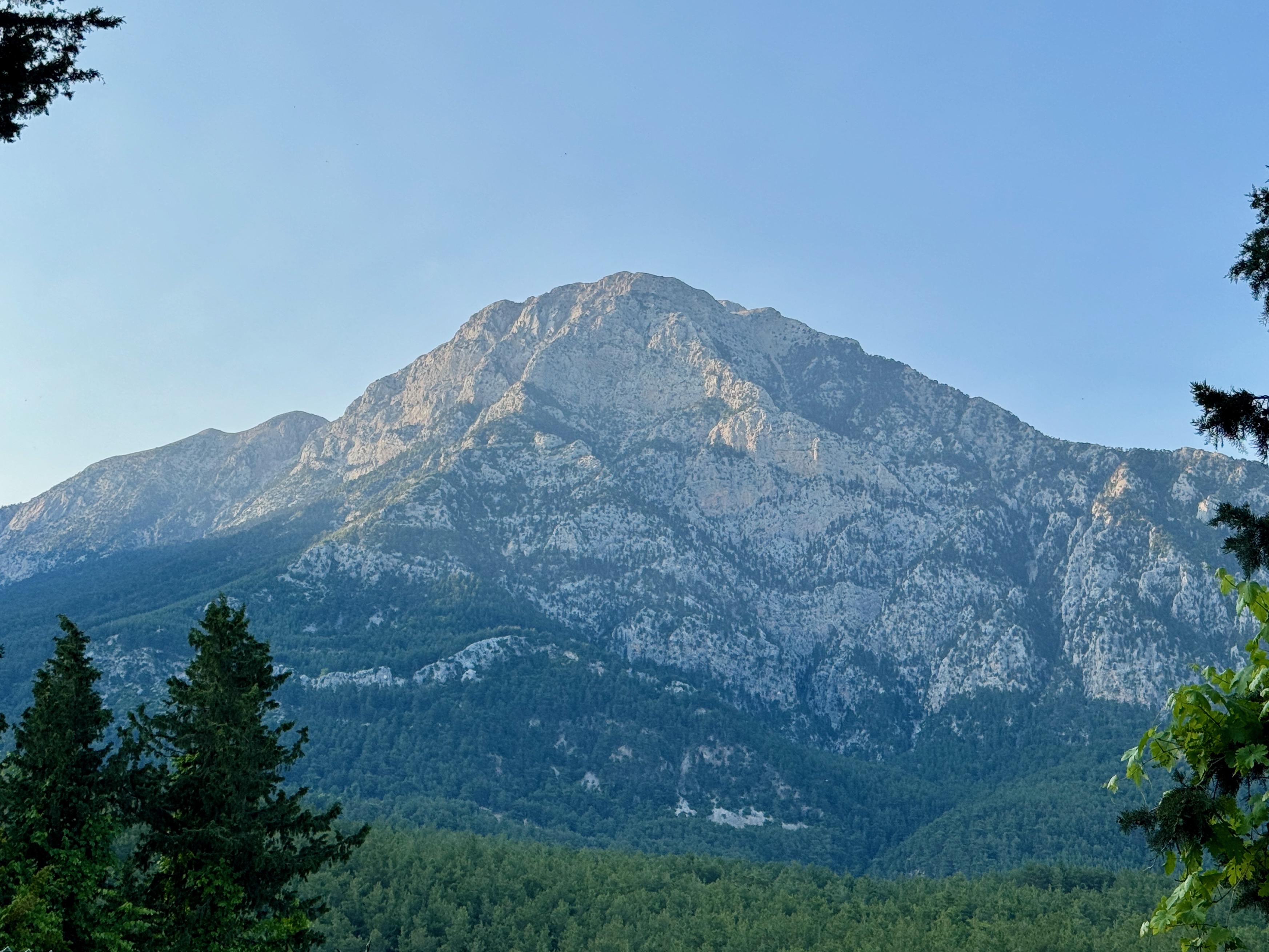
Twenty years ago, my wife Jessica and I fell in love with a remote, mountainous corner of Turkey. Deeply forested and rooted in antiquity, its steep valleys are overseen by a majestic peak soaring 2,365 metres (7,760 feet) above the nearby Mediterranean Sea.
We took on a two-acre plot of land on the flanks of the mountain range, hard to reach and initially bereft of road, electricity or water. Living in a campsite for five months, we built a house, The Lazy Olive. But over the years that followed, we were so busy struggling to cope with small details that, without wanting to, we lost touch with the big picture of our surroundings.

From the outset, I had wanted to scale the summit of the great peak of Mount Olympos, also known as Tahtalı in Turkish. (A number of high mountains in Turkey have inherited the name Olympos from antiquity, but are separate from the more famous Mt Olympus in neighbouring Greece). But, after a first eight-hour trek over a nearby mountain twenty years ago, I never made time for more.
This April, however, I was determined to get back to what had initially attracted us to Olympos and the raw beauty and unspoiled, 70 km-long coastline of the Beydağları National Park.
Once a week, I set out to discover what had lain at our doorstep for so many years: the Lycian Way, a 760-km, 35-day trail along the coast of the Lycian peninsula pieced together from ancient village paths by British pioneer Kate Clow in the 1990s. Turkey’s first long-distance trail has since become famous in the hiking world.
I soon worked out that there were a dozen good sections of the Lycian Way that would work well as day trips from The Lazy Olive. I wanted to start with a reprise of that first walk in 2005. Jessica joined me. From our front door we went up and over Musa Dağ, or Mount Moses, which spreads across our horizon when we sit on the terrace of our house. 18 km and 10 hours later, exhausted, we reached the beach at Adrasan.

One 3 km stretch climbed a steep 620 m in elevation through a close-packed forest of smooth red-trunked strawberry trees. Stony escarpments, earthen forest tracks and silent paths carpeted in pine needles led us to another world. We marveled at how the inhabitants of the two millennia-old port city of Olympos below had built a second stone city near the peak, perhaps to avoid the scourge of pirates.
The experience made me feel a little foolish. We had spent too many of our vacations scouring building supplies shops as big as cathedrals, shuttling between government offices on mind-numbing bureaucratic errands, and enduring long, sweltering drives to distant towns. We always needed something: parts for broken water pumps, esoteric natural pool essentials or yet more makeovers for The Empress, our 1987 ex-Turkish army Land Rover.
Now we were finally walking those walks. We reconnected with the amazing fact that all this natural beauty was just a footpath away from our house.

For the next stage, Jessica and I hiked 11 km along the contour track that runs alongside our village’s small agricultural canal to the water springs in Ulupınar. Every grassy bank was thick with offerings to spring, like daisies, red poppies, vibrant white-and-yellow camomile, purple thistles, salsify heads of seed like giant dandelions, and a flower with a delicate display that truly earns its name of white lace.
Then I did a round trip of 18 km from Ulupınar that passed through Beycik, the high mountain village which would be my jumping off point for the route up Mount Olympos. I wanted to build up confidence: the 700 m climb in height up to Beycik was just half the 1,400 m I’d have to manage to reach the top of the mountain (and the same on the way down). It wasn’t the only thing that made me anxious. Hiking apps are all very well, but the Lycian Way can be elusive to follow. From a couple of trips up Mount Olympos by a cable car installed in 2007, I also knew that up at 2,365 m (7,760 ft) the sun cuts like a knife, the air is thin and cold, and the last 3 km to the summit climbs through trackless-looking screes of bare, uneven stones.
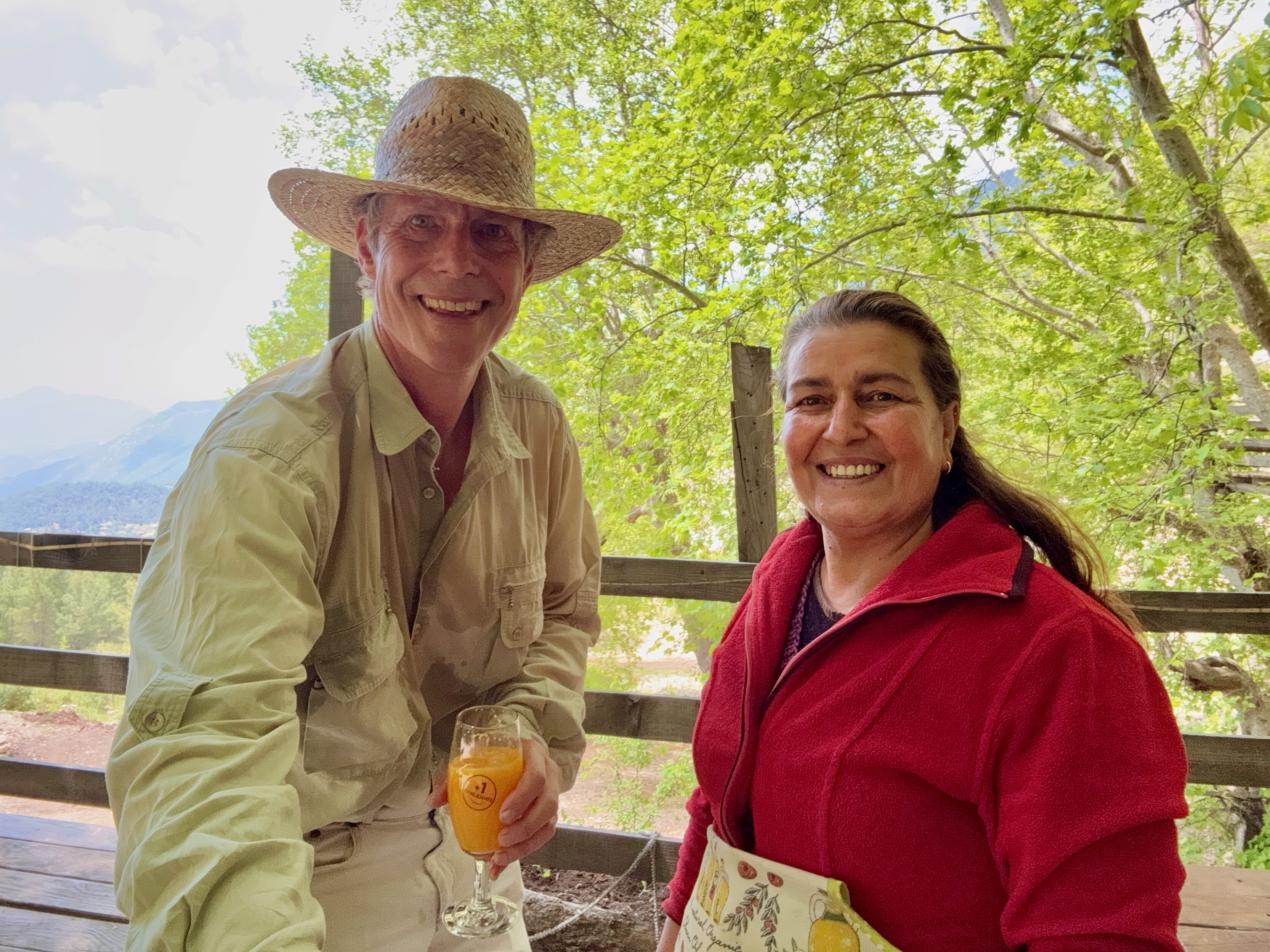
All started well on the day. After an hour, the path literally wound through a delightful, informal cafe built out of wood from the forest. A pint of fresh-pressed orange juice from the proprietor, Hanife, further raised my morale. Continuing uphill, I briefly overlapped with a Turkish hiking group. They had driven four hours to the starting point, and, after the eight-hour climb and descent, they would be driving four hours home the same night. Their commitment added to my sense of occasion.
The path was steep but not vertiginous, with many rocky outcrops from which to admire the Mediterranean coastline far below. The resinous pine trees common on the lower slopes gave way to high-altitude cedars with their feathery layers of branches spreading out like cirrus clouds. Great ancient trunks lay in clearings, bleached as white as bones, while the forest floor was bushy with bright green cedar saplings to take their place.

My training walks had shown me how the Lycian Way can split into confusing parallel or side trails, but up here walking was more straightforward. Cairns, wooden signposts and the occasional crossed branches – not to mention my favourite Belgian walking app – kept me on track.
At the treeline, I paused, intimidated by the bare, steep slope of broken stones ahead, all between the size of a brick and a bollard. I detected the path that snaked upward, nearly invisibly. A young Australian caught up with me and we kept each other company for the last hour of gruelling climb. She’d chosen to come to Turkey by chance after an artificial intelligence search told her that the Lycian Way was one of Europe’s top 10 long-distance trails. We took our minds off the ascent by talking about the rest of her 25-day walk and her work on indigenous Australians’ adaptation to climate change. We soon reckoned that remote rural family cultures in Turkey and Australia had a surprising amount in common.

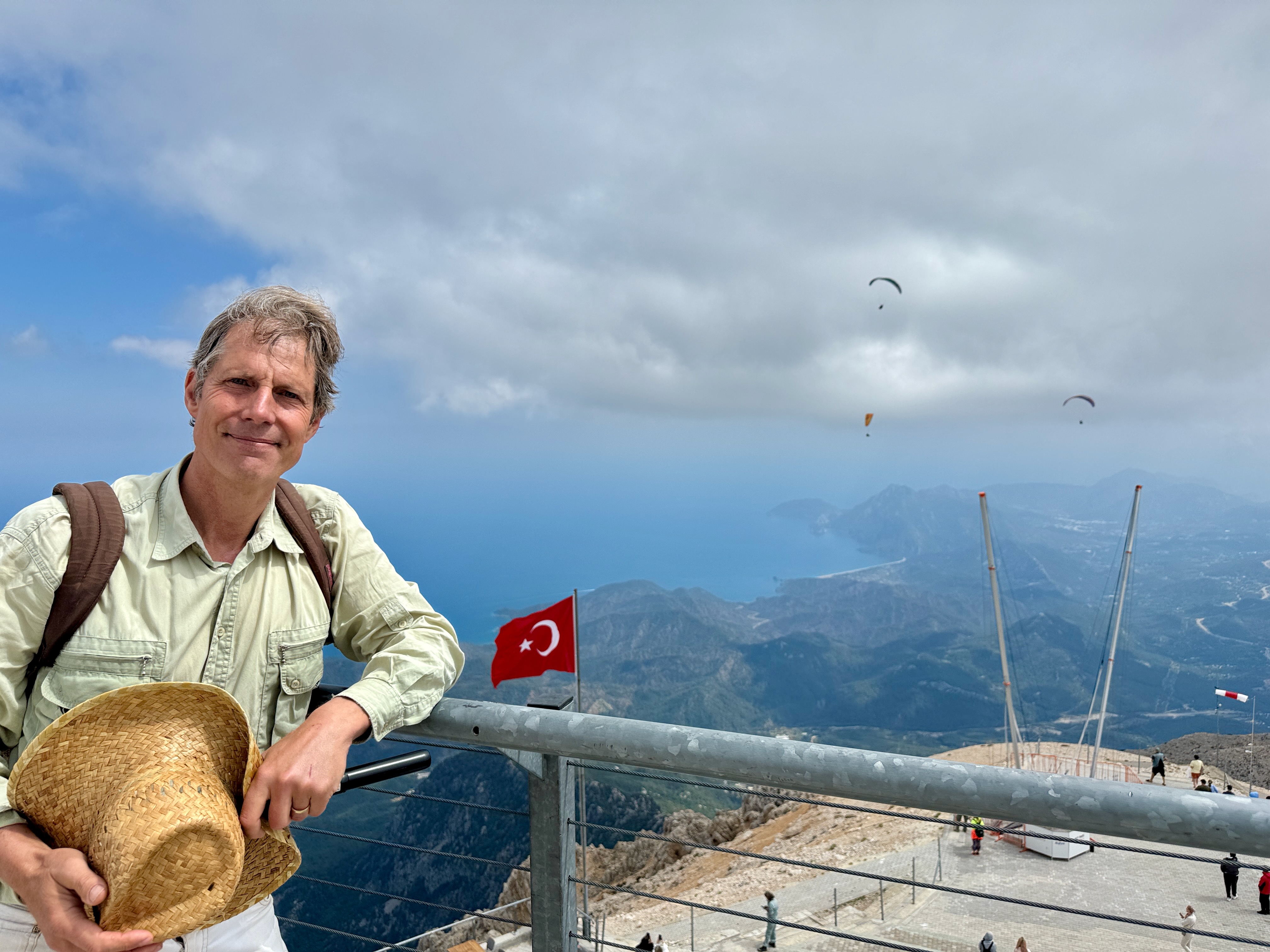
Together we closed on the summit. I marveled at the ugly concrete angularity of the Swiss-built cable car station, a blockhouse that one day could be chosen for the denouement of a James Bond film. I hadn’t expected how it took my breath away to reach and look over the last crest before the station’s perimeter fence. The other side of the mountain plunged steeply away to reveal the whole western coast of the Lycian peninsula at our feet, from the resort town of Kemer to a white line by the sea that marked the port city of Antalya, 45 km distant.
Ducking through the wire into the cable station’s realm brought a jarring change from the beauties of the ascent. We found a seat on the restaurant terrace amid an east-meets-west mix of people in flip-flops and t-shirts. Cartoon Olympian god statues served as mute selfie buddies, squeals rang out as a bungee trampoline heaved people high over the escarpments and pilots of two-seater paragliders stood ready to transport the bravest on a soaring shortcut back down to the sea 8 km away.
After a bracing Turkish coffee, my Australian companion and I were ready to stage our own flight from the tourist bubble and back into nature. At the treeline, she turned north to her next village host. I headed back south, down the way I had ascended. I wished that like her I had metal-tipped alpine walking sticks to give me purchase on the stonier surfaces. I scavenged fallen branches to serve as rough wooden staffs, but had to plant them down so hard they kept breaking.
For the rest of the afternoon I felt privileged to have the great mountain back mostly to myself. In fact, apart from the Turkish hiking group and the Australian, I only saw three other people on the Lycian Way during that whole late April day. When I got back down to the café, and gratefully accepted more orange juice and some succulent stuffed cabbage leaves, Hanife told me it was rarely busy. The peak seasons from February to mid-April and from October to November, she said, bring at most 50-60 hikers a day.
Nine hours after I’d left the Empress in Beycik, we were reunited and I started the drive back to The Lazy Olive. There have been many rewards for the past 20 years we’ve spent on the building, maintaining and managing the occasional renting out of our second house in a hard-to-reach place. But my exhilarating four April walks from Adrasan beach to Mount Olympos – in all, 54 km along and 3 km up and down – made me remember why we fell in love with this part of Turkey and started this adventure in the first place.
When we’re not there, we rent out The Lazy Olive through AirBNB or VRBO. To see more walks from the house there’s a YouTube video playlist too.

 Hugh Pope
Leave a comment